
Exploring Forces Class 8 MCQs with Answers are designed to help students understand and revise the important concepts related to forces. These multiple-choice questions cover topics such as types of forces, effects of forces, contact and non-contact forces, and forces in everyday situations. The MCQs are useful for quick revision, practice, class tests, and exam preparation.
Exploring Forces Class 8 MCQ with Answers
Conceptual Recall
Q. The push or pull applied on an object is called:
(a) Energy
(b) Work
(c) Force
(d) Motion
Answer: (c) Force
Explanation: In science, force is defined as a push or pull applied on an object.
Q. Which of the following is not an effect of force?
(a) Changing the speed of an object
(b) Changing the direction of motion
(c) Changing the shape of an object
(d) Making an object invisible
Answer: (d) Making an object invisible
Explanation: Force can change speed, direction, or shape, but not visibility.
Q. The SI unit of force is:
(a) Joule
(b) Newton
(c) Watt
(d) Pascal
Answer: (b) Newton
Explanation: Force is measured in newtons (N).
Q. Which of the following is a contact force?
(a) Gravitational force
(b) Magnetic force
(c) Muscular force
(d) Electrostatic force
Answer: (c) Muscular force
Explanation: Muscular force requires direct contact through muscles.
Q. Which of the following is a non‑contact force?
(a) Muscular force
(b) Frictional force
(c) Magnetic force
(d) Force of push
Answer: (c) Magnetic force
Explanation: Magnetic force acts without contact between objects.
Q. The force with which the Earth pulls an object towards itself is called:
(a) Mass
(b) Weight
(c) Pressure
(d) Energy
Answer: (b) Weight
Explanation: Weight is the gravitational pull of Earth on an object.
Q. The SI unit of weight is:
(a) Kilogram (kg)
(b) Newton (N)
(c) Gram (g)
(d) Joule (J)
Answer: (b) Newton (N)
Explanation: Since weight is a force, its SI unit is newton.
Q. The upward force applied by a liquid on an object placed in it is called:
(a) Gravitational force
(b) Buoyant force (Upthrust)
(c) Frictional force
(d) Magnetic force
Answer: (b) Buoyant force (Upthrust)
Explanation: Liquids exert an upward push on objects immersed in them.
Q. Archimedes’ Principle states:
(a) Every object floats in water
(b) An object immersed in a liquid experiences an upward force equal to the weight of liquid displaced
(c) Liquids exert no force on objects
(d) Only hollow objects float
Answer: (b) An object immersed in a liquid experiences an upward force equal to the weight of liquid displaced
Explanation: This principle explains floating and sinking.
Application-Based
Q. Ragini found it hard to pedal her bicycle against the wind. Which effect of force is shown here?
(a) Force changes the shape of an object
(b) Force changes the direction of motion
(c) Force opposes motion and reduces speed
(d) Force makes an object invisible
Answer: (c) Force opposes motion and reduces speed
Explanation: Wind applies force opposite to motion, reducing speed.
Q. A fielder stops a moving cricket ball with his hands. What effect of force is observed?
(a) Force changes the shape of the ball
(b) Force changes the direction of the ball
(c) Force stops or decreases the speed of the ball
(d) Force makes the ball heavier
Answer: (c) Force stops or decreases the speed of the ball
Explanation: The ball’s motion is reduced due to applied force.
Q. A ball rolling on the ground stops after some time. Which force is responsible?
(a) Gravitational force
(b) Frictional force
(c) Magnetic force
(d) Muscular force
Answer: (b) Frictional force
Explanation: Friction between ball and ground opposes motion.
Q. Why are aeroplanes designed with streamlined shapes?
(a) To increase friction with air
(b) To reduce friction due to air resistance
(c) To make them heavier
(d) To increase muscular force
Answer: (b) To reduce friction due to air resistance
Explanation: Streamlined shapes reduce drag from air friction.
Q. Two balloons rubbed with a woollen cloth repel each other. What does this show?
(a) Opposite charges repel each other
(b) Similar charges repel each other
(c) Balloons are magnetic
(d) Woollen cloth produces gravity
Answer: (b) Similar charges repel each other
Explanation: Like charges repel, unlike charges attract.
Q. A ball thrown upwards slows down, stops, and then falls back. Which force is responsible for this motion?
(a) Magnetic force
(b) Electrostatic force
(c) Gravitational force
(d) Muscular force
Answer: (c) Gravitational force
Explanation: Gravity pulls the ball back towards Earth.
Q. A spring balance is used to measure:
(a) Only mass of an object
(b) Only length of an object
(c) Weight (force) of an object
(d) Temperature of an object
Answer: (c) Weight (force) of an object
Explanation: Stretch of the spring indicates the weight in newtons.
Q. A student hangs a pencil box and a stone on a spring balance one after another. The spring stretches more for the stone. What does this show?
(a) Both have equal weight
(b) Stone has greater weight
(c) Pencil box has greater weight
(d) Spring balance is faulty
Answer: (b) Stone has greater weight
Explanation: Greater stretch means greater force of gravity acting on the object.
Q. A mug feels lighter when dipped in water. Why?
(a) Water reduces its mass
(b) Water applies buoyant force upward
(c) Gravity becomes weaker inside water
(d) Mug becomes hollow in water
Answer: (b) Water applies buoyant force upward
Explanation: Buoyant force reduces the apparent weight of the mug.
Q. Pumice rock floats on water because:
(a) It is magnetic
(b) It has trapped air bubbles making it less dense than water
(c) It is hollow inside
(d) It repels water molecules
Answer: (b) It has trapped air bubbles making it less dense than water
Explanation: Porous structure lowers density, allowing pumice to float.
Assertion–Reason
Q. Assertion (A): Applying brakes on a moving bicycle is an example of force.
Reason (R): Force can decrease the speed of a moving object.
(a) Both A and R are true, R explains A
(b) Both A and R are true, R does not explain A
(c) A true, R false
(d) A false, R true
Answer: (a) Both A and R are true, R explains A
Explanation: Brakes apply force that reduces speed.
Q. Assertion (A): If an object is at rest, no force is acting on it.
Reason (R): Balanced forces acting on an object cancel each other’s effect.
(a) Both A and R are true, R explains A
(b) Both A and R are true, R does not explain A
(c) A true, R false
(d) A false, R true
Answer: (d) A false, R true
Explanation: Even at rest, balanced forces may act on the object.
Q. Assertion (A): Friction always acts opposite to the direction of motion.
Reason (R): Friction arises due to irregularities in surfaces in contact.
(a) Both A and R are true, R explains A
(b) Both A and R are true, R does not explain A
(c) A true, R false
(d) A false, R true
Answer: (a) Both A and R are true, R explains A
Explanation: Surface irregularities lock together, opposing motion.
Q. Assertion (A): Force results only when two objects interact.
Reason (R): A push or pull is always due to interaction between objects.
(a) Both A and R are true, R explains A
(b) Both A and R are true, R does not explain A
(c) A true, R false
(d) A false, R true
Answer: (a) Both A and R are true, R explains A
Explanation: Force is an interaction between at least two objects.
Q. Assertion (A): A magnet can exert force on another magnet without touching it.
Reason (R): Magnetic force is a non‑contact force.
(a) Both A and R are true, R explains A
(b) Both A and R are true, R does not explain A
(c) A true, R false
(d) A false, R true
Answer: (a) Both A and R are true, R explains A
Explanation: Magnetic force acts from a distance.
Q. Assertion (A): Gravitational force is always attractive.
Reason (R): Earth pulls all objects towards itself.
(a) Both A and R are true, R explains A
(b) Both A and R are true, R does not explain A
(c) A true, R false
(d) A false, R true
Answer: (a) Both A and R are true, R explains A
Explanation: Gravity never repels, it only attracts.
Q. Assertion (A): Mass of an object remains the same everywhere.
Reason (R): Mass is the amount of matter in an object.
(a) Both A and R are true, R explains A
(b) Both A and R are true, R does not explain A
(c) A true, R false
(d) A false, R true
Answer: (a) Both A and R are true, R explains A
Explanation: Mass is independent of location, unlike weight.
Q. Assertion (A): Weight of an object can change from Earth to Moon.
Reason (R): Gravitational force is weaker on the Moon than on Earth.
(a) Both A and R are true, R explains A
(b) Both A and R are true, R does not explain A
(c) A true, R false
(d) A false, R true
Answer: (a) Both A and R are true, R explains A
Explanation: Weight depends on gravitational pull, which varies by planet.
Q. Assertion (A): If buoyant force equals gravitational force, the object floats.
Reason (R): Floating occurs when upward and downward forces balance each other.
(a) Both A and R are true, R explains A
(b) Both A and R are true, R does not explain A
(c) A true, R false
(d) A false, R true
Answer: (a) Both A and R are true, R explains A
Explanation: Balance of forces leads to floating.
Q. Assertion (A): An object sinks if its weight is greater than the weight of liquid displaced.
Reason (R): Buoyant force depends on the amount of liquid displaced.
(a) Both A and R are true, R explains A
(b) Both A and R are true, R does not explain A
(c) A true, R false
(d) A false, R true
Answer: (a) Both A and R are true, R explains A
Explanation: Less displaced liquid → weaker buoyant force → sinking.
Case Study-Based
Q. Sonali and Ragini rode their bicycles downhill without pedalling, yet the bicycles moved faster. Which force was responsible?
(a) Magnetic force
(b) Gravitational force
(c) Frictional force
(d) Electrostatic force
Answer: (b) Gravitational force
Explanation: Gravity pulls objects downhill, increasing speed without pedalling.
Q. A student pushes a lunch box across a table. It moves a short distance and stops. Later, the same box is pushed on a smooth glass surface and moves farther before stopping.
Which conclusion can be drawn?
(a) Friction is greater on smooth surfaces
(b) Friction is greater on rough surfaces
(c) Friction does not depend on surface type
(d) Friction makes objects invisible
Answer: (b) Friction is greater on rough surfaces
Explanation: Rough surfaces have more irregularities, increasing friction.
Q. In Activity 5.6, a rubbed plastic scale attracted small paper pieces without touching them. What conclusion can be drawn?
(a) Plastic scale became magnetic
(b) Plastic scale acquired static charges
(c) Paper pieces produced gravity
(d) Scale became heavier
Answer: (b) Plastic scale acquired static charges
Explanation: Rubbing builds static charges that attract light objects.
Q. The different objects (pencil box, tiffin box, stone) were hung from a spring. The spring stretched differently each time. What conclusion can be drawn?
(a) Earth pulls all objects with equal force
(b) Earth pulls different objects with different forces depending on their mass
(c) Spring balance does not work properly
(d) Stretch of spring is always the same
Answer: (b) Earth pulls different objects with different forces depending on their mass
Explanation: Greater mass → greater gravitational pull → greater weight.
Q. The closed bottle was pushed into water. It bounced back to the surface when released. What does this show?
(a) Bottle is magnetic
(b) Water applies buoyant force upward
(c) Bottle becomes heavier in water
(d) Gravity disappears inside water
Answer: (b) Water applies buoyant force upward
Explanation: Upward push from water makes the bottle rise.
Diagram/Visual-Based
Q. The students moved a cardboard box by pushing, pulling, and lifting. What conclusion can be drawn?
(a) Force is only a push
(b) Force is only a pull
(c) Force can be a push or pull
(d) Force is neither push nor pull
Answer: (c) Force can be a push or pull
Explanation: Both pushing and pulling are examples of applying force.
Q. If you press an inflated balloon, then which effect of force will be there?
(a) Change in speed
(b) Change in direction
(c) Change in shape
(d) Change in weight
Answer: (c) Change in shape
Explanation: Force applied on the balloon changes its shape.
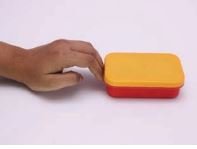
Q. In the figure, an object pushed on a table stops after sliding a distance. Which force is shown in the diagram?
(a) Gravitational force
(b) Frictional force
(c) Muscular force
(d) Magnetic force
Answer: (b) Frictional force
Explanation: Friction between object and table opposes motion.
Q. In the figure, animals are shown using force for movement. Which type of force is this?

(a) Frictional force
(b) Muscular force
(c) Gravitational force
(d) Magnetic force
Answer: (b) Muscular force
Explanation: Animals use muscular force for walking, running, flying, swimming.
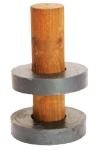
Q. In the figure, two ring magnets placed with like poles facing each other remain floating apart. What does this show?
(a) Unlike poles repel each other
(b) Like poles repel each other
(c) Magnets lose force when floating
(d) Magnets attract only metals
Answer: (b) Like poles repel each other
Explanation: Repulsion occurs when similar poles face each other.
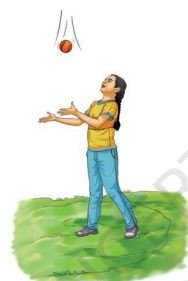
Q. In the Figure, an object thrown vertically upwards slows down, stops, and then falls straight down. Which force is illustrated?
(a) Electrostatic force
(b) Magnetic force
(c) Gravitational force
(d) Muscular force
Answer: (c) Gravitational force
Explanation: Gravity causes vertical motion — slowing up, accelerating down.
Q. The spring balance has a maximum range of:
(a) 5 N
(b) 10 N
(c) 15 N
(d) 20 N
Answer: (b) 10 N
Explanation: The scale shown measures from 0 to 10 N.
Q. An object of mass 1 kg has different weights on Earth, Moon, and Jupiter. What does this show?
(a) Mass changes with location
(b) Weight changes with gravitational force
(c) Both mass and weight change
(d) Neither mass nor weight changes
Answer: (b) Weight changes with gravitational force
Explanation: Mass remains constant, but weight varies with gravity.
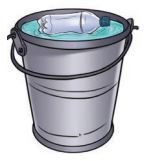
Q. In Figure, the bottle immersed in water rises upward. Which force is responsible?
(a) Gravitational force
(b) Buoyant force
(c) Frictional force
(d) Electrostatic force
Answer: (b) Buoyant force
Explanation: Buoyant force acts upward against gravity.
Disclaimer: The content that is present on our website is based on the NCERT Class 8 Science textbook and is provided for educational purposes only. All the content and images have been taken from Science Class 8 NCERT Textbook. Images and content shown above are the property of individual organizations and are used here for reference purposes only. To make it easy to understand, some of the content and images are generated by AI and cross-checked by the teachers.