
Practice How Nature Works in Harmony Class 8 MCQs to strengthen your understanding of the relationships and balance found in nature. These questions help students revise important concepts about ecosystems, living organisms, natural resources, and how different parts of nature work together.
How Nature Works in Harmony Class 8 MCQ
Conceptual Recall MCQ
Q. The living components of a habitat are called ________.
A. Abiotic components
B. Biotic components
C. Physical components
D. Chemical components
Answer: B. Biotic components
Q. A group of fish of the same kind living together in a pond is called:
A. Community
B. Population
C. Habitat
D. Species
Answer: B. Population
Q. In a grassland ecosystem, which sequence correctly represents a food chain?
A. Grass → Hare → Leopard
B. Grass → Frog → Grasshopper → Eagle
C. Grasshopper → Grass → Snake → Eagle
D. Eagle → Snake → Frog → Grasshopper
Answer: A. Grass → Hare → Leopard
Q. Which of the following is an example of mutualism in an ecosystem?
A. Orchid growing on a tree
B. Tick feeding on a dog
C. Honeybee collecting nectar from a flower
D. Insects damaging crops
Answer: C. Honeybee collecting nectar from a flower
Q. Which of the following is NOT a benefit provided by forests?
A. Fresh air and fertile soil
B. Timber and medicines
C. Slowing down storms and floods
D. Internet connectivity
Answer: D. Internet connectivity
Q. Which of the following is a human-made ecosystem?
A. Forest
B. Desert
C. Fish pond
D. Ocean
Answer: C. Fish pond
Application‑Based MCQ
Q. A snake comes out at night while a rodent is active during the day in the same forest. What does this show?
A. They compete for sunlight.
B. They use the same habitat differently.
C. They live in different habitats.
D. They depend only on abiotic factors.
Answer: B. They use the same habitat differently.
Q. If all organisms in a habitat were of the same type, what would most likely happen?
A. They would live peacefully without competition
B. They would compete for the same resources, leading to scarcity
C. They would produce more oxygen
D. They would form a larger community
Answer: B. They would compete for the same resources, leading to scarcity
Q. If humans practice overfishing in Pond A, what long‑term ecological effect may occur?
A. Increase in dragonflies, decrease in pollinators, reduced seed production
B. Decrease in dragonflies, increase in pollinators, more seed production
C. No change in ecosystem balance
D. Fish population will recover automatically
Answer: A. Increase in dragonflies, decrease in pollinators, reduced seed production
Q. In a crop field pyramid (Millet → Mouse → Eagle), if the number of mice decreases drastically, what will most likely happen?
A. Eagle population will increase
B. Eagle population will decline due to lack of food
C. Millet population will decrease
D. Pyramid structure will remain unchanged
Answer: B. Eagle population will decline due to lack of food
Q. Pollution in a pond kills many plants. Which of the following is the correct sequence of changes that will occur?
A. Plants die → Oxygen increases → Fish increase → Insects decrease
B. Plants die → Oxygen decreases → Fish die → Insects increase
C. Plants die → Oxygen increases → Fish die → Insects increase
D. Plants die → Oxygen decreases → Fish increase → Insects decrease
Answer: B. Plants die → Oxygen decreases → Fish die → Insects increase
Q2. If mangrove trees in the Sundarbans are cut for fuelwood, which of the following consequences is most likely?
A. Strong winds and waves will hit coastal areas harder
B. Oxygen levels in the air will increase
C. Wildlife population will grow rapidly
D. Farmers will stop using pesticides
Answer: A. Strong winds and waves will hit coastal areas harder
Q. A farmer grows only wheat on the same land every year. Which problem is most likely to occur?
A. Increase in biodiversity
B. Soil degradation and loss of pollinators
C. Rise in humus content
D. Natural pest control
Answer: B. Soil degradation and loss of pollinators
Assertion–Reason MCQ
Q. Assertion (A): Elephants often enter farms and villages in some parts of India.
Reason (R): Loss of forest habitat forces elephants to search for food and water in human areas.
A. Both A and R are true, and R is the correct explanation of A.
B. Both A and R are true, but R is not the correct explanation of A.
C. A is true, but R is false.
D. A is false, but R is true.
Answer: A. Both A and R are true, and R is the correct explanation of A.
Q. Assertion (A): Pollination is essential for the formation of fruits and seeds.
Reason (R): Pollen grains must reach the carpels for fertilization to occur.
A. Both A and R are true, and R is the correct explanation of A
B. Both A and R are true, but R is not the correct explanation of A
C. A is true, R is false
D. A is false, R is true
Answer: A. Both A and R are true, and R is the correct explanation of A
Q. Assertion (A): Abiotic components like sunlight and soil are equally important as biotic components in an ecosystem.
Reason (R): Abiotic components directly influence life processes such as photosynthesis, respiration, and reproduction.
A. Both A and R are true, and R is the correct explanation of A
B. Both A and R are true, but R is not the correct explanation of A
C. A is true, R is false
D. A is false, R is true
Answer: A. Both A and R are true, and R is the correct explanation of A
Q. Assertion (A): Food webs are more stable than food chains.
Reason (R): In food webs, organisms have multiple feeding relationships, reducing dependence on a single source.
A. Both A and R are true, and R is the correct explanation of A
B. Both A and R are true, but R is not the correct explanation of A
C. A is true, R is false
D. A is false, R is true
Answer: A. Both A and R are true, and R is the correct explanation of A
Q. Assertion (A): Competition among organisms helps maintain balance in ecosystems.
Reason (R): Without competition, one species may multiply too much and disturb the ecosystem.
A. Both A and R are true, and R is the correct explanation of A.
B. Both A and R are true, but R is not the correct explanation of A.
C. A is true, but R is false.
D. A is false, but R is true.
Answer: A. Both A and R are true, and R is the correct explanation of A.
Q. Assertion (A): Ecosystems offer aesthetic and recreational value to humans.
Reason (R): They provide places like parks, lakes, and forests where people can relax and enjoy nature.
A. Both A and R are true, and R is the correct explanation of A.
B. Both A and R are true, but R is not the correct explanation of A.
C. A is true, but R is false.
D. A is false, but R is true.
Answer: A. Both A and R are true, and R is the correct explanation of A.
Q. Assertion (A): The Green Revolution increased food production in India.
Reason (R): It relied on tractors, machines, synthetic fertilisers, and pesticides.
A. Both A and R are true, and R is the correct explanation of A.
B. Both A and R are true, but R is not the correct explanation of A.
C. A is true, but R is false.
D. A is false, but R is true.
Answer: A. Both A and R are true, and R is the correct explanation of A.
Case/Experiment‑Based MCQ
Q. Students explored two habitats — a pond and a forest — and listed living and non‑living components. They found fish, frogs, and algae in the pond, and trees, birds, and soil in the forest.
What conclusion can be drawn?
A. Only ponds have biotic components.
B. Both habitats have biotic and abiotic components.
C. Forests have only abiotic components.
D. Ponds have no abiotic components.
Answer: B. Both habitats have biotic and abiotic components.
Q. In a school garden, students marked a 1 m × 1 m area. They counted 20 grass plants, 5 rose plants, 10 ants, and 2 butterflies.
Question: What is the population of grass plants?
A. 5
B. 10
C. 20
D. 2
Answer: C. 20
Question: What do all these organisms together form?
A. A single population
B. A community
C. Abiotic components
D. A habitat
Answer: B. A community
Q. Researchers studied two overlapping ecosystems: a river (aquatic) and farmland (terrestrial). They observed that fertilizer runoff from farmland increased algae in the river, reducing oxygen for fish.
Question: Which type of interaction is shown here?
A. Biotic–biotic
B. Abiotic–abiotic
C. Biotic–abiotic
D. Community–population
Answer: C. Biotic–abiotic
Question: What long‑term effect may occur if this continues?
A. Fish population decline, affecting food chains
B. Increase in fish population
C. No effect on ecosystem balance
D. More oxygen available for fish
Answers: A. Fish population decline, affecting food chains
Q. Researchers observed mushrooms growing on dead logs during the rainy season. Beetles and flies were also found on animal dung nearby.
Question: What role do these organisms play in the ecosystem?
A. Producers
B. Consumers
C. Decomposers
D. Carnivores
Answer: C. Decomposers
Question: Why are decomposers essential for plants?
A. They provide shelter
B. They recycle nutrients back into soil
C. They increase sunlight
D. They reduce rainfall
Answers: B. They recycle nutrients back into soil
Q. In the 1980s, India exported frog legs of the Indian bullfrog. This led to a decline in frog populations. Since frogs eat insects, their reduced numbers caused a rise in agricultural pests. Farmers then used more synthetic pesticides, which harmed soil, water, and human health.
Which of the following conclusions can be drawn from this case?
A. Overharvesting frogs increased pest population.
B. More pesticides were used, harming the environment.
C. Government banned frog leg export to prevent ecological damage.
D. All of the above.
Answer: D. All of the above
Q. The Sundarbans, the world’s largest mangrove forest, was declared a UNESCO World Heritage Site in 1987. It protects humans by slowing storms and floods, absorbs carbon dioxide, and supports endangered species. However, cutting trees, illegal hunting, and pollution threaten this ecosystem.
Which of the following actions can help protect the Sundarbans?
A. Banning tree cutting and illegal hunting
B. Reducing industrial waste and sewage pollution
C. Conserving endangered species through protected areas
D. All of the above
Answer: D. All of the above
Q. A farmer uses synthetic fertilisers and pesticides for many years. Over time, soil fertility decreases, friendly microorganisms die, and humus content reduces. Pests become resistant, and soil erosion increases.
Which of the following practices can help solve these problems?
A. Using organic manure and compost
B. Practising crop rotation instead of monoculture
C. Reducing heavy irrigation and repeated ploughing
D. All of the above
Answer: D. All of the above
Diagram/Visual‑Based MCQ
Q. Look at a diagram showing a pond and a forest. Which statement correctly compares them?
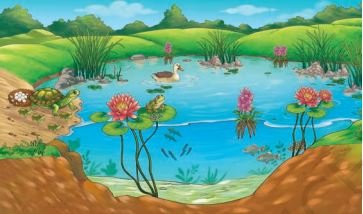
A. Both have living and non‑living parts but different conditions for survival.
B. Only the pond has living organisms.
C. Only the forest has non‑living components.
D. Both have identical living beings.
Answer: A. Both have living and non‑living parts but different conditions for survival.
Q. Refer to the figure: Pollination. Which of the following correctly matches the agent with pollination?
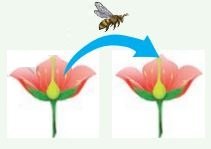
A. Wind – carries pollen grains
B. Soil – absorbs pollen grains
C. Water – destroys pollen grains
D. Sepals – produce pollen grains
Answer: A. Wind – carries pollen grains
Q. In Pond A (with fish), seed production was higher than Pond B (without fish). Which chain of interactions best explains this?
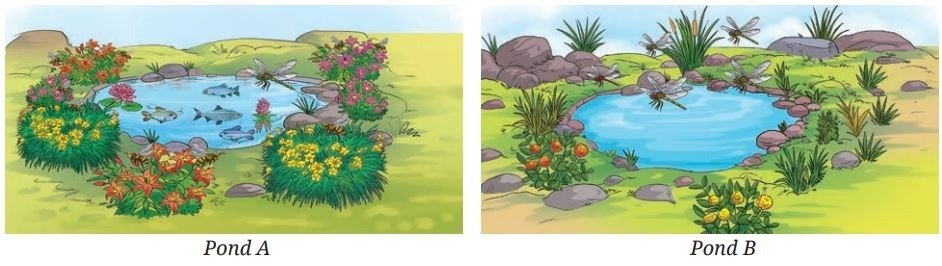
A. Fish → fewer dragonflies → more pollinators → more seeds
B. Fish → more dragonflies → fewer pollinators → more seeds
C. Fish → more pollinators → fewer dragonflies → fewer seeds
D. Fish → fewer pollinators → more dragonflies → fewer seeds
Answer: A. Fish → fewer dragonflies → more pollinators → more seeds
Q. Refer to the figure: Overlap of terrestrial and aquatic ecosystems. If farmland expands and river water is diverted for irrigation, which ecosystem interaction will be most affected?
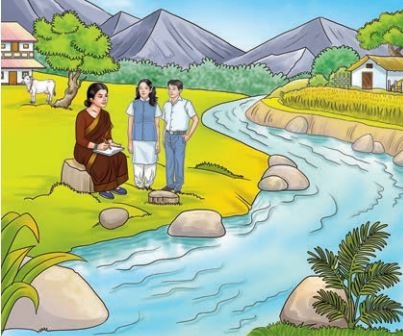
A. Aquatic ecosystem balance due to reduced water flow
B. Forest ecosystem balance due to more trees
C. Grassland ecosystem balance due to more rainfall
D. Mountain ecosystem balance due to higher altitude
Answer: A. Aquatic ecosystem balance due to reduced water flow
Q. Refer to the figure: Food chain represented as a pyramid. Which statement best explains the pyramid shape?
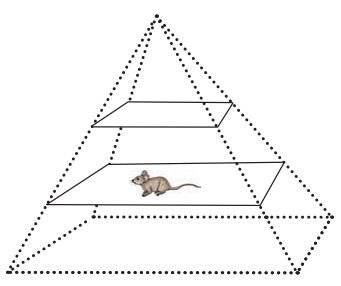
A. Number of organisms decreases at higher trophic levels
B. Energy increases at higher trophic levels
C. Producers are fewer than carnivores
D. All trophic levels have equal numbers
Answer: A. Number of organisms decreases at higher trophic levels
Q. Refer to the figure (One change leads to another). If fish die in the pond, what will be the immediate effect?
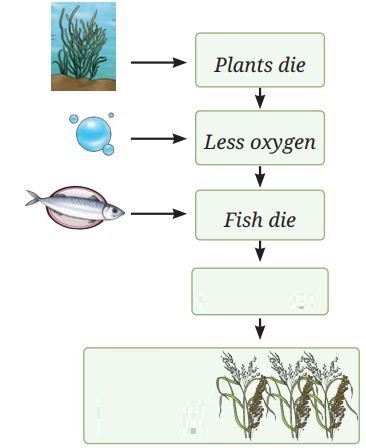
A. Oxygen level will increase
B. Insects will multiply
C. Plants will grow faster
D. Pesticide use will decrease
Answer: B. Insects will multiply
Q. Refer to the figure (Sundarbans mangrove forest). What is the main ecological role of mangrove trees shown in the diagram?
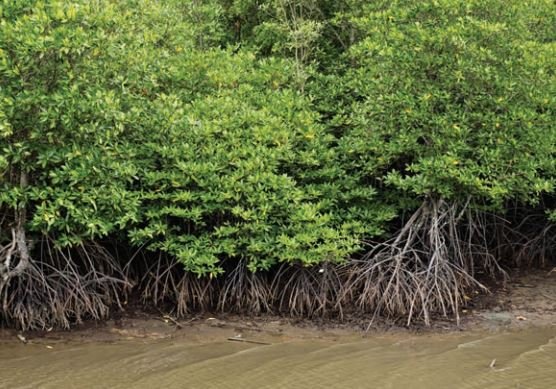
A. Increase soil erosion
B. Absorb carbon dioxide and release oxygen
C. Reduce biodiversity
D. Spread invasive species
Answer: B. Absorb carbon dioxide and release oxygen
Q. Refer to the figure (Beetle feeding on pests). What does this diagram show?
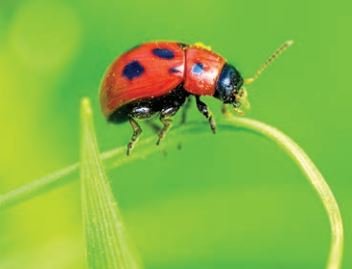
A. Natural control of pests by predators
B. Soil erosion due to over-irrigation
C. Monoculture farming
D. Use of synthetic pesticides
Answer: A. Natural control of pests by predators
Disclaimer: The content that is present on our website is based on the NCERT Class 8 Science textbook and is provided for educational purposes only. All the content and images have been taken from Science Class 8 NCERT Textbook. Images and content shown above are the property of individual organizations and are used here for reference purposes only. To make it easy to understand, some of the content and images are generated by AI and cross-checked by the teachers.