
Practice important Class 8 MCQs on The Parliamentary System, Legislature and Executive with answers. These questions help students understand the main features of India’s parliamentary system, the roles of the Parliament, Legislature, and Executive, and the relationship between different organs of government. The MCQs are prepared in simple language and are useful for Class 8 exams, school tests, revision, and quick practice.
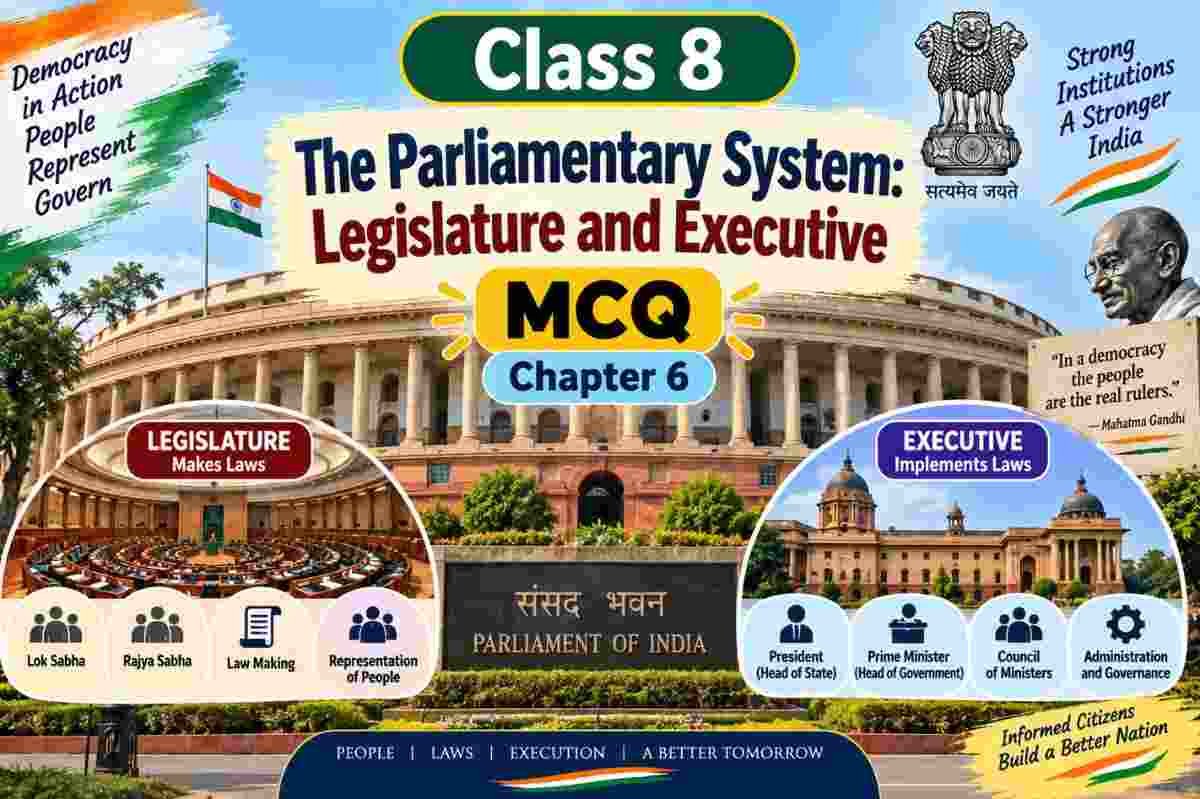
The Parliamentary System Legislature and Executive Class 8 MCQ
Conceptual Recall
Q. What is the maximum number of members envisaged for the Lok Sabha by the Constitution?
a) 500
b) 550
c) 600
d) 552
Answer: b) 550
Q. Who presides over the Rajya Sabha?
a) The Speaker
b) The Vice President of India
c) The Prime Minister
d) The President of India
Answer: b) The Vice President of India
Q. Which of the following is a constitutional function of the Parliament?
a) Conducting local body elections
b) Electing the President and Vice President
c) Appointing judges directly
d) Managing municipal corporations
Answer: b) Electing the President and Vice President
Q. What is the purpose of the Question Hour in the Lok Sabha?
a) To allow MPs to ask ministers about government policies and actions
b) To pass bills without debate
c) To elect the Speaker of the Lok Sabha
d) To approve the annual budget
Answer: a) To allow MPs to ask ministers about government policies and actions
Q. Who appoints the Prime Minister of India?
a) The Vice President
b) The President
c) The Lok Sabha Speaker
d) The Rajya Sabha Chairperson
Answer: b) The President
Q. What is the primary role of the Judiciary in India?
a) Making laws for the country
b) Enforcing laws passed by Parliament
c) Interpreting laws and safeguarding the Constitution
d) Preparing the annual budget
Answer: c) Interpreting laws and safeguarding the Constitution
Q. Which of the following states has a bicameral legislature?
a) Rajasthan
b) Uttar Pradesh
c) Gujarat
d) Madhya Pradesh
Answer: b) Uttar Pradesh
Application‑Based
Q. Why did the Constitution makers decide on a bicameral legislature instead of a single house?
a) To reduce the number of MPs
b) To balance national unity with state interests
c) To avoid direct elections
d) To follow the American presidential system
Answer: b) To balance national unity with state interests
Q. The Sengol was placed near the Speaker’s chair in the Lok Sabha. What does it symbolise?
a) Military power of rulers
b) Dharma and righteous rule
c) Wealth and prosperity
d) Authority of colonial governance
Answer: b) Dharma and righteous rule
Q. The Right to Education Act (RTE), 2009, was based on Article 21A of the Constitution. Which principle does this reflect?
a) Education is part of the Right to Life
b) Education is only for literate citizens
c) Education is optional for children
d) Education is a privilege, not a right
Answer: a) Education is part of the Right to Life
Q. The Standing Committee on Health recommended creating separate Ayush departments in states. What does this show about the role of committees?
a) They scrutinise government activities and suggest improvements
b) They directly pass laws without Parliament
c) They elect the Prime Minister
d) They manage local body elections
Answer: a) They scrutinise government activities and suggest improvements
Q. In 1956, Railway Minister Lal Bahadur Shastri resigned after a train accident, even though he was not directly blamed. What principle did this action reflect?
a) Collective responsibility
b) Moral responsibility of ministers
c) Judicial accountability
d) Financial accountability
Answer: b) Moral responsibility of ministers
Q. If Parliament passes a law that violates Fundamental Rights, what can the Judiciary do?
a) Approve the law without review
b) Strike down or modify the law to protect the Constitution
c) Enforce the law strictly
d) Refer the matter to the Prime Minister
Answer: b) Strike down or modify the law to protect the Constitution
Q. If the Rajya Sabha records only 35% productivity due to disruptions, what does this imply?
a) The House functioned for only about one‑third of its scheduled time
b) The House passed all bills without debate
c) The House was dissolved permanently
d) The House met for extra hours daily
Answer: a) The House functioned for only about one‑third of its scheduled time
Assertion–Reason
Q. Assertion (A): India practices federalism.
Reason (R): Power is distributed between the centre, states, and local governments.
a) Both A and R are true, and R is the correct explanation of A.
b) Both A and R are true, but R is not the correct explanation of A.
c) A is true, R is false.
d) A is false, R is true.
Answer: a) Both A and R are true, and R is the correct explanation of A.
Q. Assertion (A): Translation services in Parliament make discussions accessible to all.
Reason (R): India has linguistic diversity, and MPs must be able to understand debates in their own languages.
a) Both A and R are true, and R is the correct explanation of A.
b) Both A and R are true, but R is not the correct explanation of A.
c) A is true, R is false.
d) A is false, R is true.
Answer: a) Both A and R are true, and R is the correct explanation of A.
Q. Assertion (A): A bill must receive the President’s assent before becoming a law.
Reason (R): The President ensures that laws passed by Parliament align with constitutional provisions.
a) Both A and R are true, and R is the correct explanation of A.
b) Both A and R are true, but R is not the correct explanation of A.
c) A is true, R is false.
d) A is false, R is true.
Answer: a) Both A and R are true, and R is the correct explanation of A.
Q. Assertion (A): The Union Executive is accountable to the Lok Sabha.
Reason (R): Ministers must justify their actions and decisions during Question Hour and committee reviews.
a) Both A and R are true, and R is the correct explanation of A.
b) Both A and R are true, but R is not the correct explanation of A.
c) A is true, R is false.
d) A is false, R is true.
Answer: a) Both A and R are true, and R is the correct explanation of A.
Q. Assertion (A): The Prime Minister is the de facto executive authority in India.
Reason (R): The Prime Minister leads the Council of Ministers, shapes national policies, and coordinates ministries.
a) Both A and R are true, and R is the correct explanation of A.
b) Both A and R are true, but R is not the correct explanation of A.
c) A is true, R is false.
d) A is false, R is true.
Answer: a) Both A and R are true, and R is the correct explanation of A.
Q. Assertion (A): Separation of powers ensures that no organ of government becomes too powerful.
Reason (R): The Legislature, Executive, and Judiciary check each other’s actions.
a) Both A and R are true, and R is the correct explanation of A.
b) Both A and R are true, but R is not the correct explanation of A.
c) A is true, R is false.
d) A is false, R is true.
Answer: a) Both A and R are true, and R is the correct explanation of A.
Q. Assertion (A): Regular absenteeism and angry debates reduce the effectiveness of legislatures.
Reason (R): Legislatures are meant to be spaces for thoughtful debates and lawmaking in the interest of the people.
a) Both A and R are true, and R is the correct explanation of A.
b) Both A and R are true, but R is not the correct explanation of A.
c) A is true, R is false.
d) A is false, R is true.
Answer: a) Both A and R are true, and R is the correct explanation of A.
Case Study
Q. Case: After independence, India adopted parliamentary democracy inspired partly by Britain and partly by its own traditions like village panchayats and ancient republics.
What does this case highlight about India’s Constitution?
a) It blended global influences with indigenous traditions.
b) It copied only the American system.
c) It rejected all foreign ideas.
d) It allowed only direct elections.
Answer: a) It blended global influences with indigenous traditions.
Q. Case: The Union Executive consists of the President, Vice President, and Council of Ministers headed by the Prime Minister. These ministers are collectively responsible to the Lok Sabha.
What democratic principle does this arrangement reflect?
a) Collective responsibility and accountability to the people
b) Concentration of power in the President
c) Independence of ministers from Parliament
d) Direct election of ministers by citizens
Answer: a) Collective responsibility and accountability to the people
Q. Case: The RTE Act was introduced as a bill, referred to a committee, debated, passed in Parliament, and finally received Presidential assent before becoming law.
What does this case highlight about the lawmaking process in India?
a) It is elaborate and ensures scrutiny before laws are enacted.
b) It allows bills to become laws without debate.
c) It requires only the Prime Minister’s approval.
d) It bypasses the President’s assent.
Answer: a) It is elaborate and ensures scrutiny before laws are enacted.
Q. Case: In 2011, Sushma Swaraj criticised the government using poetry, and Dr. Manmohan Singh replied with another verse.
What does this case highlight about parliamentary debates?
a) They can use humour and poetry while discussing serious issues.
b) They are always formal and without emotion.
c) They only involve financial discussions.
d) They exclude opposition leaders.
Answer: a) They can use humour and poetry while discussing serious issues.
Q. Case: Civil servants (bureaucrats) work under ministers to implement laws and policies, ensuring smooth functioning of government departments.
What does this case highlight about the role of civil servants?
a) They provide continuity and support in governance.
b) They directly make laws in Parliament.
c) They elect the Prime Minister.
d) They preside over the Rajya Sabha.
Answer: a) They provide continuity and support in governance.
Q. Case: Education is in the Concurrent List. When the Union Government passed the RTE Act, it became applicable across all states.
What does this case highlight about the Concurrent List?
a) Union laws override state laws in case of conflict.
b) States alone can legislate on education.
c) Only local bodies can legislate on education.
d) Education is not part of the Constitution.
Answer: a) Union laws override state laws in case of conflict.
Q. Case: Citizens use digital platforms to share views on policies and engage with MLAs during lawmaking.
What does this case highlight about strengthening democracy?
a) Informed and engaged citizens improve legislative functioning
b) Citizens directly pass laws without legislatures
c) Citizens elect the Speaker of the Vidhan Sabha
d) Citizens control the budget independently
Answer: a) Informed and engaged citizens improve legislative functioning
Diagram/Visual‑Based
Q. Which of the following statements correctly distinguishes the two houses?
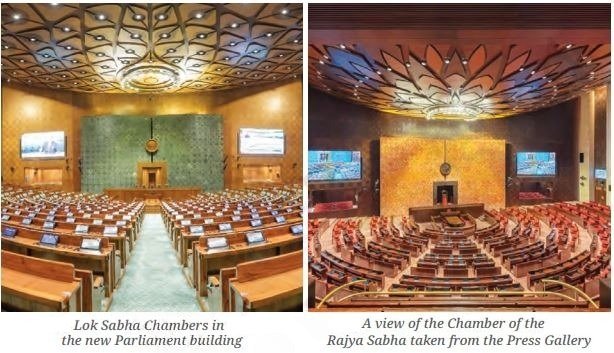
a) Lok Sabha members are elected directly; Rajya Sabha members are elected indirectly.
b) Lok Sabha is permanent; Rajya Sabha is dissolved every 5 years.
c) Lok Sabha represents states; Rajya Sabha represents the whole nation.
d) Lok Sabha has nominated members; Rajya Sabha has none.
Answer: a) Lok Sabha members are elected directly; Rajya Sabha members are elected indirectly.
Q. Which of the following is a legislative function of Parliament?
a) Implementing laws through ministries
b) Making laws for the country
c) Conducting translation services
d) Presiding over debates
Answer: b) Making laws for the country
Q. The figure shows the process of lawmaking; note on Money Bills. Which of the following statements about a Money Bill is correct?
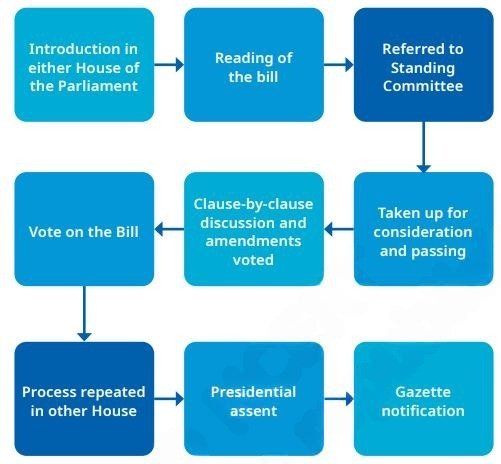
a) It can be introduced in either House of Parliament.
b) It can only be introduced in the Lok Sabha with the President’s recommendation.
c) It requires approval only from the Rajya Sabha.
d) It does not need Presidential assent.
Answer: b) It can only be introduced in the Lok Sabha with the President’s recommendation.
Q. The figure shows Standing Committee reports; the annual budget is a key financial accountability tool. Why does Parliament monitor government expenditure through the annual budget?
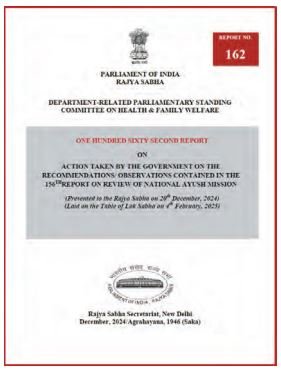
a) Because the government spends public money and must justify its use
b) Because the Prime Minister alone decides the budget
c) Because the Rajya Sabha is dissolved every 2 years
d) Because MPs are not allowed to ask questions
Answer: a) Because the government spends public money and must justify its use
Q. Which of the following is a key difference between Legislature and Executive?
a) Legislature makes laws; Executive enforces laws.
b) Legislature enforces laws; Executive makes laws.
c) Both Legislature and Executive only pass budgets.
d) Legislature and Executive are identical in composition.
Answer: a) Legislature makes laws; Executive enforces laws.
(Fig. 6.11 shows Union vs State government structures.)
Q. The figure shows Union vs State government structures. Which of the following is a correct difference between Union and State governments?
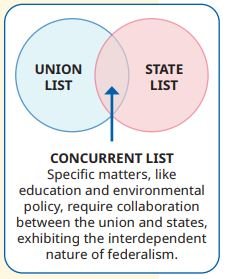
a) Union head is the President; State head is the Governor
b) Union executive authority is the Prime Minister; State executive authority is the Chief Minister
c) Union makes laws on Union & Concurrent Lists; State makes laws on State & Concurrent Lists
d) All of the above
Answer: d) All of the above
(Fig. 6.13 shows Monsoon Session disruptions; table shows sessions and sittings.)
Q. Which of the following is NOT one of the three regular sessions of Parliament?
a) Budget Session
b) Monsoon Session
c) Winter Session
d) Spring Session
Answer: d) Spring Session
Disclaimer: The content that is present on our website is based on the NCERT Class 8 Social Science textbook and is provided for educational purposes only. All the content and images have been taken from Socail Science Class 8 NCERT Textbook. Images and content shown above are the property of individual organizations and are used here for reference purposes only. To make it easy to understand, some of the content and images are generated by AI and cross-checked by the teachers.