
Practice Factors of Production Class 8 MCQs with answers to understand the basic concepts of land, labour, capital, and entrepreneurship. These important questions are designed in simple language to help students learn how different resources are used to produce goods and services. This MCQ practice is useful for Class 8 exams, school tests, revision, and quick preparation.
Factors of Production Class 8 MCQ with Answers
Conceptual Recall
Q. Which of the following is NOT a factor of production?
a) Land
b) Labour
c) Capital
d) Voting rights
Answer: d) Voting rights
Q. Which of the following is included under “land” in economics?
a) Soil, forests, minerals, water
b) Only geographical land
c) Only agricultural fields
d) Only rented property
Answer: a) Soil, forests, minerals, water
Q. What is the adult literacy rate in India as of 2023 (World Bank estimates)?
a) 85% males, 70% females
b) 70% males, 85% females
c) 90% males, 60% females
d) 100% males, 80% females
Answer: a) 85% males, 70% females
Q. Which of the following is NOT considered capital in economics?
a) Machinery
b) Office buildings
c) Personal savings
d) Sunlight
Answer: d) Sunlight
Q. What does “technology” mean in economics?
a) Use of natural resources only
b) Application of scientific knowledge in production
c) Only machines used in factories
d) Only digital communication tools
Answer: b) Application of scientific knowledge in production
Q. What is the main responsibility of producers towards natural resources?
a) Use them as quickly as possible
b) Reduce waste, avoid pollution, and protect the environment
c) Focus only on profit
d) Ignore future generations
Answer: b) Reduce waste, avoid pollution, and protect the environment
Application‑Based
Q. Ratna started her restaurant Pause Point by renting space, hiring staff, and buying equipment. Which factor of production does “hiring staff” represent?
a) Land
b) Labour
c) Capital
d) Entrepreneurship
Answer: b) Labour
Q. A software developer uses knowledge of coding to design applications. Which factor of production does this represent?
a) Land
b) Labour (human capital)
c) Capital
d) Entrepreneurship
Answer: b) Labour (human capital)
Q. India has 65% of its population below 35 years. What opportunity does this provide?
a) Demographic dividend through a young, productive workforce
b) Decline in literacy rates
c) Reduction in healthcare facilities
d) Elimination of entrepreneurship
Answer: a) Demographic dividend through a young, productive workforce
Q. Ratna took a loan from the bank to start her restaurant and paid interest. What does “interest” mean in this context?
a) Profit earned by the business
b) Money paid by borrower to lender for using funds
c) Dividend given to shareholders
d) Rent paid for land
Answer: b) Money paid by borrower to lender for using funds
Q. A student uses SWAYAM to learn robotics while continuing school. What does this example show about technology?
a) It eliminates geographical barriers in accessing knowledge and skills
b) It replaces teachers completely
c) It reduces literacy rates
d) It only benefits urban students
Answer: a) It eliminates geographical barriers in accessing knowledge and skills
Q. A company provides fair wages, safe working conditions, and paid leave to its employees. Which responsibility is this fulfilling?
a) Financial accountability
b) Workplace rights and protections
c) Environmental sustainability
d) Technological innovation
Answer: b) Workplace rights and protections
Assertion–Reason
Q. Assertion (A): Technology is considered a crucial enabler in production.
Reason (R): It helps enterprises produce more goods with the same or fewer inputs.
a) Both A and R are true, and R is the correct explanation of A.
b) Both A and R are true, but R is not the correct explanation of A.
c) A is true, R is false.
d) A is false, R is true.
Answer: a) Both A and R are true, and R is the correct explanation of A.
Q, Assertion (A): Education and training improve the quality of labour.
Reason (R): They enhance skills, knowledge, and efficiency, making workers more productive.
a) Both A and R are true, and R is the correct explanation of A.
b) Both A and R are true, but R is not the correct explanation of A.
c) A is true, R is false.
d) A is false, R is true.
Answer: a) Both A and R are true, and R is the correct explanation of A.
Q. Assertion (A): Japan’s concept of kaizen contributed to its economic success.
Reason (R): It emphasises continuous improvement and high standards of work.
a) Both A and R are true, and R is the correct explanation of A.
b) Both A and R are true, but R is not the correct explanation of A.
c) A is true, R is false.
d) A is false, R is true.
Answer: a) Both A and R are true, and R is the correct explanation of A.
Q. Assertion (A): Entrepreneurs contribute to society by creating innovative products and services.
Reason (R): They combine factors of production, take risks, and solve problems.
a) Both A and R are true, and R is the correct explanation of A.
b) Both A and R are true, but R is not the correct explanation of A.
c) A is true, R is false.
d) A is false, R is true.
Answer: a) Both A and R are true, and R is the correct explanation of A.
Q. Assertion (A): Supply chain disruptions can halt production.
Reason (R): Businesses often rely on inputs from far‑off places, and delays affect the entire process.
a) Both A and R are true, and R is the correct explanation of A.
b) Both A and R are true, but R is not the correct explanation of A.
c) A is true, R is false.
d) A is false, R is true.
Answer: a) Both A and R are true, and R is the correct explanation of A.
Q. Assertion (A): Corporate Social Responsibility (CSR) motivates businesses to address social and environmental concerns.
Reason (R): CSR includes reducing pollution, supporting communities, and treating employees with respect.
a) Both A and R are true, and R is the correct explanation of A.
b) Both A and R are true, but R is not the correct explanation of A.
c) A is true, R is false.
d) A is false, R is true.
Answer: a) Both A and R are true, and R is the correct explanation of A.
Case Study
Q. Case: A group surveyed their locality and found 13 grocery shops, 8 restaurants, 15 vegetable vendors, and 4 mobile repair shops.
Question: What does this case highlight about economic life?
a) Different businesses combine various inputs to provide goods and services.
b) Only government provides services.
c) Shops exist without using any resources.
d) Economic activities depend only on land.
Answer: a) Different businesses combine various inputs to provide goods and services.
Q. Case: A civil engineering student learns design principles in class and applies them during training at construction sites.
Question: What does this case highlight about human capital?
a) Practical training and education together enhance efficiency and problem‑solving.
b) Only classroom learning is sufficient for skill development.
c) Engineers do not require training.
d) Human capital depends only on physical strength.
Answer: a) Practical training and education together enhance efficiency and problem‑solving.
Q. Case: Generations of sculptors worked on temples, practising regularly and learning new techniques, considering work as worship.
Question: What does this case highlight about India’s ancient skill heritage?
a) Work was seen as devotion, blending art and knowledge.
b) Sculptors worked only for money.
c) Skills were not passed across generations.
d) Ancient India lacked craftsmanship.
Answer: a) Work was seen as devotion, blending art and knowledge.
Q. Case: J.R.D. Tata started India’s first airline, expanded industries, cared for workers, and believed businesses should serve society.
Question: What lesson can young entrepreneurs learn from J.R.D. Tata?
a) Entrepreneurship is only about profit.
b) Vision, honesty, and social responsibility strengthen business success.
c) Entrepreneurs should avoid taking risks.
d) Workers’ welfare is not important.
Answer: b) Vision, honesty, and social responsibility strengthen business success.
Q. Case: Agriculture and handicrafts rely more on labour, while semiconductor chips and satellites rely more on capital and machinery.
Question: What does this case highlight about factors of production?
a) Different sectors use different proportions of factors depending on the product.
b) All sectors depend only on land.
c) Labour is unnecessary in modern industries.
d) Capital is irrelevant in handicrafts.
Answer: a) Different sectors use different proportions of factors depending on the product.
Q. Case: Leather factories in Tamil Nadu provide jobs but pollute rivers and soil with waste.
Question: What does this case highlight about production responsibilities?
a) Economic growth must balance with environmental sustainability.
b) Pollution is unavoidable in production.
c) Workers alone are responsible for waste management.
d) Businesses should ignore environmental concerns.
Answer: a) Economic growth must balance with environmental sustainability.
Diagram/Visual‑Based
Q. Which of the following best explains the difference between labour and human capital?
a) Labour is basic effort; human capital is skilled, efficient labour.
b) Labour and human capital are identical.
c) Labour refers only to physical work; human capital refers only to machines.
d) Labour is land; human capital is capital.
Answer: a) Labour is basic effort; human capital is skilled, efficient labour.
Q. What was unique about India’s ancient stitched shipbuilding technique?
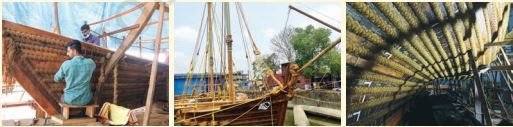
a) Ships were built using nails and iron sheets
b) Wooden planks were stitched with cords, making ships flexible
c) Ships were carved from single logs of wood
d) Ships were imported from Europe
Answer: b) Wooden planks were stitched with cords, making ships flexible
Q. Which of the following is NOT a task performed by an entrepreneur?
a) Identifying problems and solving them
b) Taking risks with money and time
c) Combining factors of production
d) Acting as the presiding officer of the Lok Sabha
Answer: d) Acting as the presiding officer of the Lok Sabha
Q. Figure 1 shows recycling wastewater; Figure 2 shows recycled products as inputs. Which of the following practices reflects responsible use of resources?
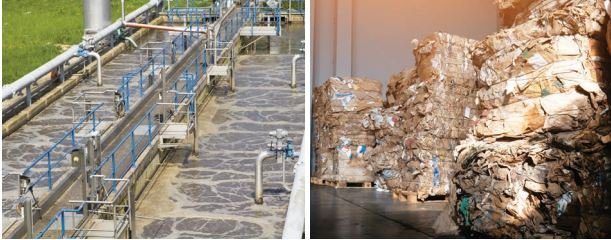
a) Recycling industrial wastewater before releasing it
b) Dumping waste directly into rivers
c) Ignoring pollution caused by old smartphones
d) Overusing land without replenishment
Answer: a) Recycling industrial wastewater before releasing it
Disclaimer: The content that is present on our website is based on the NCERT Class 8 Social Science textbook and is provided for educational purposes only. All the content and images have been taken from Socail Science Class 8 NCERT Textbook. Images and content shown above are the property of individual organizations and are used here for reference purposes only. To make it easy to understand, some of the content and images are generated by AI and cross-checked by the teachers.