
The Colonial Era in India Class 8 Notes explain how the British established and expanded their rule in India and how colonial rule changed Indian society, economy, education, industries and administration. These notes cover important topics such as the decline of Indian industries, early resistance movements, the Great Rebellion of 1857, and the legacy of colonialism. The chapter is explained in very easy language to help Class 8 students understand the topic and prepare for exams.
The Colonial Era in India Class 8 Notes
What is colonialism?
Colonialism means when a powerful country takes control of another country or territory and rules it mainly for its own benefit.
The powerful country is called the coloniser, while the country being controlled is called the colony.
Early Colonialism
Colonialism is very old. It started from ancient times; that time the powerful kings and empires took control of other lands. Later, some empires want to spread Christianity and Islam; they want to expand their political control over the different regions. So, they also stated colonialism.
European Colonialism
From the 15th century, European countries started exploring other places; they wanted new lands. The main European countries are:
- Portugal
- Spain
- Britain
- France
- Netherlands
They established their colonies in many places, like Asia, Africa, the Americas, Australia and the Pacific Islands. They basically use war and force to take control of the other countries.
Why did Europeans want colonies?
There were many reasons.
- They wanted wealth: European countries wanted valuable goods such as spices, gold and other resources, and they wanted to sell their goods in new markets.
- They wanted more power: European countries were competing with each other. Every country wanted to become stronger than the others.
- They wanted to spread Christianity: some Europeans wanted to spread Christianity in the other land.
- They wanted to explore new places: European sailors wanted to find new lands and new sea routes.
What did the colonisers say?
European colonisers say that they are going to bring civilisation, progress and development to the people, but the colonial rule brings a lot of problems like.
- People lost their freedom.
- Their resources were taken.
- Their local traditions and culture were often affected.
- The colonisers gained many benefits, while the local people often suffered.
Resistance to Colonial Rule
- People are not allowed to accept foreign rule.
- They fought against the colonisers in many places.
- After World War II, colonial rule declined, and many colonies became independent countries.
- India was one of the countries that fought for independence from British rule.
Europeans in India
India Before the Europeans
India had trade with other countries for a very long time. Indian goods were very popular in many parts of the world, like –
- spices
- cotton
- ivory
- gems
- sandalwood
- teakwood
- Wootz Steel
India was a wealthy country and had an important position in international trade; because of this, India attracted European traders.
1. The Portuguese in India
Vasco da Gama Comes to India
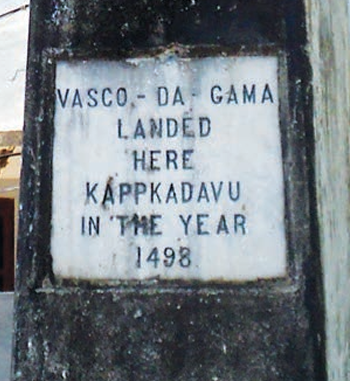
The Portuguese were the first Europeans to establish strong control in India. In 1498, Vasco da Gama reached Kappad near Kozhikode (Calicut) in Kerala. This was an important event in the history of European involvement in India. Portuguese want to control –
- The spice trade.
- They used their ships and weapons to control important ports.
- In 1510, they captured Goa.
- Goa became the main centre of Portuguese power in India.
The Cartaz System
The Portuguese started a system called the Cartaz system. In this system, if any ship wants to pass from their area, then they have to get the pass. This pass allows the ships to pass safely from the Portuguese-controlled area. This helped the Portuguese to control the sea trades like spice.
Portuguese Religious Policy
The Portuguese also interfered in religious matters, especially in Goa. In 1560, the Goa Inquisition was started. They punished the people who believed in other religions. They forcibly convert the people, and they destroy the religious places in India. The Goa Inquisition ended in 1812.
2. The Dutch in India
The Dutch came to India in the early 1600s. The main aim of the Dutch was trade. They are especially interested in the spice trade. The Dutch set up trading centres in different places in India, like
- Surat
- Bharuch
- Cochin (Kochi)
- Nagapattinam
- Masulipatnam
The Dutch became competitors of the Portuguese. In 1741, the Dutch fought against Marthanda Varma, the ruler of Travancore. Marthanda Varma defeated the Dutch at the Battle of Colachel. This battle is called the Battle of Colachel.
The Battle of Colachel was an important victory because an Indian kingdom defeated a European power; after this defeat, the Dutch power in India became weaker.
3. The French in India
The French came to India after the Portuguese and Dutch. They established a trading centre at Surat in 1668. Their main centre later became Pondicherry (Puducherry). The French wanted to increase their trade and power in India.
Joseph Francois Dupleix was an important French governor in India. He wants to increase the power of French and introduce a new method to do this –
- He started to train the Indian soldiers in European military methods.
- He was supported by many Indian rulers.
- He always takes advantage when there is a fight between Indian rulers.
- Indian soldiers trained by Europeans were called sepoys.
What are Carnatic Wars?
When the French and British wanted to become more powerful in India. They fought against each other between 1746 and 1763. The French captured Madras in 1746, but later, the British defeated the French. After this war the French power in India became much weaker and was mainly limited to places such as Pondicherry and a few other settlements.
4. The British in India
The British first came to India as traders. In 1600, the East India Company received a royal charter from Queen Elizabeth. The East India Company set up trading centres at –
- Surat
- Madras
- Bombay
- Calcutta
In the 18th century, the British wanted to trade with India, but later they started taking political and military control.
The policy of Divide and Rule
The British use divide-and-rule policy to take control of the Indian kingdom where there is any fight between the Indian ruler they:
- supported one ruler against another
- interfered in disputes
- made agreements with Indian rulers
- used their army when needed
This helps the British to increase their power and control over India. This method is called “Divide and Rule”.
Battle of Plassey – 1757
The Battle of Plassey was a very important battle in India. The Nawab of Bengal, Siraj-ud-daulah, fought the British East India Company. The British army was led by Robert Clive.
Robert Clive made a secret agreement with Mir Jafar, who was an important commander of the Nawab.
Mir Jafar did not properly support Nawab Siraj-ud-daulah during the battle. Because of this, the British won the battle.
Why was Plassey important?
After the Battle of Plassey, the British became more powerful in Bengal, and it helped to raise the British power in India.
What is Subsidiary Alliance?
The British used the Subsidiary Alliance to control Indian states. In subsidiary alliances say that –
- The ruler had to keep British soldiers in his state.
- The ruler had to pay for these soldiers.
- The ruler could not freely make agreements with other countries.
- A British officer called a resident stayed in the ruler’s court.
In 1798, the Nizam of Hyderabad accepted the system. This system helped the British to control Indian states without directly ruling them.
What is the Doctrine of Lapse?
Lord Dalhousie started new rules, like any king cannot choose an adopted son to become the next ruler, because the British did not accept the adopted son as the ruler. So, the British took control of the state. This was called the Doctrine of Lapse.
Many Indian rulers were angry because the British were taking their states after the ruler died without a natural son. This increased anger against British rule and became one of the causes of the Revolt of 1857.
Famines Under British Rule
India suffered from several serious famines during British rule. A famine is a time when there is not enough food for many people.
1. Bengal Famine
Note: Famine means a serious shortage of food that causes many people to go hungry.
The Bengal Famine of 1770 was a very serious famine. In Bengal there was a food shortage. At the same time, heavy revenue demands made the situation more difficult for farmers. A very large number of people died.
2. Great Famine – 1876–78
Another major famine happened between 1876 and 1878. Many parts of India, particularly areas of the Deccan and southern India, were badly affected. Millions of people died. The British government policy becomes strong criticism.
Drain of Wealth
One of the major criticisms of British rule was the drain of wealth. This means that a large amount of India’s wealth was transferred to Britain instead of being used for the development of India. Many Indian thinkers studied this issue –
Dadabhai Naoroji
Dadabhai Naoroji was an Indian leader and thinker. He explained how British rule was taking wealth away from India. He called this the Drain of Wealth. He wrote a famous book called ‘Poverty and Un-British Rule in India’.
Romesh Chunder Dutt
Romesh Chunder Dutt also wrote about the economic problems caused by British rule. He explained how India’s wealth drained and how the Indian money went to Britain. For example:
- Indians paid taxes.
- Money was spent on the British army.
- British officials were paid from Indian revenue.
- Profits from trade went to Britain.
- Other payments were also made to Britain.
- As a result, much of India’s wealth did not remain in India.
What are the effects of British rule in India?
British rule changed India in many ways and caused serious problems. Some important effects were:
- India lost its political freedom.
- Indian resources were used for British benefit.
- Many people became poor.
- Heavy taxes created problems for farmers.
- India suffered from serious famines.
- Some Indian industries and traditional businesses became weaker.
- A large amount of wealth went from India to Britain.
These problems increased people’s anger against British rule. The struggle for freedom continued for many years, and India finally became independent in 1947.
Changing Landscapes
The expanding colonial rule impacted nearly every aspect of Indian life, as the rulers were convinced that India should be reshaped according to their ‘superior’ conceptions. Let us briefly look at a few of those impacts.
British rule changed many parts of Indian life. The British changed industries, government, education, and the economy mainly to serve their own interests.
1. Decline of Indian Industries
Before British rule, India was well known for textiles like cotton, silk, and wool. But the British imposed heavy taxes on Indian goods while keeping their own goods lightly taxed. This made it hard for Indian industries to compete.
Many artisans and weavers became poor, and other industries such as iron, steel, and paper also declined. As a result, India’s share of the world GDP dropped sharply during British rule.
2. Dismantling Traditional Governance
Before British rule, the Indian village had village councils. This council—
- solved disputes,
- managed community matters,
- organized roads and irrigation.
When the British rule came, many local systems were replaced with the centralized government. The aim of the British government is to collect taxes and maintain control.
3. Changing Indian Education
Before British rule, India had its own educational system, like pathalsas, madrasas, viharas, etc. The students learn reading, writing, arithmetic, and practical knowledge.
In 1835, Thomas B. Macaulay presented his own education system, which is known as Macaulay’s Education Policy. He believed the European education system is better than traditional Indian education. He wanted to promote English education and their culture. He also wants to train Indians to work as clerks and lower-level officials.
4. Changing the Indian Economy
The British changed the Indian economy to help British industries. India became the supplier of raw materials and the market for British goods.
5. Railways
The British built a large railway network. Railways were mainly used to:
- carry raw materials to ports for export,
- bring British goods to different parts of India,
- Move British soldiers quickly during rebellions or wars.
6. Telegraph and British Expenses
The telegraph system mainly served British administrative and military needs. Indians paid taxes for many colonial expenses. Indian taxes helped to pay for—
- British administration,
- military installations,
- salaries and lifestyles of British officials.
Early Resistance Movements: Challenging Colonial Authority
The British took control of India and used its wealth and resources for their own benefit. Indians started resisting British rule in different parts of the country.
1. Sannyasi-Fakir Rebellion
It was the one of the first organised rebellions against the british. It started in Bengal after the famine of 1770. Sannyasis were Hindu, and Fakire were Muslim. The Sannyasis and Fakire were stopped from moving freely. So, they attacked British treasures and tax collectors. The British finally defeated them.
2. Tribal Uprisings
The British entered forests and tribal areas. This caused many problems for tribal people, like –
- The British restricted forests.
- Tribals could not freely use forest products.
- Their land was taken or given to outsiders.
- They had to pay cash taxes.
- Many became trapped in debt.
- Their traditional village councils were replaced by the British system.
- Some tribal groups were wrongly called “criminal tribes”.
3. Kol Uprising (1831–1832)
It took place in Chota Nagpur present-day in Jharkhand. The British land rules gave more importance to outsiders. Because of this, people are losing their land. The Kol tribes rebelled, and the British finally defected to them.
4. Santhal Rebellion (1855–1856)
The santhal rebellion started in Jharkhand, Bihar and West Bengal. It was led by Sidhu and Kanhu Murmu. The Sindhu and Kanhu took away tribal land from moneylenders and landlords, and they have declared their own government, but the British used force and defeated them. Thousands of Santhals were killed.
5. Peasant Uprisings
Indian farmers also suffered under British rule. The brithers collect heavy taxes from them. Many farmers lost their land, and moneylenders and landlords also exploited them.
6. Indigo Revolt (1859–1862)
The Indigo Revolt happened mainly in northern Bengal. The European people forced farmers to grow indigo instead of crops. Farmers were paid very little money; many farmers fell into debt. Educated Bengalis and the Bengali press supported them, and finally the British stopped some of the worst practices of the planters.
The Great Rebellion of 1857
The Great Rebellion of 1857 was a major revolt against British rule. The British called it the “Sepoy Mutiny” because Indian soldiers, called sepoys, played an important role in it.
Reasons for the Rebellion
There is already anger among the Indian soldiers because of the British policies.
1. Vellore Mutiny
In 1806, Indian soldiers rebelled at Vellore in present-day Tamil Nadu. That time british introduced new uniform rules. These rules hurt the religious practices of Hindu and Muslim soldiers. Soldiers were stopped from wearing some religious marks. They were also asked to shave their beards. The sepoys attacked the British, and the British crushed the revolt.
2. Problems of Sepoys
Many of the sepoys are the farmers and from the farmer families. Their family suffered because of heavy land taxes. So, the Sepoys were angry against the British rule.
3. Immediate Cause – Greased Cartridges
In 1857, a rumor was there that rifle cartridges were covered with cow and pig fat. Soldiers have a bit of the cartridges before using. This hurt the religious feelings of Hindus and Muslims. This increases the anger among the sepoys.
4. Mangal Pandey
In Barrackpore, present-day West Bengal, Mangal Pandy attacked British officers. He was later executed. His execution increased anger among Indian soldiers.
5. Rebellion Begins at Meerut
The rebellion has become bigger in Meerut in present Uttar Pradesh. Some of the sepoys killed British officers. They then marched to Delhi. In Delhi, they declared Bahadur Shah Zafar as their leader.
6. Spread of the Rebellion
The rebellion spread to many parts of northern and central India. Important places included Delhi, Kanpur, Lucknow, and Jhansi. Important leaders included:
- Bahadur Shah Zafar – Delhi
- Nana Saheb – Kanpur
- Rani Lakshmibai – Jhansi
British response against the rebellion?
The British fought back with great force and recaptured Delhi in September 1857. They burned villages, killed people, and destroyed crops.
Why Did the Rebellion Fail?
The rebellion was brave, but there are some weaknesses.
- There was no united leadership.
- The rebels did not have one common plan.
- They did not have a consistent strategy.
- The British had better organization and military resources.
End of East India Company Rule
After the rebellion in 1858, the British crown took direct control of India. The rule of the East India Company was ended, and a new period known as the British Raj started. The British changed the Indian Army to make another large rebellion more difficult.
The Legacy of European Colonialism in India
The British rule wanted to control India and use its wealth and resources. The Indian suffered from violence, exploitation and loss of freedom. British rule also had some effect, like –
- They made detailed maps and surveys of India.
- They studied India’s monuments, art and architecture.
- They helped develop the study of archaeology.
- Some old monuments were restored.
- Indian art became known in Europe.
The loss of Indian heritage
The British and other Europeans took many Indian paintings, jewels, statues and manuscripts to Europe. This was the great loss of Indian cultural heritage.
Disclaimer: The content that is present on our website is based on the NCERT Class 8 Social Science textbook and is provided for educational purposes only. All the content and images have been taken from Socail Science Class 8 NCERT Textbook. Images and content shown above are the property of individual organizations and are used here for reference purposes only. To make it easy to understand, some of the content and images are generated by AI and cross-checked by the teachers.