
Practice Light, Mirrors and Lenses Class 8 MCQs to strengthen your understanding of light, reflection, mirrors, lenses, images, and their everyday applications. These questions are useful for Class 8 Science revision, school exams, and competitive exam preparation.
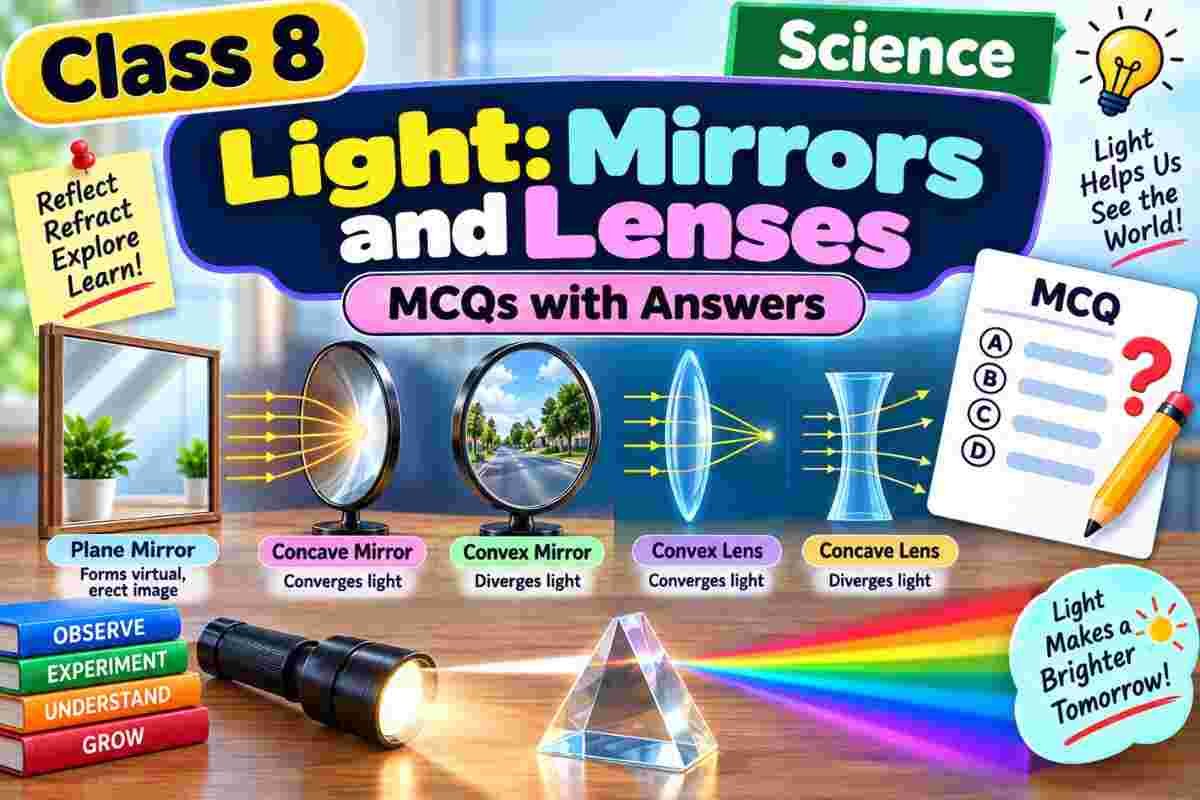
Light Mirrors and Lenses Class 8 MCQ
Conceptual Recall
Q. A mirror curved inward is called:
a) Plane mirror
b) Concave mirror
c) Convex mirror
d) Transparent mirror
Answer: b) Concave mirror
Q. A mirror curved outward is called:
a) Plane mirror
b) Concave mirror
c) Convex mirror
d) Transparent mirror
Answer: c) Convex mirror
Q. In a concave mirror, when the object is close to the mirror, the image is:
a) Erect and enlarged
b) Inverted and enlarged
c) Erect and diminished
d) Same size and erect
Answer: a) Erect and enlarged
Q. In a convex mirror, the image is always:
a) Inverted and enlarged
b) Erect and diminished
c) Same size and erect
d) Enlarged and erect
Answer: b) Erect and diminished
Q. The ray of light falling on a mirror is called:
a) Reflected ray
b) Incident ray
c) Normal ray
d) Divergent ray
Answer: b) Incident ray
Q. The angle between the normal and the reflected ray is called:
a) Angle of incidence
b) Angle of reflection
c) Angle of deviation
d) Angle of refraction
Answer: b) Angle of reflection
Q. A lens thicker at the middle than at the edges is called:
a) Concave lens
b) Convex lens
c) Plane lens
d) Transparent plate
Answer: b) Convex lens
Q. A lens thicker at the edges than at the middle is called:
a) Concave lens
b) Convex lens
c) Plane lens
d) Transparent plate
Answer: a) Concave lens
Application-Based
Q. When Meena looked at the inner side of the spoon, her image appeared:
a) Erect and smaller
b) Inverted and enlarged
c) Same size and erect
d) Blurred and unclear
Answer: b) Inverted and enlarged
Q. Vehicle side mirrors are made of:
a) Concave mirrors
b) Convex mirrors
c) Plane mirrors
d) Transparent glass
Answer: b) Convex mirrors
Q. A dentist uses a concave mirror because:
a) It always forms diminished images
b) It provides an enlarged view when close to the teeth
c) It shows inverted images of teeth
d) It works like a convex mirror
Answer: b) It provides an enlarged view when close to the teeth
Q. Side‑view mirrors in vehicles are convex because:
a) They form enlarged images
b) They provide a wider field of view with smaller images
c) They form inverted images
d) They magnify objects behind
Answer: b) They provide a wider field of view with smaller images
Q. When the incident ray falls along the normal, the angle of incidence and reflection are:
a) 90° each
b) 45° each
c) 0° each
d) Different
Answer: c) 0° each
Q. Solar concentrators use concave mirrors because:
a) They diverge light rays
b) They concentrate sunlight at a point, producing heat
c) They form erect images only
d) They reflect light parallel
Answer: b) They concentrate sunlight at a point, producing heat
Q. A magnifying glass works because:
a) It is a concave lens
b) It is a convex lens that enlarges objects when close
c) It is a plane mirror
d) It is a transparent plate
Answer: b) It is a convex lens that enlarges objects when close
Q. Why can a convex lens burn paper when placed in sunlight?
a) It diverges light rays
b) It converges sunlight at a point, producing heat
c) It absorbs sunlight
d) It reflects sunlight like a mirror
Answer: b) It converges sunlight at a point, producing heat
Assertion–Reason
Q. Assertion (A): Concave mirrors can form magnified images.
Reason (R): Their reflecting surface curves inward, converging light rays.
a) Both A and R are true, and R is the correct explanation of A
b) Both A and R are true, but R is not the correct explanation of A
c) A is true, but R is false
d) A is false, but R is true
Answer: a) Both A and R are true, and R is the correct explanation of A
Q. Assertion (A): Concave mirrors can form both erect and inverted images.
Reason (R): The nature of the image depends on the distance of the object from the mirror.
a) Both A and R are true, and R is the correct explanation of A
b) Both A and R are true, but R is not the correct explanation of A
c) A is true, but R is false
d) A is false, but R is true
Answer: a) Both A and R are true, and R is the correct explanation of A
Q3. Assertion (A): The angle of incidence is equal to the angle of reflection.
Reason (R): Light rays bend when they strike a mirror.
a) Both A and R are true, and R is the correct explanation of A
b) Both A and R are true, but R is not the correct explanation of A
c) A is true, but R is false
d) A is false, but R is true
Answer: c) A is true, but R is false
Q. Assertion (A): A concave lens always forms erect and diminished images.
Reason (R): Its curved edges diverge light rays passing through it.
a) Both A and R are true, and R is the correct explanation of A
b) Both A and R are true, but R is not the correct explanation of A
c) A is true, but R is false
d) A is false, but R is true
Answer: a) Both A and R are true, and R is the correct explanation of A
Case/Experiment-Based
Q. Meena observed her face in different mirrors at the science centre:
- Mirror A showed her face enlarged and inverted.
- Mirror B showed her face erect but smaller.
Which conclusion is correct?
a) Mirror A is convex, Mirror B is concave
b) Mirror A is concave, Mirror B is convex
c) Both are plane mirrors
d) Both are convex mirrors
Answer: b) Mirror A is concave, Mirror B is convex
Q. A student places a toy 3 cm in front of a concave mirror. The image appears erect and larger. When the toy is moved farther away, the image becomes inverted and smaller. What conclusion can be drawn?
a) Concave mirrors always form erect images
b) Concave mirrors change image nature depending on distance
c) Convex mirrors behave the same way
d) Plane mirrors behave similarly
Answer: b) Concave mirrors change image nature depending on distance
Q6. A student shines a torch beam through a comb slit onto a plane mirror. He notes that the angle of incidence is 30° and the angle of reflection is also 30°. What law does this confirm?
a) Law of refraction
b) Law of incidence
c) First law of reflection
d) Second law of reflection
Answer: c) First law of reflection
Q. A student places a toy behind a convex lens. At a small distance, the toy appears erect and enlarged. As the toy is moved farther, the image becomes inverted and smaller. What conclusion can be drawn?
a) Convex lenses always form erect images
b) Convex lenses change image nature depending on distance
c) Concave lenses behave the same way
d) Plane mirrors behave similarly
Answer: b) Convex lenses change image nature depending on distance
Diagram/Visual-Based
Q. In the figure, the mirror with inward curve is:
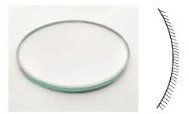
a) Concave mirror
b) Convex mirror
c) Plane mirror
d) Transparent mirror
Answer: a) Concave mirror
Q. In the figure, the mirror with outward curve is:
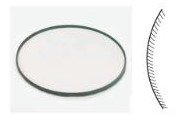
a) Concave mirror
b) Convex mirror
c) Plane mirror
d) Transparent mirror
Answer: b) Convex mirror
Q. A spoon acts like a spherical mirror because:
a) Its curved surface reflects light
b) It is transparent
c) It absorbs light
d) It is flat
Answer: a) Its curved surface reflects light
Q. In the figure, the concave mirror shows the toy’s image as:
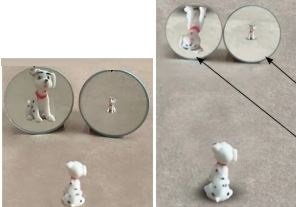
a) Erect and enlarged
b) Inverted and diminished
c) Same size and erect
d) Erect and diminished
Answer: a) Erect and enlarged
Q. In the figure, the convex mirror shows the toy’s image as:
a) Inverted and enlarged
b) Erect and diminished
c) Same size and erect
d) Enlarged and erect
Answer: b) Erect and diminished
Q. In the figure, the torch reflector uses:
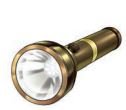
a) Concave mirror
b) Convex mirror
c) Plane mirror
d) Transparent glass
Answer: a) Concave mirror
Q. In the figure, the side‑view mirror of a vehicle uses:

a) Concave mirror
b) Convex mirror
c) Plane mirror
d) Transparent mirror
Answer: b) Convex mirror
Q. In the figure, the line drawn at 90° to the mirror surface is called:
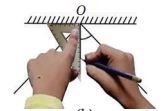
a) Incident ray
b) Reflected ray
c) Normal
d) Divergent ray
Answer: c) Normal
Q. In the figure, bending the chart paper makes the reflected beam disappear because:
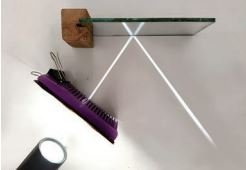
a) The reflected ray lies in the same plane as the incident ray and normal
b) The reflected ray bends into another plane
c) The mirror stops reflecting
d) The incident ray vanishes
Answer: a) The reflected ray lies in the same plane as the incident ray and normal
Q. In the figure, parallel rays reflected by a concave mirror:
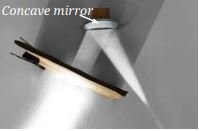
a) Remain parallel
b) Diverge
c) Converge
d) Disappear
Answer: c) Converge
Q. In the figure, parallel rays reflected by a convex mirror:
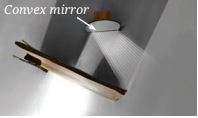
a) Remain parallel
b) Diverge
c) Converge
d) Form erect images
Answer: b) Diverge
Q. In the figure, the water drop acts like:
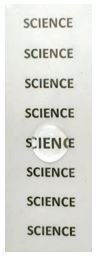
a) A concave lens
b) A convex lens
c) A plane mirror
d) A transparent plate
Answer: b) A convex lens
Q. In the figure, the concave lens shows the object as:
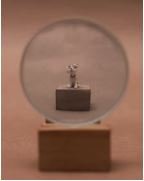
a) Erect and diminished
b) Inverted and enlarged
c) Same size and erect
d) Enlarged and erect
Answer: a) Erect and diminished
Q. In the figure, eyeglasses use lenses because:
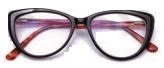
a) They reflect light
b) They bend light to help vision
c) They absorb light
d) They magnify only
Answer: b) They bend light to help vision
Disclaimer: The content that is present on our website is based on the NCERT Class 8 Science textbook and is provided for educational purposes only. All the content and images have been taken from Science Class 8 NCERT Textbook. Images and content shown above are the property of individual organizations and are used here for reference purposes only. To make it easy to understand, some of the content and images are generated by AI and cross-checked by the teachers.