
Practice important concepts from The Amazing World of Solutes, Solvents and Solutions Class 8 with these MCQs. This quiz covers solutes, solvents, solutions, solubility, and everyday examples of solutions. These questions are useful for Class 8 Science revision, practice, and exam preparation.
The Amazing World of Solutes Solvents and Solutions Class 8 MCQ
Conceptual Recall
Q. ORS tastes the same in every sip because it is a:
a) Non‑uniform mixture
b) Uniform mixture
c) Compound
d) Pure element
Answer: b) Uniform mixture
Q. In a sugar solution, sugar is the:
a) Solvent
b) Solute
c) Compound
d) Alloy
Answer: b) Solute
Q. A solution in which more solute can still dissolve is called:
a) Saturated solution
b) Unsaturated solution
c) Concentrated solution
d) Dilute solution
Answer: b) Unsaturated solution
Q. The maximum amount of solute that dissolves in a fixed quantity of solvent is called:
a) Concentration
b) Solubility
c) Dilution
d) Suspension
Answer: b) Solubility
Q. Dissolved oxygen in water is important because:
a) It supports aquatic life
b) It makes water salty
c) It increases density of water
d) It prevents evaporation
Answer: a) It supports aquatic life
Q. The mixture of gases in water is:
a) Non‑uniform mixture
b) Uniform mixture
c) Compound
d) Suspension
Answer: b) Uniform mixture
Q. Density is defined as:
a) Mass × Volume
b) Mass ÷ Volume
c) Volume ÷ Mass
d) Mass + Volume
Answer: b) Mass ÷ Volume
Q. The SI unit of density is:
a) g/mL
b) g/cm³
c) kg/m³
d) N/m²
Answer: c) kg/m³
Q. Volume is defined as:
a) Mass of an object
b) Space occupied by an object
c) Density of an object
d) Weight of an object
Answer: b) Space occupied by an object
Q. 1 mL is equal to:
a) 1 cm³
b) 1 dm³
c) 1 L
d) 1 g
Answer: a) 1 cm³
Q. The curved surface of liquid in a measuring cylinder is called:
a) Meniscus
b) Surface tension
c) Density curve
d) Solubility line
Answer: a) Meniscus
Q. Density decreases when a substance is:
a) Heated
b) Cooled
c) Pressurized
d) Frozen
Answer: a) Heated
Q. Ice floats on water because:
a) It is heavier than water
b) It has lower density than liquid water
c) It dissolves in water
d) It is a compound
Answer: b) It has lower density than liquid water
Application-Based
Q. Chalk powder mixed with water forms:
a) Solution
b) Suspension (non‑uniform mixture)
c) Alloy
d) Compound
Answer: b) Suspension (non‑uniform mixture)
Q. In Gulab jamun syrup (Chashni), sugar is present in large amount but is still considered the:
a) Solvent
b) Solute
c) Compound
d) Mixture
Answer: b) Solute
Q. Which solution is more concentrated?
a) 2 spoons of salt in 100 mL water
b) 4 spoons of salt in 50 mL water
c) Both are equal
d) Cannot be compared
Answer: b) 4 spoons of salt in 50 mL water
Q. When water at 70 °C dissolves more baking soda than at 20 °C, it shows:
a) Solubility decreases with temperature
b) Solubility increases with temperature
c) Solubility remains constant
d) Solubility depends only on pressure
Answer: b) Solubility increases with temperature
Q. Why do fish survive better in cold water ponds?
a) Cold water dissolves more oxygen
b) Cold water is heavier
c) Cold water is less dense
d) Cold water has less carbon dioxide
Answer: a) Cold water dissolves more oxygen
Q. Husk floats on water while rice sinks because:
a) Husk has lower density than water, rice has higher density
b) Husk is lighter in colour, rice is darker
c) Husk is soluble, rice is insoluble
d) Husk is a compound, rice is a mixture
Answer: a) Husk has lower density than water, rice has higher density
Q. A block of aluminium has mass 27 g and volume 10 cm³. Its density is:
a) 2.7 g/cm³
b) 27 g/cm³
c) 0.27 g/cm³
d) 270 g/cm³
Answer: a) 2.7 g/cm³
Q. Which solution is more concentrated?
a) 10 g salt in 100 mL water
b) 20 g salt in 100 mL water
c) Both are equal
d) Cannot be compared
Answer: b) 20 g salt in 100 mL water
Q. A tetra pack says “200 mL buttermilk.” This means:
a) Mass of buttermilk is 200 g
b) Volume of buttermilk is 200 mL
c) Density of buttermilk is 200 kg/m³
d) Weight of buttermilk is 200 N
Answer: b) Volume of buttermilk is 200 mL
Q. Which measuring cylinder is best to measure 70 mL water in one step with good accuracy?
a) 50 mL cylinder
b) 100 mL cylinder
c) 250 mL cylinder
d) 500 mL cylinder
Answer: b) 100 mL cylinder
Q. Why are measuring cylinders designed tall and narrow instead of short and wide?
a) To hold more liquid
b) To reduce evaporation
c) To increase accuracy of measurement
d) To measure mass directly
Answer: c) To increase accuracy of measurement
Q. A notebook has dimensions 25 cm × 18 cm × 2 cm. Its volume is:
a) 900 cm³
b) 450 cm³
c) 125 cm³
d) 50 cm³
Answer: a) 900 cm³
Q. Why does a hot air balloon rise?
a) Hot air is denser than cool air
b) Hot air is less dense than cool air
c) Hot air has more mass
d) Hot air is heavier than cool air
Answer: b) Hot air is less dense than cool air
Q. Why do fish survive under ice in lakes during winter?
a) Ice dissolves oxygen
b) Ice sinks to the bottom
c) Ice floats, keeping water below warmer
d) Ice increases density of water
Answer: c) Ice floats, keeping water below warmer
Assertion–Reason
Q. Assertion (A): A solution is always a uniform mixture.
Reason (R): The solute particles are evenly distributed in the solvent.
a) Both A and R are true, and R is the correct explanation of A
b) Both A and R are true, but R is not the correct explanation of A
c) A is true, but R is false
d) A is false, but R is true
Answer: a) Both A and R are true, and R is the correct explanation of A
Q. Assertion (A): A saturated solution at one temperature can become unsaturated at a higher temperature.
Reason (R): Solubility of most substances increases with rise in temperature.
a) Both A and R are true, and R is the correct explanation of A
b) Both A and R are true, but R is not the correct explanation of A
c) A is true, but R is false
d) A is false, but R is true
Answer: a) Both A and R are true, and R is the correct explanation of A
Q. Assertion (A): Solubility of gases decreases with increase in temperature.
Reason (R): Higher temperature gives gas molecules more energy to escape from liquid.
a) Both A and R are true, and R is the correct explanation of A
b) Both A and R are true, but R is not the correct explanation of A
c) A is true, but R is false
d) A is false, but R is true
Answer: a) Both A and R are true, and R is the correct explanation of A
Q. Assertion (A): Density of a substance is independent of its shape or size.
Reason (R): Density depends only on mass and volume.
a) Both A and R are true, and R is the correct explanation of A
b) Both A and R are true, but R is not the correct explanation of A
c) A is true, but R is false
d) A is false, but R is true
Answer: a) Both A and R are true, and R is the correct explanation of A
Q. Assertion (A): The smallest volume measurable depends on the capacity of the measuring cylinder.
Reason (R): Larger cylinders have bigger divisions, so accuracy decreases.
a) Both A and R are true, and R is the correct explanation of A
b) Both A and R are true, but R is not the correct explanation of A
c) A is true, but R is false
d) A is false, but R is true
Answer: a) Both A and R are true, and R is the correct explanation of A
Q. Assertion (A): For water and colourless liquids, the reading is taken at the bottom of the meniscus.
Reason (R): The meniscus forms due to surface tension and adhesion of liquid to the container walls.
a) Both A and R are true, and R is the correct explanation of A
b) Both A and R are true, but R is not the correct explanation of A
c) A is true, but R is false
d) A is false, but R is true
Answer: a) Both A and R are true, and R is the correct explanation of A
Q. Assertion (A): Increasing pressure increases the density of gases.
Reason (R): Pressure pushes gas particles closer, reducing volume.
a) Both A and R are true, and R is the correct explanation of A
b) Both A and R are true, but R is not the correct explanation of A
c) A is true, but R is false
d) A is false, but R is true
Answer: a) Both A and R are true, and R is the correct explanation of A
Case/Experiment-Based
Q. A student prepares two mixtures:
- Mixture A: Salt + Water
- Mixture B: Sand + Water
Observation: Mixture A tastes the same throughout, while Mixture B settles at the bottom.
Which conclusion is correct?
a) Mixture A is uniform, Mixture B is non‑uniform
b) Mixture A is non‑uniform, Mixture B is uniform
c) Both are uniform mixtures
d) Both are compounds
Answer: a) Mixture A is uniform, Mixture B is non‑uniform
Q. A student adds salt spoon by spoon into water. After 3 spoons, the salt dissolves completely, but after 5 spoons, some salt settles at the bottom. What does this show?
a) Water has unlimited capacity to dissolve salt
b) Water has reached its solubility limit
c) Salt is insoluble in water
d) The solution is dilute
Answer: b) Water has reached its solubility limit
Q. A student observes that in summer, fish in a pond are less active compared to winter. Which scientific reason explains this?
a) Warm water dissolves less oxygen, reducing availability for fish
b) Warm water dissolves more oxygen, making fish sleepy
c) Warm water increases density, making fish sink
d) Warm water evaporates faster, removing food for fish
Answer: a) Warm water dissolves less oxygen, reducing availability for fish
Q. A student measures the mass of a stone using a digital balance. The reading shows 16.400 g. If the stone’s volume is 8 cm³, what is its density?
a) 2.05 g/cm³
b) 16.4 g/cm³
c) 0.51 g/cm³
d) 8 g/cm³
Answer: a) 2.05 g/cm³
Q. A student uses a 100 mL measuring cylinder. Between 10 mL and 20 mL marks, there are 10 divisions. What is the smallest volume measurable?
a) 0.1 mL
b) 1 mL
c) 2 mL
d) 5 mL
Answer: b) 1 mL
Q. A student fills a measuring cylinder with 50 mL water. After lowering a stone tied with a thread, the water level rises to 55 mL. What is the stone’s volume?
a) 50 cm³
b) 55 cm³
c) 5 cm³
d) 105 cm³
Answer: c) 5 cm³
Q. If the stone’s mass is 16.400 g and its volume is 5 cm³, its density is:
a) 3.28 g/cm³
b) 5 g/cm³
c) 16.4 g/cm³
d) 0.32 g/cm³
Answer: a) 3.28 g/cm³
Q. A student places a raw egg in tap water. It sinks. What change can make the egg float?
a) Heating the water
b) Adding salt to water to increase density
c) Cooling the water
d) Removing air bubbles
Answer: b) Adding salt to water to increase density
Diagram/Visual-Based
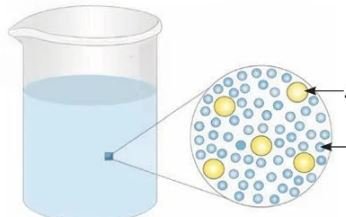
Q. In Figure (schematic of solute in solvent), the evenly spread dots represent:
a) Solvent particles
b) Solute particles
c) Compound molecules
d) Non‑uniform mixture
Answer: b) Solute particles
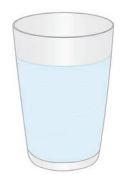
Q. In Figure, the solution with no undissolved salt is:
a) Saturated solution
b) Unsaturated solution
c) Concentrated solution
d) Suspension
Answer: b) Unsaturated solution
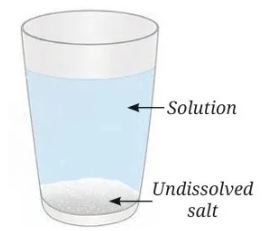
Q. In Figure, the solution with undissolved salt at the bottom is:
a) Unsaturated solution
b) Saturated solution
c) Dilute solution
d) Suspension
Answer: b) Saturated solution
Q. In Figure (aquatic species in water), which statement is correct?
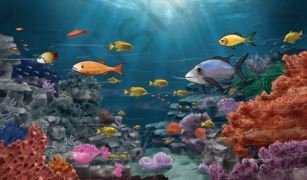
a) Aquatic life depends on dissolved oxygen in water
b) Aquatic life depends on carbon dioxide dissolved in water
c) Aquatic life depends only on nitrogen dissolved in water
d) Aquatic life does not depend on gases dissolved in water
Answer: a) Aquatic life depends on dissolved oxygen in water
Q. In Figure (objects floating/sinking), oil floats on water because:
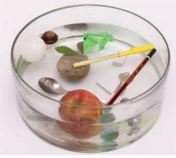
a) Oil has lower density than water
b) Oil is heavier than water
c) Oil is soluble in water
d) Oil is a compound
Answer: a) Oil has lower density than water
Q. In Fig. 9.10a (dense forest) and Fig. 9.10b (less dense forest), the analogy explains:
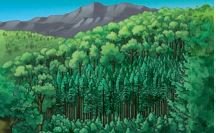
a) Mass
b) Volume
c) Density
d) Pressure
Answer: c) Density
Q. In Figure (measuring cylinder), the markings on the transparent body indicate:
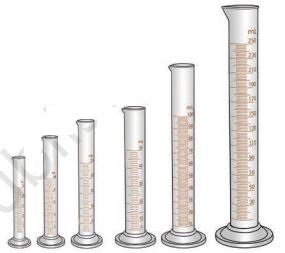
a) Mass of liquid
b) Volume of liquid
c) Density of liquid
d) Weight of liquid
Answer: b) Volume of liquid
Q. In Figure (100 mL cylinder), the smallest division represents:
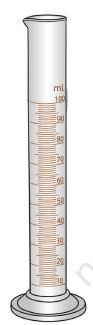
a) 0.1 mL
b) 1 mL
c) 2 mL
d) 5 mL
Answer: b) 1 mL
Q. In Figure, the correct way to read liquid level is:
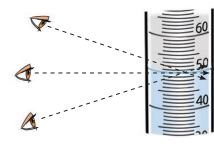
a) At the top of the meniscus for colourless liquids
b) At the bottom of the meniscus for colourless liquids
c) At any point of the curve
d) At the side of the cylinder
Answer: b) At the bottom of the meniscus for colourless liquids
Q. In Figure (Earth’s layers), density:
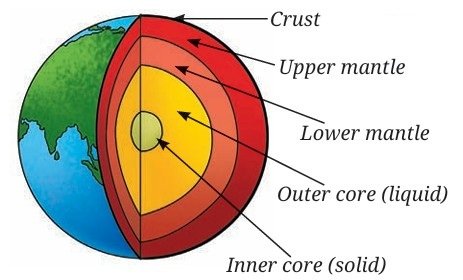
a) Decreases towards the centre
b) Increases towards the centre
c) Remains constant
d) Depends only on temperature
Answer: b) Increases towards the centre
Q. In Figure (hot air balloon), the balloon rises because:
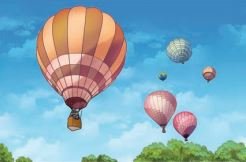
a) Hot air is denser
b) Hot air is less dense
c) Hot air is heavier
d) Hot air is a compound
Answer: b) Hot air is less dense
Q. In Figure (ice floating), the structure of ice occupies:

a) Less space → higher density
b) More space → lower density
c) Same space → same density
d) No space → zero density
Answer: b) More space → lower density
Q. In Figure (egg sinking), the egg sinks because:
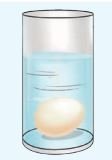
a) Its density is greater than water
b) Its density is less than water
c) It is soluble in water
d) It is lighter than water
Answer: a) Its density is greater than water
Disclaimer: The content that is present on our website is based on the NCERT Class 8 Science textbook and is provided for educational purposes only. All the content and images have been taken from Science Class 8 NCERT Textbook. Images and content shown above are the property of individual organizations and are used here for reference purposes only. To make it easy to understand, some of the content and images are generated by AI and cross-checked by the teachers.