
← Back to Class 9 Social Science Notes
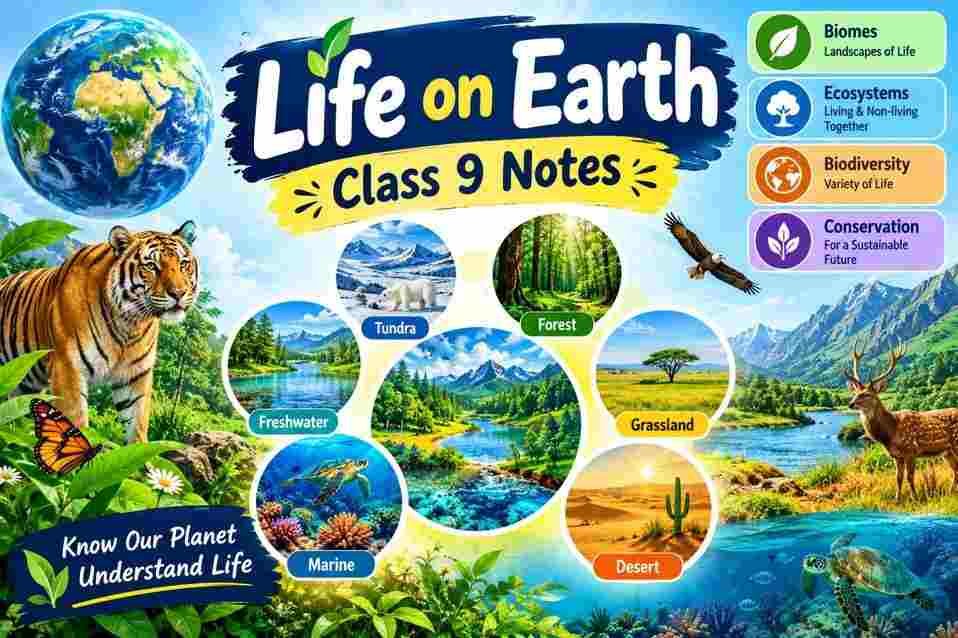
Life on Earth Class 9 Notes help students understand the different forms of life and their relationship with the environment. These notes cover biomes, biodiversity, ecosystems, forests, living beings, and the importance of conserving natural resources. Written in easy language, these notes help students understand key concepts and prepare for exams.
Life on Earth Class 9 Notes
Geography helps to understand the Earth and teaches us how land, the weather, and land and water affect the animals, plants, and humans. Different places have different land forms and weather. Different plants and animals live in these places.
Humans also change the environment through their activities. We should protect nature and the different forms of life on the Earth.
What Is a Biome?
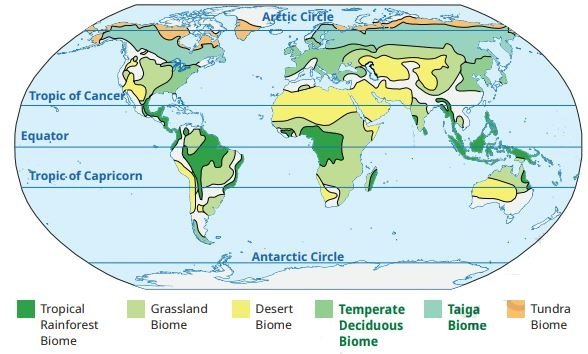
The earth is made of many different pieces. Each piece has its own weather, plants, and animals. These large natural areas are called biomes.
A biome is a large area of the Earth where certain types of plants and animals live because the weather and environment are similar. The word ‘biome’ is made up of the word ‘bio’, derived from the Greek word ‘bios’, meaning ‘life’, and ‘-ome’, a suffix used in biology to denote a group of a specific type of biological constituent. For example,
- Tundra: A very cold region.
- Desert: A very dry region with little rainfall.
- Forest: An area with many trees.
- Grassland: A large area mainly covered with grass.
What Is an Ecosystem?
An ecosystem is a place where the plants, animals, and non-living things interact with each other. For example, a pond is an ecosystem where fish, frogs, plants, water, air, and sunlight are all part of it.
Difference Between a Biome and an Ecosystem
A biome is like a broad environmental region, while an ecosystem is like a neighbourhood within it, where plants, animals, and non-living things interact closely.
Types of Biomes
The biomes are divided into two main types:
- Terrestrial biomes: Biomes found on land.
- Aquatic biomes: Biomes found in water.
1. Terrestrial Biomes
In terrestrial biomes there are four main types: forests, grasslands, deserts, and tundra.
A forest biome
The forests are the large areas covered with many trees and plants. They are also called “gene banks” because they contain different types of plants and animals.
The tropical rainforests are found near the Equator. These places are hot and receive heavy rainfall throughout the years.
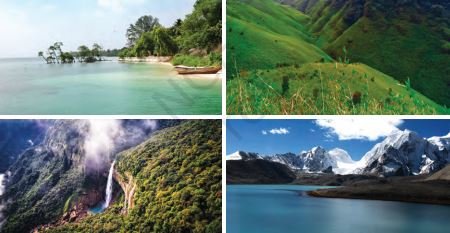
The largest topical rainforest on Earth is found in the Amazon Basin in South America and the Congo Basin in Africa and Southeast Asia. In India the rainforest is found in the Andaman and Nicobar Islands and in northeastern states.
Importance of forests—
- The forests provide homes for many animals and plants.
- Forest helps to main levels. oxygen level.
- It also helps to control the Earth’s temperature.
- Forests contain different types of things.
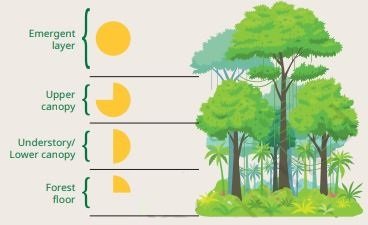
Ideal structure of a rainforest biome
Grassland Biome
Grassland is a large open area mainly covered with grass. Grasslands have very few trees. They receive some rainfall but usually not enough to support thick forest. There are two main types of grasslands—
- Temperate grasslands: This grassland is found in the prairies of North America and the steppes of Asia. This grassland soil is good for farming.
- Tropical grassland: These are also called savannahs. Tropical grasslands are found in Africa and have grass with a few scattered trees. The animals like elephants, lions, and giraffes live in African savannahs.
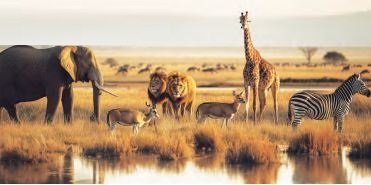
Importance of grasslands:
- They provide the food for grazing animals.
- They are useful for the farmers.
- They help the domesticated animals like cows and sheep.
Desert Biome
Desert biomes are areas that receive very little rainfall. can be desiccated. hot or cold.
- Hot desert: The Sahara Desert in Africa.
- Cold desert: The Gobi Desert in Asia.
The Rann of Kutch in Gujarat is a large salt desert. During the dry season salt covers the land and makes the desert look white. During the rainy season, part of it becomes wet.
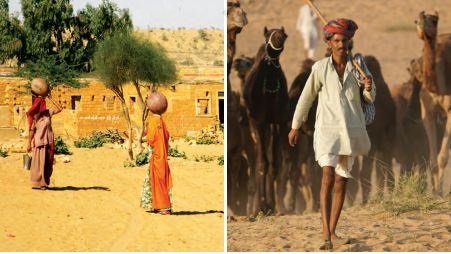
In these places animals can survive with very little water. For example, cacti can store water, and camels can survive in dry conditions.
Importance of deserts:
- The desert provides homes for special plants and animals.
- Some of the desert contains useful minerals and oil.
- They have their own unique natural environment.
Tundra Biome
The tundra is one of the coldest biomes on Earth. It is found mainly in the Arctic region and part of Antarctica. In this area winters are very long and summers are short.
The ground is frozen for most of the year. This permanently frozen ground is called permafrost. In this area small plants grow because large trees cannot grow easily because of the cold.
Some animals, like reindeer and Arctic foxes, can survive in this cold environment. The polar bears live in Arctic regions.
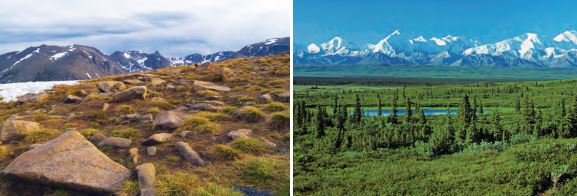
Importance of the tundra:
- It provides the home of animals that can survive extreme cold.
- It supports special plants and other living things.
- Its environment can be easily affected by changes in temperature.
Aquatic biomes are the large areas of water where different plants and animals live. The water covers about three-fourths of the Earth’s surface. There are two main types of aquatic biomes:
2. Freshwater Biomes
The freshwater biomes include lakes, rivers, ponds, and wetlands. The freshwater biomes contain very little salt. Importance of freshwater biomes:
- They provide water for drinking.
- They provide water for farming.
- They are homes for fish, frogs, and insects.
- They support many plants and animals.
Marine Biomes
Marine biomes include seas, oceans, and coral reefs. In marine biomes water contains a lot of salt.
Importance of marine biomes:
- They provide homes for dolphins, whales, fish, and tiny organisms called plankton.
- They provide food and jobs to many people.
- They help control the Earth’s climate.
- They store and move heat around the Earth.
Biome Pyramid
A biome pyramid is a diagram that helps to understand the different groups of living things in an ecosystem. It helps to understand how the energy passes from plants to the animals. The pyramid has the following levels.
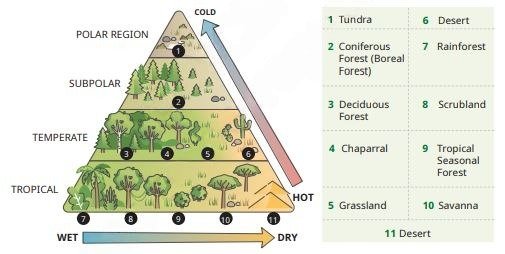
- Producers: Plants and algae make their own food using sunlight.
- Primary Consumers: These are animals that eat plants, which is known as herbivores. Examples are deer and grasshoppers.
- Secondary Consumers: These are animals that eat other animals. Examples include frogs that eat insects.
- Top Predators: These are animals near the top of the food chain. Examples include lions and eagles.
Interconnectedness between Biomes and Living Beings
Biomes and living beings depend on each other. Biomes provide homes for plants, animals, and humans. The animals help in pollination and spreading seeds, and humans change land for farming and making cities. The microorganisms help to break down the dead matter and return nutrients to the soil.
Maintaining Ecological Balance and Biodiversity
Biodiversity means the variety of life on Earth. It includes animals, plants, microorganisms, and their natural habitats. Biodiversity helps to make nature balanced and supports human life. The biodiversity includes—
- Different types of plants and animals.
- Difference among members of the same species.
- Different habitats like forests, deserts, and oceans.
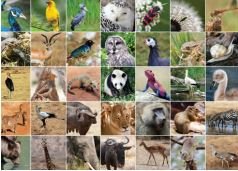
Conservation means protecting plants, animals, and their habitats. Some of the important ways to conserve biodiversity are—
Biodiversity Hotspots: There are some certain regions where the unique plants and animals are found, such as the Himalaya, the Western Ghats, North East India, and the Andaman & Nicobar Islands.
Ecosystem-Based Conservation: Different ecosystems need different types of protection, like mangrove forests, which are protected along coasts, and the trees are planted in mountain areas.
Protected Areas: The national parks, wildlife sanctuaries, and World Heritage Sites protect plants, animals, and their habitats.
Geographical Barriers and Corridors: There are some geographical barriers like rivers and mountains that stop animal movement, but valleys and wildlife corridors help the animals move from one area to another.
Human–Environment Interaction: In different areas people use land, water, and forest in different ways, like terrace farming is practiced in hilly areas, while agroforestry combines trees with farming.
Forest Ecotourism
Forest ecotourism means when the people visit forests, they are responsible for enjoying nature and helping to protect it.
- The tourist can see animals, plants, waterfalls, and rivers.
- Tourists can visit wildlife sanctuaries and national parks.
- This helps the people to learn about the nature of the forest and protect it.
- It also provides jobs and income to local people.
- The main aim is to protect the environment.
Forests and Livelihoods
Many rural and tribal communities depend on forests for their daily needs and for income. The forests provide—
- Food, fruits, nuts, and honey
- Firewood and fuel
- Medicines and medicinal plants.
- Timber, materials, bamboo for shelter
- Jobs based on the forest, like ecotourism.
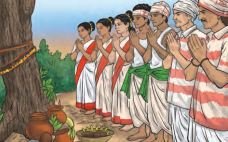
There are some tribal communities like the Gonds and Bhils, which perform rituals to respect the forest.
Forest Dwellers
The Forest Dwellers are closely connected to the forests; they are the people who live near the forest or inside the forest area. Forest dwellers depend on forests for their daily needs.
- They collect food, medicines, fuel, and other forest products.
- They use forest resources to earn money.
- They follow traditional customs and practices.
- Women collect and manage forest resources.
- Their traditional knowledge helps them to understand and use nature.
Geographical Indication (GI)
A Geographical Indication (GI) tag identifies a product that comes from a particular place and has some special quality, a reputation, or other feature like that place. A GI tag helps—
- Protect the identification of local products.
- Preserve traditional skills and knowledge.
- Promote local culture.
- Helps the local communities earn income.
GI-Tagged Products in India
| Product | State/Region | Special Feature |
|---|---|---|
| Ramban Sulai Honey | Jammu and Kashmir | Known for its special flavour and aroma |
| Tezpur Litchi | Assam | Known for its bright colour and juicy pulp |
| Channapatna Toys | Karnataka | Traditional toys made using wood, including Aale mara |
| Kandhamal Haldi | Odisha | Turmeric known for its curcumin content |
| Erode Manjal (Turmeric) | Tamil Nadu | Used in cooking and traditional medicine |
| Nilgiri Tea | Tamil Nadu, Keralam, and Karnataka | Grown in the Western Ghats region |
| Tripura Queen Pineapple | Tripura | Known for its sweetness and aroma |
| Khasi Mandarin | Meghalaya | Citrus fruit grown in the hills |
Challenges Faced by People Living in Forests
The people living in the forest face many challenges in their daily lives. Some of the challenges are—
Lack of Basic Facilities
- Many forest villages do not have a good hospital, schools, or clean drinking water.
- Women face health issues because of the smoke and burning wood.
- People depend on forests for fuel, bamboo, honey, and medicines.
Problems are using forest resources.
- The Forest Law can limit the people’s access to some forest resources.
- Cutting the tree as a resource is not allowed.
- Which can create a problem for dwellers to earn money and meet their daily needs.
Natural Disasters
- People living in forests can face floods, landslides, and forest fires.
Conflict with Wild Animals
- Monkeys, elephants, and wild boars may damage crops.
- Sometimes, wild animals can attack the people.
- This makes the people feel unsafe.
Low income and lack of support
- The forest people can face unfair treatment and neglect from other organizations.
- They usually sell the forest product at a low price.
- They need help to sell their product at a good price.
- They also need information about government schemes and their legal rights.
Government Efforts to Support Forest Dwellers
The government introduces different programs to help the forest communities.
Forest Rights Act, 2006 (FRA)
The Forest Rights Act, 2006, is made to protect tribal people and other traditional forest dwellers. This law gives certain rights to the eligible families.
- The forest people can collect forest produce like honey, medicinal plants, and bamboo.
- Eligible families who have a traditional farm in the forest can get legal rights over the land.
Other Government Programs
- Tribal Welfare Schemes: They provide support to the tribal people, like education, healthcare, and skill training.
- Joint Forest Management (JFM): It encourages local people to protect forests and benefit from forest products.
- PESA Act: The Gram Sabhas and Panchayats’ roles to manage the government schedule.
- Dharti Aaba Janjatiya Gram Utkarsh Abhiyan (DAJGUA): It aims to provide basic facilities to the tribal villages and helps to develop the village.
- PM JANMAN: The aim is to improve the living condition of particularly vulnerable tribal groups.
Mendha Lekha: A Case Study in Community Forest Management
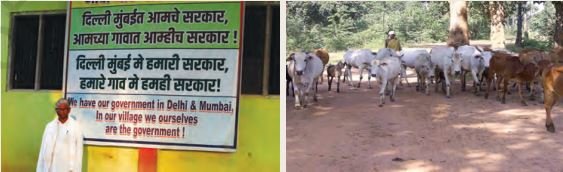
The Mendha Lekha is a small forest village in Gadchiroli district in Maharashtra. Most of the people belong to the Gond tribe. The village is known for protecting its forest through community participation. Some of the important points are
- Mendha Lekha received community forest rights under the Forest Rights Act, 2006.
- The villagers follow “Mawa Nate Mawa Raj,” which means “Our village, our rule.”
- The Gram Sabha helps the villagers to make decisions together.
- The village community protected around 1800 hectares of forest.
- The villagers prevent forest trees, forest fires, and bamboo harvests carefully.
- Money earned from the forest is used for community needs like education or village development.
Ecological commons are the natural resources that are shared and used by a community. For example, forests, rivers and lakes, grazing lands, air, water, etc. People use these resources for food, water, fuel, fodder, and medicines.
Why Are Ecological Commons Important?
- They support the lives of rural and tribal people.
- They provide food, water, fuel, and other useful resources.
- They help maintain ecological balance.
- They help protect plants and animals.
- They support climate balance.
A fishery is a place where the fish are caught or raised. In the Bihar River and lakes, they have supported fishing communities for many years. From the past year, some powerful landowners controlled many fishing areas. This made it difficult for the local fishing communities to earn a living. Some of the steps taken to improve fisheries management—
- The Jalkar Management Act, 2006, provided better fishing resources to the local people.
- Local people are encouraged to take part in managing water bodies.
- The government’s aim was to give better access and help to use fish resources carefully.
- Local people worked to balance fish production and protect resources for the feature.
Case Study: Water Tanks Built by Kings
In many parts of India, rainfall is seasonal. People built tanks and reservoirs to store rainwater for use during dry periods. The king and local communities built many water storage systems in different regions.
| Region | Traditional Water Storage System |
|---|---|
| Bundelkhand | Tanks built by the Chandella and Bundela kings |
| Karnataka | Keres |
| Tamil Nadu | Eri tanks |
| Andhra Pradesh and Odisha | Chevuru tanks |
| Bihar | Ahar pynes |
| Gondwana | region Katas |
Important Facts
- Between 800 and 1200 CE, the Chandela and Bundela kings built about 8000 tanks in Bundelkhand.
- The Gond kings supported the building of large reservoirs called katas.
- A kata is a reservoir with three sides built to hold water.
- This water storage helps the local people to meet their water needs.
- India still has many functioning tanks used for water storage.
Disclaimer: The content that is present on our website is based on the NCERT Class 9 Social Science textbook and is provided for educational purposes only. All the content and images have been taken from Social Science Class 9 NCERT Textbook and CBSE Support material. Images and content shown above are the property of individual organizations and are used here for reference purposes only. To make it easy to understand, some of the content and images are generated by AI and cross-checked by the teachers.