
← Back to Class 9 Social Science MCQs
Practice the most important Manage Your Personal Finances Class 9 MCQs with answers to test your understanding of personal finance. These multiple-choice questions will help you revise key concepts such as budgeting, saving, spending, financial planning, and making responsible financial decisions. Solve these MCQs to improve your knowledge and prepare for your Class 9 examinations.
Manage Your Personal Finances Class 9 MCQ
Conceptual Recall MCQs
Q. What is personal finance?
a) Managing only business money
b) Planning and managing an individual’s money to meet needs and wants
c) Collecting taxes from people
d) Buying and selling shares only
Answer: b) Planning and managing an individual’s money to meet needs and wants
Q. Which pillar of personal finance is considered the starting point because it provides money for spending, saving, and investing?
a) Budgeting
b) Saving
c) Income
d) Protection and risk management
Answer: c) Income
Q. What is investing?
a) Keeping money at home without using it
b) Spending all income immediately
c) Putting savings into assets to protect value and earn returns
d) Borrowing money from others
Answer: c) Putting savings into assets to protect value and earn returns
Q. What is inflation?
a) A decrease in population
b) An increase in the prices of goods and services over time
c) A reduction in bank deposits
d) An increase in salaries only
Answer: b) An increase in the prices of goods and services over time
Q. What is the main purpose of insurance?
a) To increase daily expenses
b) To guarantee profits
c) To provide protection against financial losses due to risks
d) To eliminate all risks completely
Answer: c) To provide protection against financial losses due to risks
Q. In an insurance contract, what is the regular amount paid by the insured person?
a) Bonus
b) Premium
c) Compensation
d) Interest
Answer: b) Premium
Q. Insurance works mainly on which principle?
a) Risk sharing
b) Profit maximisation
c) Borrowing and lending
d) Tax collection
Answer: a) Risk sharing
Q. Which type of insurance provides financial support to a family after the death of the policyholder?
a) Health Insurance
b) Motor Insurance
c) Property Insurance
d) Life Insurance
Answer: d) Life Insurance
Q. Which insurance covers expenses related to hospitalisation, medicines, and medical treatment?
a) Health Insurance
b) Crop Insurance
c) Property Insurance
d) Cattle Insurance
Answer: a) Health Insurance
Q. What is meant by borrowing or credit?
a) Keeping money in a savings account
b) Investing money in shares
c) Taking money from others with an obligation to repay it later
d) Paying income tax
Answer: c) Taking money from others with an obligation to repay it later
Q. What is an EMI?
a) A fixed monthly amount paid to repay a loan
b) A reward paid by banks
c) An investment return
d) A tax collected by the government
Answer: a) A fixed monthly amount paid to repay a loan
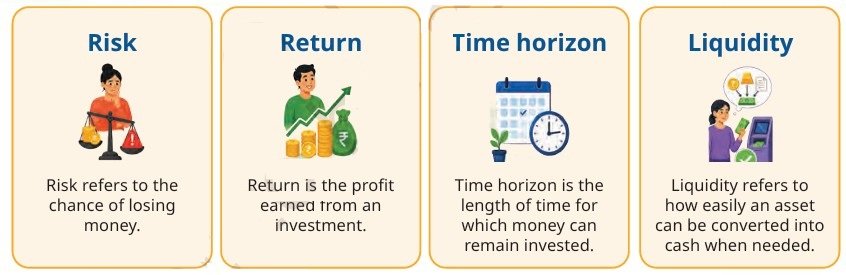
Q. Which factor refers to the chance of losing money in an investment?
a) Return
b) Liquidity
c) Time Horizon
d) Risk
Answer: d) Risk
Q. What is meant by return in investing?
a) The tax paid on income
b) The profit earned from an investment
c) The amount borrowed from a bank
d) The total expenses of a person
Answer: b) The profit earned from an investment
Q. Which factor refers to how easily an asset can be converted into cash?
a) Risk
b) Return
c) Liquidity
d) Interest
Answer: c) Liquidity
Q. Which type of tax is added to the price of goods and services?
a) Income Tax
b) Direct Tax
c) Property Tax
d) Goods and Services Tax (GST)
Answer: d) Goods and Services Tax (GST)
Q. Which organisation administers laws related to direct taxes in India?
a) RBI
b) CBDT
c) SEBI
d) NITI Aayog
Answer: b) CBDT
Application-Based MCQs
Q. Riya receives ₹500 as pocket money every month. She decides to keep aside ₹200 for a school trip and spends the remaining amount carefully. Which pillar of personal finance is she mainly practising?
a) Budgeting
b) Investing
c) Protection and risk management
d) Income generation
Answer: a) Budgeting
Q. A person earns money by renting out a house to another family. This money is an example of:
a) Dividend
b) Salary
c) Business profit
d) Income from property
Answer: d) Income from property
Q. Ravi keeps ₹1,000 at home for one year. During the same period, prices rise by 6%. What is the most likely effect?
a) His purchasing power increases
b) His purchasing power remains unchanged
c) He earns interest automatically
d) His purchasing power decreases
Answer: d) His purchasing power decreases
Q. A person wants a safe investment with assured returns for five years and does not want to take high risks. Which option is most suitable?
a) Stocks
b) Fixed Deposit (Fd)
c) Equity trading
d) Speculative investing
Answer: b) Fixed Deposit (Fd)
Q. A family has purchased health insurance. One family member undergoes surgery and receives financial support from the insurance company. What is the main benefit received?
a) Increased income
b) Reduced medical expenses burden
c) Free education
d) Higher property value
Answer: b) Reduced medical expenses burden
Q. Suresh’s bike was damaged in a road accident. He received compensation for repair costs through his insurance policy. Which insurance helped him?
a) Property Insurance
b) Life Insurance
c) Motor Insurance
d) Crop Insurance
Answer: c) Motor Insurance
Q. A farmer’s crops were severely damaged due to floods. Which insurance would help reduce his financial loss?
a) Health Insurance
b) Life Insurance
c) Cattle Insurance
d) Crop Insurance
Answer: d) Crop Insurance
Q. A dairy owner suffers a financial loss when one of his insured cows becomes permanently disabled. Which insurance provides protection in this situation?
a) Cattle Insurance
b) Health Insurance
c) Property Insurance
d) Motor Insurance
Answer: a) Cattle Insurance
Q. Meera takes an education loan to pursue higher studies that will help her get a better job in the future. This is an example of:
a) Productive borrowing
b) Risky investing
c) Tax planning
d) Misuse of credit
Answer: a) Productive borrowing
Q. A person uses a loan to buy expensive luxury items that are not necessary and later struggles to repay the loan. What is the most likely result?
a) Increased savings
b) Higher investment returns
c) Financial difficulties due to debt burden
d) Reduced expenses
Answer: c) Financial difficulties due to debt burden
Q. Raj wants to invest money that he may need urgently within a few weeks. Which factor should he pay the most attention to?
a) Risk only
b) Liquidity
c) Tax Slab
d) Principal Amount
Answer: b) Liquidity
Q. A person chooses shares instead of fixed deposits because he wants higher long-term returns. What must he be prepared for?
a) Lower risk
b) Guaranteed income
c) Higher taxation
d) Higher risk
Answer: d) Higher risk
Q. A family already pays EMIs for a house, car, and two electronic gadgets. They are considering another loan. Which concern is most relevant?
a) Too many EMIs may reduce savings and emergency funds
b) More EMIs always increase income
c) More EMIs reduce interest rates
d) EMIs eliminate future expenses
Answer: a) Too many EMIs may reduce savings and emergency funds
Assertion–Reason MCQs
Q. Assertion (a) : Budgeting helps people live within their means.
Reason (R): Budgeting helps balance income and expenditure and control unnecessary spending.
a) Both A and R are true, and R is the correct explanation of A.
b) Both A and R are true, but R is not the correct explanation of A.
c) A is true, but R is false.
d) A is false, but R is true.
Answer: a) Both A and R are true, and R is the correct explanation of A.
Q. Assertion (a) : Income is an important pillar of personal finance.
Reason (R): Without income, it is not possible to spend, save, or invest money.
a) Both A and R are true, and R is the correct explanation of A.
b) Both A and R are true, but R is not the correct explanation of A.
c) A is true, but R is false.
d) A is false, but R is true.
Answer: a) Both A and R are true, and R is the correct explanation of A.
Q. Assertion (a) : Starting investments at an early age can result in a larger accumulated amount.
Reason (R): Compounding allows returns to earn additional returns over time.
a) Both A and R are true, and R is the correct explanation of A.
b) Both A and R are true, but R is not the correct explanation of A.
c) A is true, but R is false.
d) A is false, but R is true.
Answer: a) Both A and R are true, and R is the correct explanation of A.
Q. Assertion (a) : Shares generally involve higher risk than fixed deposits.
Reason (R): Share prices fluctuate depending on market conditions and company performance.
a) Both A and R are true, and R is the correct explanation of A.
b) Both A and R are true, but R is not the correct explanation of A.
c) A is true, but R is false.
d) A is false, but R is true.
Answer: a) Both A and R are true, and R is the correct explanation of A.
Q. Assertion (a) : Insurance helps families recover from unexpected financial setbacks.
Reason (R): Insurance companies provide compensation for losses covered under the policy.
a) Both A and R are true, and R is the correct explanation of A.
b) Both A and R are true, but R is not the correct explanation of A.
c) A is true, but R is false.
d) A is false, but R is true.
Answer: a) Both A and R are true, and R is the correct explanation of A.
Q. Assertion (a) : Health insurance eliminates the possibility of illness.
Reason (R): Health insurance covers medical expenses arising from illness or accidents.
a) Both A and R are true, and R is the correct explanation of A.
b) Both A and R are true, but R is not the correct explanation of A.
c) A is true, but R is false.
d) A is false, but R is true.
Answer: d) A is false, but R is true.
Q. Assertion (a) : Insurance is based on risk sharing.
Reason (R): Premiums collected from many policyholders are pooled together to support those who suffer losses.
a) Both A and R are true, and R is the correct explanation of A.
b) Both A and R are true, but R is not the correct explanation of A.
c) A is true, but R is false.
d) A is false, but R is true.
Answer: a) Both A and R are true, and R is the correct explanation of A.
Q. Assertion (a) : Responsible borrowing involves taking loans only when necessary.
Reason (R): Borrowers should ensure that loans can be repaid on time.
a) Both A and R are true, and R is the correct explanation of A.
b) Both A and R are true, but R is not the correct explanation of A.
c) A is true, but R is false.
d) A is false, but R is true.
Answer: a) Both A and R are true, and R is the correct explanation of A.
Q. Assertion (a) : Fixed deposits generally provide lower returns than shares.
Reason (R): Fixed deposits are usually considered lower-risk investments.
a) Both A and R are true, and R is the correct explanation of A.
b) Both A and R are true, but R is not the correct explanation of A.
c) A is true, but R is false.
d) A is false, but R is true.
Answer: a) Both A and R are true, and R is the correct explanation of A.
Q. Assertion (a) : Higher-risk investments may offer higher returns.
Reason (R): Risk and return generally move in opposite directions.
a) Both A and R are true, and R is the correct explanation of A.
b) Both A and R are true, but R is not the correct explanation of A.
c) A is true, but R is false.
d) A is false, but R is true.
Answer: c) A is true, but R is false.
Q. Assertion (a) : Income tax is a direct tax.
Reason (R): Income tax is paid directly on a person’s income.
a) Both A and R are true, and R is the correct explanation of A.
b) Both A and R are true, but R is not the correct explanation of A.
c) A is true, but R is false.
d) A is false, but R is true.
Answer: a) Both A and R are true, and R is the correct explanation of A.
Case Study-Based MCQ
Q. Aman wants to buy a bicycle after one year. He calculates its cost, decides how much money he needs to save every month, and reduces unnecessary expenses such as frequent canteen purchases. Which personal finance concept is Aman using?
a) Income generation
b) Budgeting and financial goal setting
c) Insurance planning
d) Risk management
Answer: b) Budgeting and financial goal setting
Q. Bhavisha started investing ₹1,000 every year at the age of 25. Dhruv also invested ₹1,000 every year and earned the same rate of return, but he started at the age of 35. By the age of 65, Bhavisha accumulated much more money. What is the main reason for this difference?
a) Bhavisha invested a larger amount every year
)Dhruv earned a lower interest rate
c) Bhavisha benefited from compounding for a longer period
d) Dhruv stopped investing before retirement
Answer: c) Bhavisha benefited from compounding for a longer period
Q. Rina’s family purchased health insurance by paying a monthly premium. A few months later, her father was admitted to the hospital due to an accident. The insurance company paid a large part of the treatment expenses, allowing the family to use their savings for other needs. What lesson does this case best demonstrate?
a) Insurance increases financial uncertainty
b) Insurance helps protect savings during emergencies
c) Insurance removes the need for hospitals
d) Insurance guarantees higher income
Answer: b) Insurance helps protect savings during emergencies
Q. Mohan is the main earning member of his family. To ensure financial security for his wife and children, he purchases an insurance policy. A few years later, Mohan passes away unexpectedly. The family receives financial assistance from the insurance company. Which type of insurance was most likely purchased by Mohan?
a) Property Insurance
b) Motor Insurance
c) Health Insurance
d) Life Insurance
Answer: d) Life Insurance
Q. Arjun wants to purchase a laptop costing ₹60,000. Instead of paying the full amount immediately, he chooses to repay the amount through EMIs over the next year. After a few months, he notices that a part of every EMI goes towards interest in addition to the loan amount. What does this case illustrate about EMIs?
a) EMIs consist only of interest payments
b) EMIs include only the principal amount
c) EMIs include both principal and interest components
d) EMIs are a form of tax payment
Answer: c) EMIs include both principal and interest components
Q. Nisha has ₹2 lakh to invest. She plans to use the money after eight years for higher education. She compares fixed deposits, mutual funds, and shares. She understands that shares may give higher returns but also involve greater risk. Which factor is most clearly influencing Nisha’s decision?
a) Political conditions
b) Risk-return trade-off
c) Population growth
) Tax collection
Answer: b) Risk-return trade-off
Diagram/Visual-Based MCQ
Q. Refer to Figure (Pillars of Personal Finance). Which pillar focuses on setting aside money for future needs or emergencies?

a) Income
b) Investing
c) Saving
d) Budgeting
Answer: c) Saving
Q. Refer to Figure (Pillars of Personal Finance). Which pillar involves safeguarding money and assets through insurance and debt management?
a) Protection and risk management
b) Saving
c) Budgeting
d) Income
Answer: a) Protection and risk management
Q. Refer to Figure (Power of Compounding). Why does Bhavisha accumulate more money than Dhruv by the age of 65?
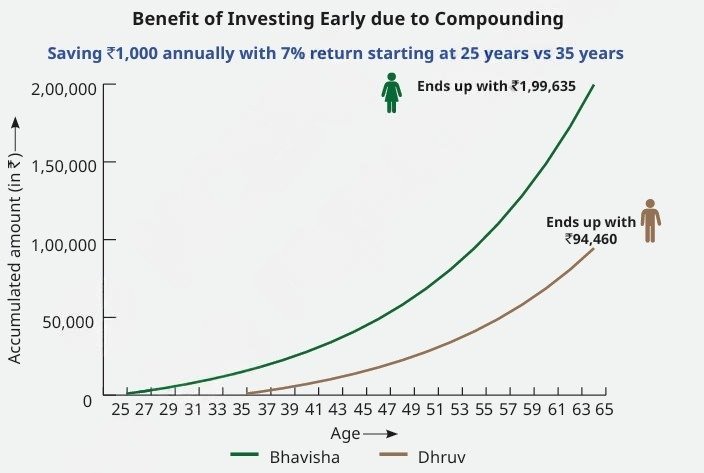
a) She started investing earlier and earned returns for a longer time
b) She received free money from the bank
c) She invested in stocks only
d) She stopped saving at an earlier age
Answer: a) She started investing earlier and earned returns for a longer time
Q. Refer to Figure (BSE SENSEX Over the Years). Which observation can be made from the graph?
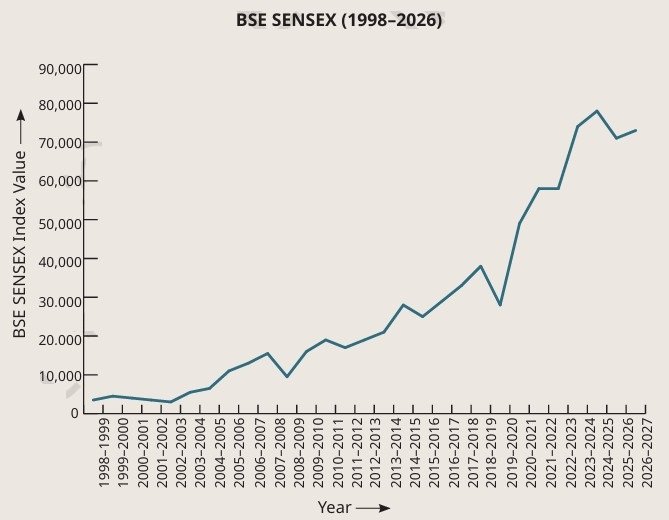
a) The SENSEX remains constant every year
b) The SENSEX always falls over time
c) The SENSEX shows short-term fluctuations but can rise significantly over the long term
d) The SENSEX only increases and never falls
Answer: c) The SENSEX shows short-term fluctuations but can rise significantly over the long term
Q. Refer to Figure (Risk Sharing through Insurance Pool). Many individuals regularly contribute premiums to a common fund. What is the primary purpose of creating this fund?

a) To distribute profits among all policyholders every month
b) To increase taxes collected by the government
c) To provide financial support to policyholders facing covered losses
d) To reduce the number of insurance policies
Answer: c) To provide financial support to policyholders facing covered losses
Q. Refer to Figure (Types of Insurance) showing Health Insurance, Life Insurance, Motor Insurance, and Crop Insurance. Which branch of insurance is specifically designed to protect a family after the death of the earning member?
a) Health Insurance
b) Motor Insurance
c) Crop Insurance
d) Life Insurance
Answer: d) Life Insurance
Q. Refer to Figure (Factors to Consider Before Investment Decision). Which factor helps an investor decide how long money can remain invested before it is needed?
a) Return
b) Liquidity
c) Time Horizon
d) Risk
Answer: c) Time Horizon
Q. Refer to Figure (Factors to Consider Before Investment Decision). Which factor indicates the profit that can be earned from an investment?
a) Return
b) Time Horizon
c) Liquidity
d) Debt
Answer: a) Return
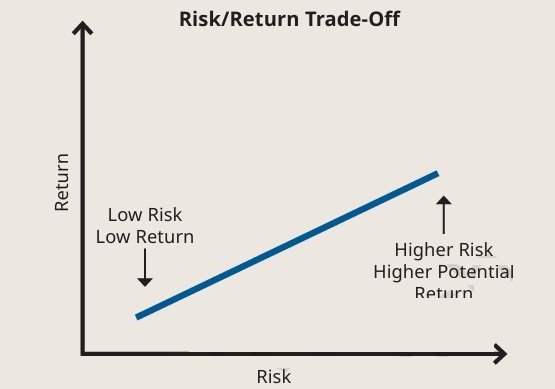
Q. Refer to Figure (Relationship between Risk and Return). What conclusion can be drawn from the diagram?
a) High return investments always have low risk
b) Risk and return are generally related, with higher returns requiring higher risk
c) Low-risk investments always provide the highest returns
d) Risk has no connection with return
Answer: b) Risk and return are generally related, with higher returns requiring higher risk
Q. Refer to Figure (Filing Income Tax). Why is paying taxes considered an important responsibility of citizens?

a) It increases personal profits
b) It reduces all expenses
c) It helps fund public services and national development
d) It guarantees higher salaries
Answer: c) It helps fund public services and national development
Higher-Order Competency-Based MCQ
Q. Why is setting financial goals important while preparing a budget?
a) It increases income automatically.
b) It helps people prioritise spending, saving, and investing decisions.
)It removes the need for saving money.
d) It guarantees profits on investments.
Answer: b) It helps people prioritise spending, saving, and investing decisions
Q. A student spends all pocket money immediately whenever it is received and never plans for future expenses. Which challenge is the student most likely to face?
a) Better financial planning
b) Higher income
c) Improved budgeting skills
d) Difficulty meeting future financial needs
Answer: d) Difficulty meeting future financial needs
Q. Why are mutual funds considered suitable for many investors?
a) They guarantee profits every year
b) They eliminate all investment risks
c) They invest only in government bonds
d) They provide diversification and are managed by professional fund managers
Answer: d) They provide diversification and are managed by professional fund managers
Q. Why is the disclaimer “Mutual fund investments are subject to market risks” included in advertisements?
)Because mutual funds always provide fixed returns
b) Because the value of investments can rise or fall depending on market performance
c) Because mutual funds are not regulated
d) Because investors cannot withdraw their money
Answer: b) Because the value of investments can rise or fall depending on market performance
Q. Why is insurance considered an important part of personal finance?
a) It guarantees wealth creation
b) It prevents all accidents from occurring
c) It protects income, savings, and assets from financial risks
d) It eliminates the need for saving money
Answer: c) It protects income, savings, and assets from financial risks
Q. A person decides not to buy any insurance because he believes nothing bad will happen in the future. Which financial principle is he ignoring?
a) The need to manage unexpected risks
b) The importance of increasing expenses
c) The principle of borrowing frequently
d) The benefit of avoiding financial planning
Answer: a) The need to manage unexpected risks
Q. Why do regular premium payments encourage better financial planning?
a) They reduce all household expenses
b) They help people develop a habit of setting aside money regularly
c) They guarantee profits every year
d) They eliminate the need for budgeting
Answer: b) They help people develop a habit of setting aside money regularly
Q. Why does India follow a progressive taxation system?
a) To charge the same tax from everyone
b) To reduce income inequality by taxing higher incomes at higher rates
c) To eliminate all taxes
d) To encourage people not to work
Answer: b) To reduce income inequality by taxing higher incomes at higher rates
Q. Sai’s taxable income in a financial year is ₹3,80,000. According to Table (New Tax Regime FY 2025-26), how much income tax will he have to pay?
| Annual Income | Tax Rate |
|---|---|
| Up to ₹4 lakh | Nil |
| ₹4 lakh – ₹8 lakh | 5% |
| ₹8 lakh – ₹12 lakh | 10% |
| ₹12 lakh – ₹16 lakh | 15% |
| ₹16 lakh – ₹20 lakh | 20% |
| ₹20 lakh – ₹24 lakh | 25% |
| Above ₹24 lakh | 30% |
a) ₹19,000
b) ₹38,000
c) ₹5,000
d) ₹0
Answer: d) ₹0
Q. Why should investors consider liquidity before investing money?
a) Because all investments have the same risk
b) Because money may be needed quickly during emergencies
c) Because liquidity guarantees higher returns
d) Because liquidity reduces taxes
Answer: b) Because money may be needed quickly during emergencies
Q. A person wants maximum safety and steady returns rather than high profits. Which investment option is most suitable according to the chapter?
a) Shares
b) Equity Trading
c) Fixed Deposit (Fd)
d) Speculative Investment
Answer: c) Fixed Deposit (Fd)
Disclaimer: The content that is present on our website is based on the NCERT Class 9 Social Science textbook and is provided for educational purposes only. All the content and images have been taken from Social Science Class 9 NCERT Textbook and CBSE Support material. Images and content shown above are the property of individual organizations and are used here for reference purposes only. To make it easy to understand, some of the content and images are generated by AI and cross-checked by the teachers.