
← Back to Class 9 Social Science MCQs
Resistance and Resilience Class 9 MCQs help students revise the important topics from the chapter Resistance and Resilience (1000–1700 CE). These multiple-choice questions cover the Rajputs, Ahom kingdom, Vijayanagara Empire, and the rise of the Marathas under Chhatrapati Shivaji Maharaj. Practise these MCQs to improve your understanding of medieval Indian history and prepare for Class 9 Social Science examinations.
Resistance and Resilience Class 9 MCQ
Conceptual Recall MCQs
Q. What does resilience mean in the context of Indian history between 1000 CE and 1700 CE?
a) Expanding territories through wars
b) Trading with foreign countries
c) The ability to survive, adapt, and preserve traditions during difficult times
d) Building large temples and forts
Answer: c) The ability to survive, adapt, and preserve traditions during difficult times
Q. What is meant by resistance?
a) Actively opposing a force or threat to protect territory, power, or culture
b) Accepting foreign rule without opposition
c) Following only religious traditions
d) Expanding trade routes
Answer: a) Actively opposing a force or threat to protect territory, power, or culture
Q. What was the iqta system introduced during the Delhi Sultanate?
a) A system of sea trade
b) A system where territories were assigned to military commanders in place of salaries
c) A method of temple construction
d) A military alliance among Rajputs
Answer: b) A system where territories were assigned to military commanders in place of salaries
Q. Which Rajput ruler led a confederacy against Bābur in the Battle of Khanua in 1527?
a) Mahārāṇā Pratāp
b) Rāṇā Udai Singh
c) Rāṇā Sāngā
d) Rāṇā Kumbhā
Answer: c) Rāṇā Sāngā
Q. Which Ahom commander defeated the Mughal fleet in the Battle of Saraighat in 1671?
a) Lachit Borphukan
b) Jayadhvaj Singha
c) Abu Bakr
d) Mīr Jumlā
Answer: a) Lachit Borphukan
Q. In which year was the Vijayanagara Empire established?
a) 1228
b) 1336
c) 1526
d) 1565
Answer: b) 1336
Q. What does the term Swarājya mean in the context of the Maratha state?
a) Rule by foreign powers
b) Trade with neighbouring kingdoms
c) Independent self-rule free from external control
d) Religious reform movement
Answer: c) Independent self-rule free from external control
Q. Which Sikh Guru established the Khalsa in 1699?
a) Guru Arjan Dev
b) Guru Hargobind
c) Guru Nānak
d) Guru Gobind Singh
Answer: d) Guru Gobind Singh
Q. Who led the first major Jat rebellion against the Mughal Empire in 1669?
a) Guru Gobind Singh
b) Gokul Jat
c) Rāṇā Sāngā
d) Lachit Borphukan
Answer: b) Gokul Jat
Q. The Bhakti tradition mainly emphasised:
a) Territorial expansion
b) Military training
c) Inclusivity, devotion, and socio-religious equality
d) Royal administration
Answer: c) Inclusivity, devotion, and socio-religious equality
Q. What was one of the most important roles of temples in medieval India besides worship?
a) Only military training centres
b) Only residential centres for kings
c) Economic, educational, and cultural centres
d) Only trading ports
Answer: c) Economic, educational, and cultural centres
Q. What was a hunḍī during this period?
a) A type of irrigation device
b) A bill of exchange used in trade and money transfer
c) A military weapon
d) A land tax record
Answer: b) A bill of exchange used in trade and money transfer
Q. Which European group was the first to arrive in India for trading ventures during the 16th century?
a) French
b) Dutch
c) English
d) Portuguese
Answer: d) Portuguese
Q. Which financial instrument played an important role in facilitating secure long-distance trade in medieval India?
a) Mansab
b) Hunḍī
c) Iqta
d) Jagir
Answer: b) Hunḍī
Application-Based MCQs
Q. A kingdom forms alliances with neighbouring states to prevent an invasion and protect its territory. This is an example of:
a) Resilience only
b) Cultural exchange
c) Resistance through political action
d) Religious reform
Answer: c) Resistance through political action
Q. A community restores places of worship and preserves its traditions despite political instability. This best reflects:
a) Resilience
b) Military expansion
c) Urbanisation
d) Colonisation
Answer: a) Resilience
Q. A ruler avoids direct confrontation with a stronger enemy and instead uses hills, forests, and surprise attacks to weaken the opponent. Which military strategy is being used?
a) Naval warfare
b) Guerrilla warfare
c) Defensive fortification only
d) Diplomatic negotiation
Answer: b) Guerrilla warfare
Q. A king grants ranks and administrative positions to local rulers to gain their loyalty and strengthen his empire. This policy is most closely related to:
a) The mansabdari system
b) The iqta system
c) The village panchayat system
d) The guild system
Answer: a) The mansabdari system
Q. An army uses small, fast boats specially designed for river warfare and takes advantage of local rivers and monsoon conditions. Which kingdom’s strategy does this describe?
a) Mewar
b) Vijayanagara
c) Ahom Kingdom
d) Delhi Sultanate
Answer: c) Ahom Kingdom
Q. A ruler chooses a capital surrounded by a river and rocky hills to improve defence against enemy attacks. Which kingdom followed this strategy?
a) Vijayanagara Empire
b) Madurai Sultanate
c) Delhi Sultanate
d) Mughal Empire
Answer: a) Vijayanagara Empire
Q. A ruler builds a network of forts on hills and valleys to launch surprise attacks and provide safe retreats during war. Which kingdom is most closely associated with this strategy?
a) Maratha Kingdom
b) Delhi Sultanate
c) Ahom Kingdom
d) Mughal Empire
Answer: a) Maratha Kingdom
Q. A religious community creates military and administrative groups to defend itself against repeated persecution and political pressure. This development best describes the formation of:
a) Mansabdars
b) Misals
c) Iqtas
d) Nāyakas
Answer: b) Misals
Q. A devotee worships God through singing devotional hymns in the local language instead of depending on temples or rituals. Which Bhakti idea does this reflect?
a) Nām kīrtan
b) Iqta system
c) Mansabdari
d) Guerrilla warfare
Answer: a) Nām kīrtan
Q. A saint wants spiritual teachings to reach ordinary people who do not know Sanskrit. What is the most effective method according to the Bhakti tradition?
a) Use only royal courts
b) Compose hymns in local languages
c) Restrict teachings to scholars
d) Build military camps
Answer: b) Compose hymns in local languages
Q. A merchant wants to send a large amount of money to another city without carrying cash during a long and risky journey. Which financial instrument would be most useful?
a) Mansab
b) Iqta
c) Land grant
d) Hunḍī
Answer: d) Hunḍī
Q. A temple employs sculptors, musicians, priests, administrators, and artisans while also supporting irrigation works. Which role of temples does this best show?
a) Temples functioned as economic institutions.
b) Temples functioned only as places of worship.
c) Temples functioned only as courts.
d) Temples functioned only as military centres.
Answer: a) Temples functioned as economic institutions.
Q. A merchant learns Portuguese, Persian, and English to communicate with traders from different regions and expand his business. This example shows:
a) Growth of commercial interactions
b) Decline of trade
c) Spread of agriculture only
d) Military expansion
Answer: a) Growth of commercial interactions
Q. A trader acts as a banker, money-changer, shipper, and interpreter while conducting overseas trade. Which feature of Indian Ocean commerce does this best reflect?
a) Merchants had only one fixed role.
b) Trade was controlled only by rulers.
c) Indian merchants performed multiple commercial functions.
d) Trade was limited to agriculture.
Answer: c) Indian merchants performed multiple commercial functions.
Assertion–Reason MCQs
Q. Assertion (a) : Resistance and resilience are closely linked.
Reason (R): Resilience gives communities the ability to endure hardships and sustain resistance.
a) Both A and R are true, and R is the correct explanation of A.
b) Both A and R are true, but R is not the correct explanation of A.
c) A is true, but R is false.
d) A is false, but R is true.
Answer: a) Both A and R are true, and R is the correct explanation of A.
Q. Assertion (a) : Peninsular India largely remained free from Turkic control during the 11th and 12th centuries.
Reason (R): Most Turkish invasions during this period were concentrated in northern and western India.
a) A is true, but R is false.
b) A is false, but R is true.
c) Both A and R are true, and R is the correct explanation of A.
d) Both A and R are true, but R is not the correct explanation of A.
Answer: c) Both A and R are true, and R is the correct explanation of A.
Q. Assertion (a) : Many Indian kingdoms resisted the Delhi Sultanate.
Reason (R): Resistance was motivated by political factors as well as the desire to preserve socio-cultural traditions.
a) Both A and R are true, and R is the correct explanation of A.
b) Both A and R are true, but R is not the correct explanation of A.
c) A is true, but R is false.
d) A is false, but R is true.
Answer: a) Both A and R are true, and R is the correct explanation of A.
Q. Assertion (a) : The Mughals sought cooperation with some Rajput kingdoms.
Reason (R): The Rajputs possessed military strength, loyalty, and administrative abilities useful for the empire.
a) A is true, but R is false.
b) A is false, but R is true.
c) Both A and R are true, but R is not the correct explanation of A.
d) Both A and R are true, and R is the correct explanation of A.
Answer: d) Both A and R are true, and R is the correct explanation of A.
Q. Assertion (a) : The Ahom Kingdom successfully resisted Mughal expansion for a long period.
Reason (R): The Ahoms effectively used local geography, river systems, and guerrilla-style tactics.
a) Both A and R are true, and R is the correct explanation of A.
b) Both A and R are true, but R is not the correct explanation of A.
c) A is true, but R is false.
d) A is false, but R is true.
Answer: a) Both A and R are true, and R is the correct explanation of A.
Q. Assertion (a) : Vijayanagara became one of the richest and most influential states in southern India.
Reason (R): The empire promoted literature, trade, culture, and expanded its territory.
a) A is true, but R is false.
b) A is false, but R is true.
c) Both A and R are true, but R is not the correct explanation of A.
d) Both A and R are true, and R is the correct explanation of A.
Answer: d) Both A and R are true, and R is the correct explanation of A.
Q. Assertion (a) : Aurangzeb spent more than two decades in the Deccan.
Reason (R): The Marathas continuously resisted Mughal attempts to control the region.
a) Both A and R are true, and R is the correct explanation of A.
b) Both A and R are true, but R is not the correct explanation of A.
c) A is true, but R is false.
d) A is false, but R is true.
Answer: a) Both A and R are true, and R is the correct explanation of A.
Q. Assertion (a) : The Akāl Takht represented temporal authority in Sikhism.
Reason (R): The Harmandir Sahib represented spiritual authority while the Akāl Takht dealt with governance and justice.
a) A is true, but R is false.
b) A is false, but R is true.
c) Both A and R are true, and R is the correct explanation of A.
d) Both A and R are true, but R is not the correct explanation of A.
Answer: c) Both A and R are true, and R is the correct explanation of A.
Q. Assertion (a) : The Bhakti tradition helped strengthen social resilience during difficult times.
Reason (R): Bhakti practices could continue through songs, community gatherings, and devotion even when temples faced restrictions.
a) Both A and R are true, and R is the correct explanation of A.
b) Both A and R are true, but R is not the correct explanation of A.
c) A is true, but R is false.
d) A is false, but R is true.
Answer: a) Both A and R are true, and R is the correct explanation of A.
Q. Assertion (a) : Chaitanya Mahāprabhu used community singing as a means of social unity.
Reason (R): Sankīrtan brought people together and helped bridge social divisions.
a) A is true, but R is false.
b) A is false, but R is true.
c) Both A and R are true, but R is not the correct explanation of A.
d) Both A and R are true, and R is the correct explanation of A.
Answer: d) Both A and R are true, and R is the correct explanation of A.
Q. Assertion (a) : The Indian economy remained dynamic between 1000 and 1700 CE.
Reason (R): Agricultural innovations, trade networks, merchant groups, and financial instruments supported economic growth.
a) Both A and R are true, and R is the correct explanation of A.
b) Both A and R are true, but R is not the correct explanation of A.
c) A is true, but R is false.
d) A is false, but R is true.
Answer: a) Both A and R are true, and R is the correct explanation of A.
Q. Assertion (a) : Gujarati merchants became important beneficiaries of the changing commercial order.
Reason (R): They successfully adapted to expanding Indian Ocean trade networks.
a) A is true, but R is false.
b) A is false, but R is true.
c) Both A and R are true, and R is the correct explanation of A.
d) Both A and R are true, but R is not the correct explanation of A.
Answer: c) Both A and R are true, and R is the correct explanation of A.
Q. Assertion (a) : Temple towns such as Thanjavur, Kanchipuram, and Puri became important urban centres.
Reason (R): Temples supported economic activities, employment, trade, and social institutions.
a) Both A and R are true, and R is the correct explanation of A.
b) Both A and R are true, but R is not the correct explanation of A.
c) A is true, but R is false.
d) A is false, but R is true.
Answer: a) Both A and R are true, and R is the correct explanation of A.
Q. Assertion (a) : Many temples built from the 16th century onwards looked different from earlier temples.
Reason (R): Communities adapted temple architecture to avoid destruction.
a) Both A and R are true, and R is the correct explanation of A.
b) Both A and R are true, but R is not the correct explanation of A.
c) A is true, but R is false.
d) A is false, but R is true.
Answer: a) Both A and R are true, and R is the correct explanation of A.
Case Study-Based MCQ
Q. A ruler encouraged people to preserve their cultural traditions and rebuild important places of worship after repeated invasions. Even during political instability, he community maintained its social and spiritual practices. Which feature of Indian society is best reflected in this case?
a) Territorial expansion
b) Resilience
c) Religious discrimination
d) Commercial activity
Answer: b) Resilience
Q. A ruler shifted his base to the hills when a powerful empire attacked his kingdom. Later, his son used surprise attacks, raids, and the difficult terrain to challenge the enemy and gradually recover lost territories. Which ruler is being described?
a) Rāṇā Sāngā
b) Mahārāṇā Pratāp
c) Rāṇā Kumbhā
d) Rāṇā Hammīra Deva
Answer: b) Mahārāṇā Pratāp
Q. An invading empire repeatedly tried to conquer a region. The local rulers used their knowledge of forests, rivers, and monsoon conditions to resist. They also relied on a military-administrative system and a strong river navy with fast boats. Which kingdom is being described?
a) Mewar
b) Vijayanagara
c) Ahom Kingdom
d) Madurai Sultanate
Answer: c) Ahom Kingdom
Q. A leader promoted the idea of self-rule and built a strong network of forts across hilly terrain. These forts served as military centres, administrative headquarters, and safe shelters during enemy attacks. His resistance weakened a powerful empire and inspired later generations. Who is this leader?
a) Guru Gobind Singh
b) Lachit Borphukan
c) Mahārāṇā Pratāp
d) Chhatrapati Śhivājī
Answer: d) Chhatrapati Śhivājī
Q. A spiritual leader encouraged people to gather in large groups and sing devotional songs in their own language. These gatherings helped people forget social barriers and created a strong feeling of unity. On one occasion, such singing was also used to protest restrictions on devotional practices. Which Bhakti saint is most closely associated with this example?
a) Kabīr
b) Rāidāsa
c) Chaitanya Mahāprabhu
d) Tulsīdās
Answer: c) Chaitanya Mahāprabhu
Q. A religious structure was built in a narrow lane and designed to resemble an ordinary residence. It lacked a tall shikhara and did not have the traditional appearance of a temple. The local community adopted this design during a period when many temples faced threats of destruction. This type of temple is best known as:
a) Dravida temple
b) Nagara temple
c) Havelī temple
d) Rock-cut temple
Answer: c) Havelī temple
Q. A coastal merchant family was involved in shipping goods, providing loans, exchanging currencies, translating languages, and connecting foreign traders with local markets. Over time, their business expanded with the arrival of European trading companies. What does this case best highlight?
a) Decline of merchant communities
b) The diverse role of Indian merchants in trade and commerce
c) Reduction in oceanic trade
d) Complete control of trade by European powers
Answer: b) The diverse role of Indian merchants in trade and commerce
Higher-Order Competency-Based MCQ
Q. Why did the fertile river-fed plains of India often attract foreign invasions during this period?
a) They contained large deserts.
b) They had surplus agricultural production and economic prosperity.
c) They were isolated from trade routes.
d) They had very low population density.
Answer: b) They had surplus agricultural production and economic prosperity.
Q. In 1178 CE, Queen Nāikī Devī defeated Muhammad Ghūrī at the Battle of Kasahrada. Which value does this event best demonstrate?
a) Religious reform
b) Maritime trade
c) Agricultural development
d) Resistance against invasion
Answer: d) Resistance against invasion
Q. Why did Mahārāṇā Pratāp adopt guerrilla warfare against the Mughals?
a) To increase trade with neighbouring states
b) To avoid using horses in battle
c) To take advantage of the rugged Aravalli terrain against a stronger enemy
d) To establish a new capital city
Answer: c) To take advantage of the rugged Aravalli terrain against a stronger enemy
Q. Which action mentioned in Dursā Arhā’s account best shows Mahārāṇā Pratāp’s independence from the Mughal court?
a) He accepted a mansab from Akbar.
b) He participated in the Nauroz festival.
c) He served in the Mughal army.
d) He did not participate in the Nauroz festival or stand guard during Jharokha Darshan.
Answer: d) He did not participate in the Nauroz festival or stand guard during Jharokha Darshan.
Q. Why was the location of Vijayanagara near Hampi strategically important?
a) It was close to the sea.
b) Its river and rocky terrain provided strong natural defence.
c) It had large desert areas.
d) It was isolated from trade routes.
Answer: b) Its river and rocky terrain provided strong natural defence.
Q. The action of Muthu Vīrappa Nāyak III refusing to honour the Mughal emperor’s slipper symbol mainly represented:
a) Acceptance of Mughal authority
b) Religious reform
c) Resistance against political domination
d) Expansion of trade relations
Answer: c) Resistance against political domination
Q. Why were forts such as Raigad and Sinhagad crucial to Maratha resistance?
a) They were mainly centres of religious ceremonies.
b) They enabled guerrilla warfare, defence, administration, and survival during sieges.
c) They were built only for trade activities.
d) They served as Mughal administrative centres.
Answer: b) They enabled guerrilla warfare, defence, administration, and survival during sieges.
Q. How did the martyrdoms of Guru Arjan Dev and Guru Tegh Bahādur influence the Sikh community?
a) They encouraged the Sikhs to withdraw from public life.
b) They ended the influence of Sikh Gurus.
c) They strengthened the resolve for collective organisation, resilience, and resistance.
d) They led to the decline of Sikhism.
Answer: c) They strengthened the resolve for collective organisation, resilience, and resistance.
Q. Why were local languages important for the success of the Bhakti movement?
a) They were compulsory in royal courts.
b) They helped rulers collect taxes.
c) They made devotional teachings accessible to common people and promoted solidarity.
d) They replaced all other languages in India.
Answer: c) They made devotional teachings accessible to common people and promoted solidarity.
Q. How did the martyrdoms of Sikh Gurus contribute to Sikh resilience?
a) They encouraged the Sikhs to avoid public life.
b) They weakened the Sikh community.
c) They ended the influence of Sikh teachings.
d) They strengthened unity, resistance, and collective organisation among Sikhs.
Answer: d) They strengthened unity, resistance, and collective organisation among Sikhs.
Q. Why did many coastal regions remain economically active even when large empires ruled inland areas?
a) Coastal regions had no contact with inland trade.
b) Maritime trade was largely managed by regional powers and local communities.
c) Agriculture was absent in coastal regions.
d) Empires completely controlled sea trade.
Answer: b) Maritime trade was largely managed by regional powers and local communities.
Q. According to Kṛiṣhṇadevarāya’s views in the Amukthamālyadā, why should rulers manage ports effectively and support foreign traders?
a) To increase military spending only
b) To encourage invasions
c) To reduce agricultural production
d) To promote commerce and strengthen the economy
Answer: d) To promote commerce and strengthen the economy
Q. Why did India’s economy remain resilient despite invasions and political instability during this period?
a) Because all wars ended quickly
b) Because foreign traders controlled the entire economy
c) Because agriculture, trade networks, merchant communities, and financial systems continued to function
d) Because agriculture was the only source of income
Answer: c) Because agriculture, trade networks, merchant communities, and financial systems continued to function
Q. Which factor best explains how economic strength supported resistance and resilience in medieval India?
a) It provided people with resources to sustain society, culture, and political resistance.
b) It reduced the importance of trade.
c) It stopped all foreign invasions.
d) It eliminated the need for agriculture.
Answer: a) It provided people with resources to sustain society, culture, and political resistance.
Diagram/Visual-Based MCQ
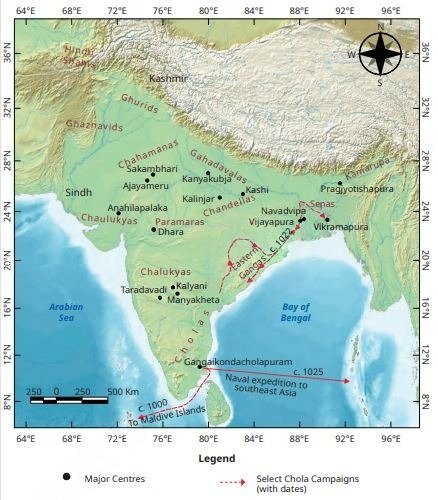
Q. Refer to Figure (Political Kingdoms of the Indian Subcontinent in the 11th and 12th Centuries). Which dynasty was associated with southern India and carried out campaigns including naval expeditions to Southeast Asia?
a) Chandelas
b) Chaulukyas
c) Gahadavalas
d) Cholas
Answer: d) Cholas
Q. Refer to Figure Which kingdom was defeated by Mahmūd of Ghaznī in 1001 CE?
a) Senas
b) Chandelas
c) Hindu Shahis
d) Eastern Gangas
Answer: c) Hindu Shahis
Q. Refer to Figure (Battle of Haldighati). The battle shown in the figure was fought between:
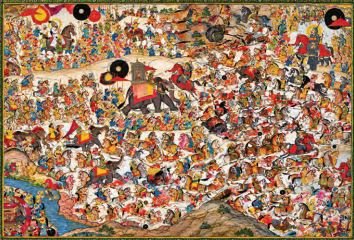
a) Mahārāṇā Pratāp and Akbar’s forces
b) Rāṇā Sāngā and Ibrāhim Lodī
c) Mahārāṇā Amar Singh and Jahāngīr
d) Rāṇā Kumbhā and Bābur
Answer: a) Mahārāṇā Pratāp and Akbar’s forces
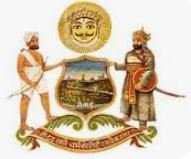
Q. Refer to Figure (Mewar’s Coat of Arms). Which community is shown alongside the Rajput warrior, symbolising its support to Mewar’s resistance?
a) Gonds
b) Bhils
c) Ahoms
d) Kākatīyas
Answer: b) Bhils
Q. Refer to Figure (Monument Commemorating the Battle of Saraighat). Which battle is remembered as a major victory of the Ahoms against the Mughals?
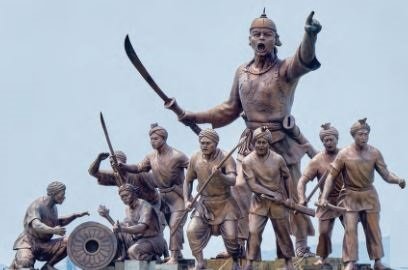
a) Battle of Khanua
b) Battle of Talikota
c) Battle of Haldighati
d) Battle of Saraighat
Answer: d) Battle of Saraighat
Q. Refer to Figure (Model of a Bāchārī Boat). What was the main advantage of the bāchārī boats used by the Ahoms?
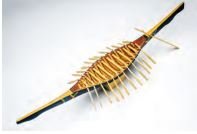
a) They could carry elephants.
b) They were heavily armoured.
c) They were light and fast for river warfare.
d) They were used only for trade.
Answer: c) They were light and fast for river warfare.
Q. Refer to Figure (Saint Kabīr with Nāmdeva, Rāidās, and Pipājī). The saints shown in the figure are associated with which tradition?
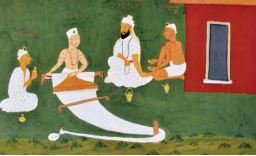
a) Mansabdari tradition
b) Bhakti tradition
c) Iqta tradition
d) Sultanate tradition
Answer: b) Bhakti tradition
Q. Refer to Figure (Brihadeeswara Temple, Thanjavur). Which statement best explains the significance of this temple?
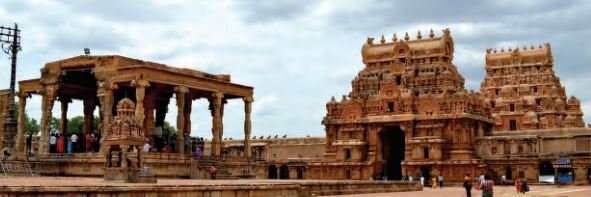
a) It was only a military fort.
b) It received extensive donations and became an important economic institution.
c) It was built by the Mughals.
d) It functioned only as a market.
Answer: b) It received extensive donations and became an important economic institution.
Q. Refer to Figure (Hunḍī). What was the main advantage of using a hunḍī?
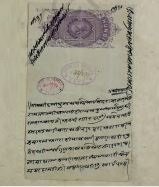
a) It increased land revenue collection.
b) It reduced agricultural production.
c) It allowed safer long-distance commercial transactions without carrying cash.
d) It was used only for temple donations.
Answer: c) It allowed safer long-distance commercial transactions without carrying cash.
Q. Refer to Figure (A Woman Weaver). The activity shown in the figure was an important part of:
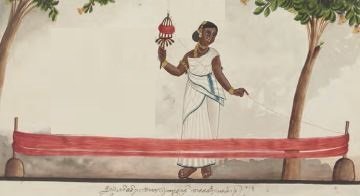
a) Military administration
b) Temple construction
c) Cotton textile production and trade
d) Tax collection
Answer: c) Cotton textile production and trade
Q. Refer to Figure (A Sarrāf or Money Changer). What was the primary role of a sarrāf?
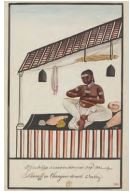
a) Leading military campaigns
b) Managing temples
c) Collecting land revenue
d) Providing financial services such as money exchange and handling hunḍīs
Answer: d) Providing financial services such as money exchange and handling hunḍīs
Q. Refer to Figure (Raigad Fort). Raigad Fort is best known as an example of:
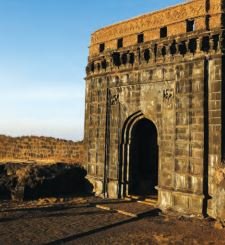
a) A Mughal military camp
b) A strategic Maratha fort used for administration and defence
c) A Sikh place of worship
d) An Ahom naval base
Answer: b) A strategic Maratha fort used for administration and defence
Disclaimer: The content that is present on our website is based on the NCERT Class 9 Social Science textbook and is provided for educational purposes only. All the content and images have been taken from Social Science Class 9 NCERT Textbook and CBSE Support material. Images and content shown above are the property of individual organizations and are used here for reference purposes only. To make it easy to understand, some of the content and images are generated by AI and cross-checked by the teachers.