
Our Home Earth: A Unique Life-Sustaining Planet Class 8 Notes explains why Earth is the only known planet that supports life. These notes cover the Earth’s atmosphere, water, sunlight, soil, minerals, reproduction, ecosystems, and conditions needed for life. The chapter also explains major threats such as climate change, biodiversity loss, and pollution, along with ways to protect our planet.
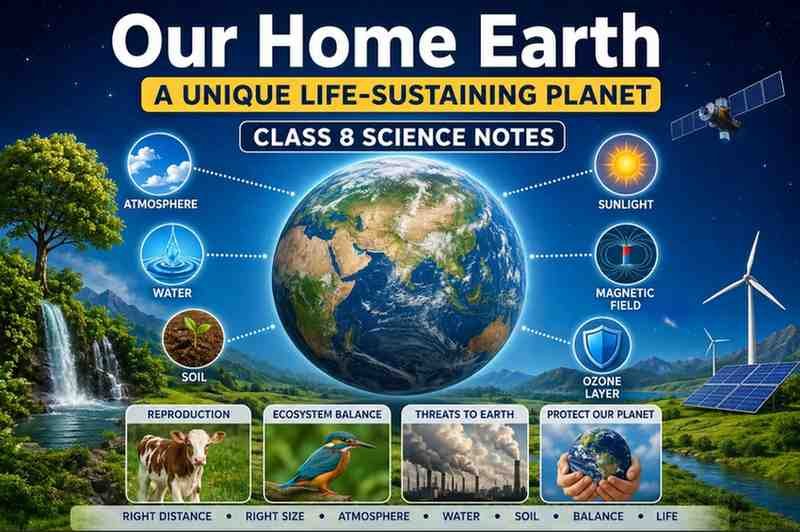
Our Home Earth a Unique Life Sustaining Planet Class 8 Notes
Earth is a special planet because it supports life. It has oceans, mountains, deserts, and forests. Scientists use satellites to study Earth, its plants, oceans, temperature, wind, and pollution.
Why Is Earth a Unique Planet?
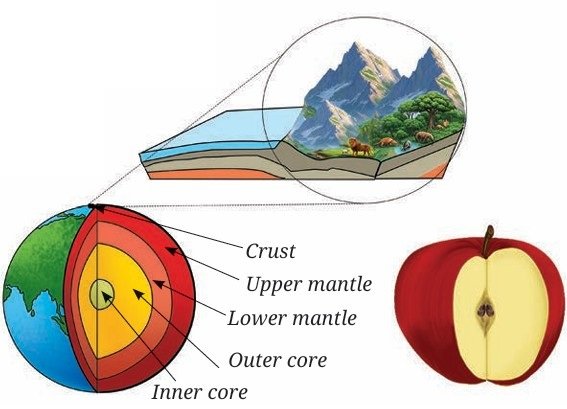
Earth is a special planet because it is the only planet where life exists and grows. The Earth has a thin layer on the surface called the crust. This layer is very small compared with the size of Earth. If Earth were the size of an apple, the crust would be as thin as its skin.
Features That Make Earth Special
- Atmosphere → Provides oxygen for breathing, carbon dioxide for plants, and protects us from harmful radiation.
- Water → Exists in liquid form, essential for survival of plants, animals, and humans.
- Soil → Rich in nutrients, supports crops and forests.
- Gravity → Holds air and water close to Earth, keeps us grounded.
- Temperature balance → Neither too hot nor too cold, suitable for life.
- Magnetic field → Shields Earth from solar winds and cosmic rays.
What Do the Planets of Our Solar System Look Like?
Our solar system has eight planets; these planets move around the sun in circular paths called orbits. In order of distance from the Sun, the planets are Mercury → Venus → Earth → Mars → Jupiter → Saturn → Uranus → Neptune.
There are two main groups of planets –
- Rocky planets: Mercury, Venus, Earth, and Mars are small and rocky.
- Large planets: Jupiter, Saturn, Uranus, and Neptune are much larger and are mostly made of gases.
Why Are Some Planets Hotter?
Planets get energy from the sun. Generally, planets closer to the sun are hotter planets, and the planets far away from the sun are the colder planets. But there is an important exception: Venus is hotter than Mercury, but Mercury is closer to the Sun.
Why Is Venus So Hot?
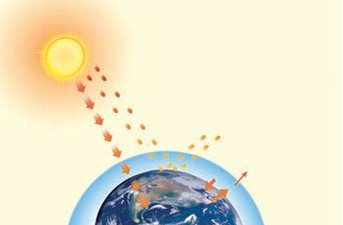
Venus has a very thick atmosphere which traps heat. The Venus atmosphere contains a large amount of carbon dioxide. These carbon dioxide traps heat. This is known as greenhouse effect.
Greenhouse Effect on Earth
Earth also has some gases, including carbon dioxide. The carbon dioxide traps heat. This natural greenhouse effect helps keep Earth at a suitable temperature for life.
Quick Revision Table
| Planet | Average | Temp (°C) | Radius vs Earth Atmosphere |
|---|---|---|---|
| Mercury | ~170 | 0.38 | No |
| Venus | ~450 | 0.95 | Yes (CO₂, thick) |
| Earth | ~15 | 1 | Yes (N₂, O₂) |
| Mars | –200 to 20 | 20 | 0.53 Thin (CO₂) |
| Jupiter | –108 | 11 | Yes (H₂, He) |
| Saturn | –139 | 9.5 | Yes (H₂, He) |
| Uranus | –197 | 4 | Yes (H₂, He, CH₄) |
| Neptune | –201 | 3.9 | Yes (H₂, He, CH₄) |
What Makes the Earth Suitable for Life to Exist ?
Earth is suitable for life because it has several special conditions that support living organisms.
1. Right Distance from the Sun
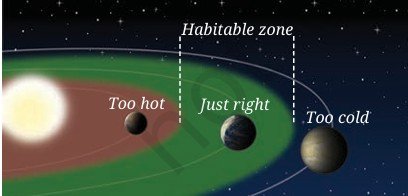
Earth is at the right distance from the Sun. This allows water to remain mostly in liquid form. If the earth will be close to the sun, then water will evaporate, and too far, then water will freeze. This special region is called the habitable zone, or Goldilocks zone.
2. Right Size and Atmosphere
Earth’s size gives it the right gravity to hold an atmosphere. Smaller planets like Mars have a thin atmosphere, and in large planets gravity is too strong; life would be crushed. Earth’s gravity keeps oxygen and other gases close, making breathing possible.
3. Ozone Layer
Some oxygen in the atmosphere forms ozone. The ozone layer acts like a shield and blocks much of the Sun’s harmful ultraviolet (UV) radiation. This helps protect living cells from damage.
4. Earth’s Magnetic Field
Earth acts like a giant magnet due to molten iron in its core. The magnetic field helps protect Earth from harmful particles coming from space, including solar wind and some cosmic rays. This protects the atmosphere and keeps life safe.
What Allows Life to Be Sustained on Earth?
Life on Earth is possible not just because of the right conditions, but because of the connections between living (biotic) and non-living (abiotic) components. This balance helps life survive and grow.
1. Air, Water, and Sunlight
- Air → Provides oxygen for respiration and carbon dioxide for photosynthesis.
- Sunlight → helps plants make food, warms the Earth, and drives weather.
- Water → Water covers 70% of Earth, regulates body temperature, aids digestion, transports nutrients, and supports aquatic life.
- Greenhouse effect → The atmosphere traps some heat, keeping Earth warm enough for liquid water.
2. Soil, Rocks, and Minerals
- Soil → Rich in nutrients like nitrogen and potassium, supports plant growth.
- Rocks and minerals → Provide salt, coal, oil, iron, copper, and other resources.
- Geodiversity → The variety of landforms and soils creates unique habitats for different life forms.
3. Plants, Animals, and Microorganisms
- Plants → Make food by photosynthesis, release oxygen.
- Animals → Eat plants or other animals, helping maintain balance.
- Microorganisms → Decompose dead matter, recycle nutrients back into soil.
- Together, they form the biosphere, where life interacts with land, water, and air.
4. Importance of Balance
Earth works like a team. Air, water, soil, land, and living organisms all affect one another. For example, cutting down forests can affect rainfall, soil, air quality, and animals. Balance keeps Earth habitable. Protecting clean air, water, soil, and biodiversity is essential for the future.
What Keeps Life from Disappearing?
Life continues on Earth because of reproduction. Reproduction allows plants and animals to produce new individuals of their own kind.
Genes: The Instructions for Life
Parents pass genetic material (genes) to their offspring. Genes contain instructions that help an organism develop features such as bones, muscles, skin, and other body parts.
Reproduction allows small differences to appear. These differences can sometimes help organisms survive in changing environments. Over many generations, these changes can lead to new features.
Two Types of Reproduction
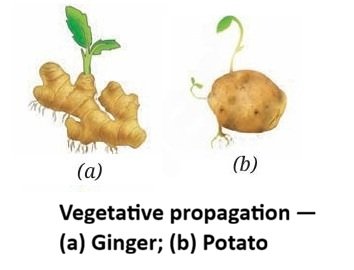
1. Asexual Reproduction: In asexual reproduction only one parent is involved. The new organism has almost the same genetic instructions as the parent. Example: Vegetative propagation in plants (potato eyes, ginger, and money plant stem cutting). In asexual reproduction offspring look almost identical to the parent.
2. Sexual reproduction: In sexual reproduction two parents contribute genetic material. Special reproductive cells called gametes carry genetic material from each parent. When male and female gametes join, they form a zygote. Because genetic material from both parents is mixed, offspring are similar to their parents but not exactly the same.
Sexual Reproduction in Plants
Flowering plants have male and female reproductive parts.
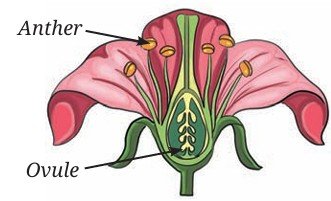
- Pollen grains carry the male material.
- Ovules contain the female material.
- Pollination means pollen goes to another flower.
- Fertilization happens when male and female join.
- A zygote is formed. It grows into a seed.
- The part around the seed becomes a fruit.
Seeds can move to new places by wind, water, birds, or animals.
Sexual Reproduction in Animals
In animals, the reproductive cells are called—
- Sperm—male gamete
- Egg – female gamete
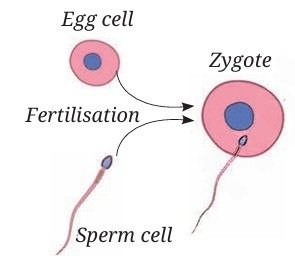
In some of the animals, like fish and frogs, the fertilization can take place in water. In birds and mammals, the fertilization takes place inside the female body.
Birds
- The fertilized egg is laid outside the body.
- The embryo grows inside the egg.
- The egg has food stored to help the embryo until it hatches.
Mammals
- The embryo grows inside the female’s body.
- The mother’s body gives the baby food and oxygen.
- The baby develops until it is born.
What Are the Threats to Life on Earth?
Life on the Earth depends on the balance between living and non-living things. Human activities are disturbing this balance. There are three major environmental problems which are called the triple planetary crisis.
- Climate change
- Loss of biodiversity
- Pollution
1. Climate Change
Burning fuels like oil and coal releases harmful gases like carbon dioxide and methane. These gases trap the heat and make the earth warmer. Climate change can cause –
- Melting of ice
- Rising sea levels
- Extreme weather
- Changes in rainfall
- Loss of plants and animals
2. Loss of Biodiversity
When the forest and other natural habitats are destroyed, then the plants and animals lose their homes. For example, less grass → fewer herbivores → less food for predators. So, losing one type of organism can affect many others.
3. Pollution
Pollution can harm air, water and soil –
- Air pollution can cause breathing problems and harm to the plants.
- Water pollution can harm aquatic animals like fish, frogs, etc.
- Soil pollution can reduce the crop production and spread harmful substances.
How Can We Protect Earth?
We can help by:
- Using clean energy such as solar and wind energy
- Saving water and energy
- Reducing pollution
- Reusing, repairing, and recycling things
- Protecting forests and wildlife
- Using natural resources carefully
- Supporting sustainable farming
Disclaimer: The content that is present on our website is based on the NCERT Class 8 Science textbook and is provided for educational purposes only. All the content and images have been taken from Science Class 8 NCERT Textbook. Images and content shown above are the property of individual organizations and are used here for reference purposes only. To make it easy to understand, some of the content and images are generated by AI and cross-checked by the teachers.