
India’s Long Road to Independence Class 8 Notes explains how India’s struggle for freedom developed over many years. It covers important events, movements and leaders who challenged British rule. From the Revolt of 1857 to the Non-Cooperation Movement, Civil Disobedience Movement and Quit India Movement, this chapter helps us understand how Indians came together and worked towards independence in 1947.
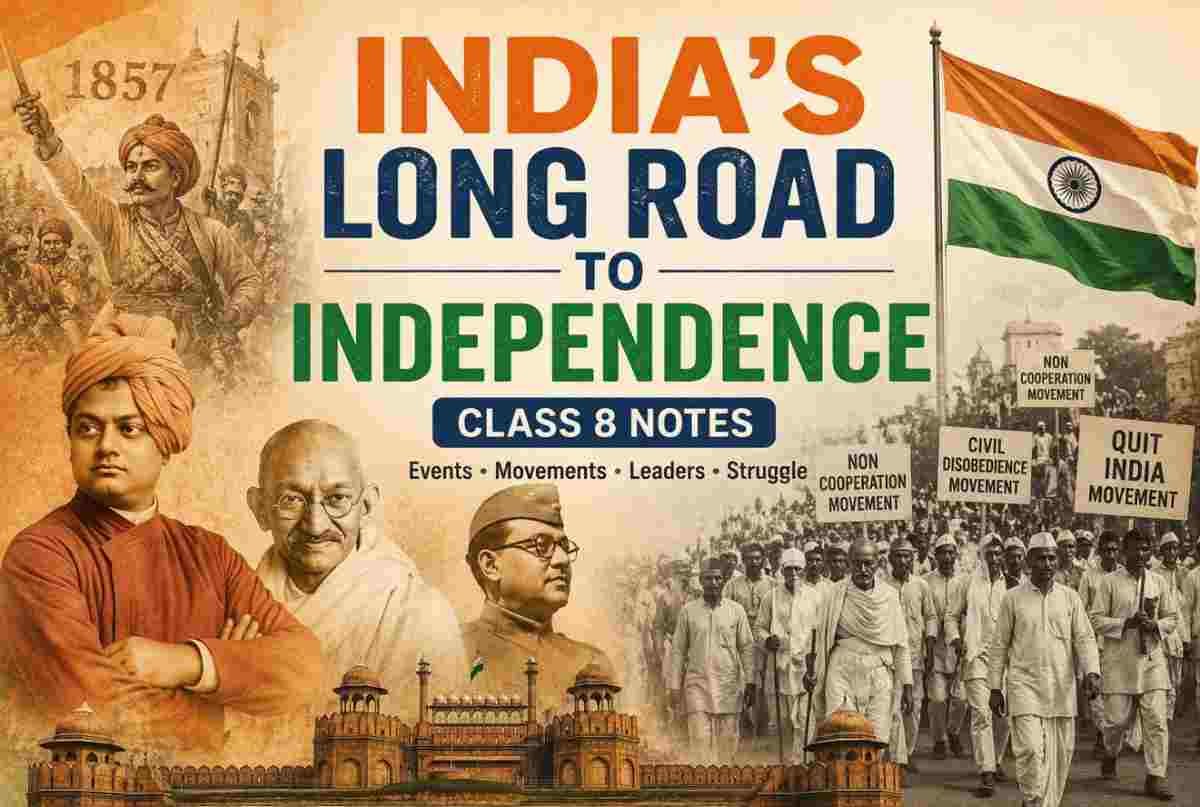
India’s Long Road to Independence Class 8 Notes
India is a land of many languages, religions, and customs. People joined together to fight against the British Empire, which was the most powerful empire at the time. The struggle for freedom was not only about battle or protest; it was about the ideas, dreams, and courage of many people to make a new nation.
India’s independence story is very big, and it has many events like reforms, protests, speeches, uprisings, and sacrifices. The Indian Council of Historical Research says that there are 14000 martyrs who died for freedom.
All the freedom fighters wanted independence, but they have different ideas; some believe in peaceful protests, and others want revolutionary action.
A Royal Proclamation
After the Great Uprising of 1857, the British Crown meant Queen Victoria took direct control of India from the East India Company. India was now ruled by Queen’s name by the Secretary of State for India and the Viceroy/Governor General.
Queen Victoria promised to give respect to the rights and honor of Indian princes, and the prince can keep ruling under British power. She said Indians will be treated as Britons, and there will be no forceful conversion to Christianity. This shows that the British want to rule peacefully.
Indians were treated as inferior compared to the British. Indians got less pay than British employees. Courts had mostly British juries, who favored Europeans. Indians were often not allowed in clubs, trains, or certain public spaces.
- Arms Act (1878): Indians were not allowed to keep weapons, but British could.
- Vernacular Press Act (1878): Controlled and censored newspapers in Indian languages.
Reform Movements
During the British rule, many Indians wanted to reform India. They looked at the European models, but there are some challenging problems in the society, like child marriage, widow suffering, and caste discrimination. Reformers want to spread education and want to improve the social life of Indians.
Bankim Chandra Chattopadhyay
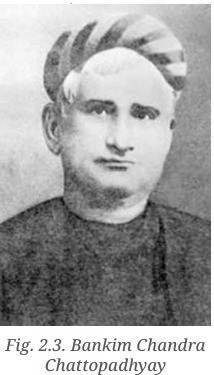
Bankim Chandra Chattopadhyay is a writer in Bengal. He wrote novels about romance and Indian history. In 1882, he wrote Aandamath, which is about the worship of Mother Land as a divine mother.
The novel included the song Vande Mataram, which became the freedom cry later. His work gave Indians cultural pride and inspired the freedom movement.
Swami Vivekananda
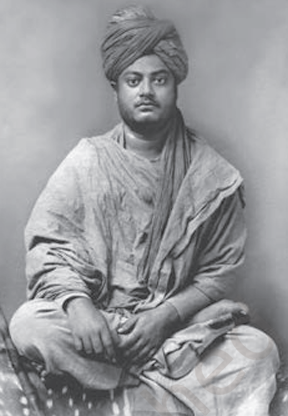
Swami Vivekananda’s name was Narendranath Datta; he was born in 1863. He studied both Western books and Indian texts. He became a disciple of Sri Ramakrishna, and later he is known as Swami Vivekananda. In 1893, he gave a famous speech in Chicago at the Parliament of the World’s Religions.
He founded the Ramakrishna Mission. His message was, “Arise, awake, and stop not till the goal is reached.” He inspired many freedom fighters. His birthday, 12 January, is celebrated as National Youth Day.
The Rise of the Indian National Congress
After 1857, many Indians wanted to make local associations, but they were not successful. A British officer, Allan Octavian Hume, opposed the British police because of the poverty in India. He resigned and helped the Indian to come together.
In 1885, the Indian National Congress was formed in Bombay, and the first session was conducted. That time leaders are Hume, Dadabhai Naoroji, and Womesh Chunder Bonnerjee. Womesh Chunder Bonnerjee was the first president.
Early congress goals
The congress showed that the more loyalty to the British Crown. But party wanted—
- More Indian participation in governance.
- Civil rights protection.
- Some social and economic reforms.
The colonial government was mostly ignored by Congress resolutions, and only minor concessions were given. Indians were not allowed real power in governance.
Growing Discontent
After 1857, the people anger and dissatisfaction continued to increase. Few examples of this growing dissatisfaction.
1. The Kuka (Namdhari) Movement:
The leader was Baba Ram Singh in Punjab. Their followers called him Kukas because of their loud chants in prayers. He stops child marriage, femicide, and dowry. His goal was to stop child marriage, female infanticide, and dowry.
He has rejected foreign goods and made their own courts and postal system. He also opposed cow slaughter near gurdwaras. In 1872, the British punished them brutally—65 Kukas were executed, and Baba Ram Singh was exiled to Burma.
2. The Chapekar Brothers (Poona, 1897)
A famine and plague hit Maharashtra; the British officers treated people harshly. The Chapekar brothers killed the British Plague Commissioner and military officer. They were arrested and hanged.
3. Bal Gangadhar Tilak
The Bal Gangadhar Tilak is also known as Lokmanya Tilak. He wrote against the British government in his newspaper, Kesari. He turned the Ganesh festival and Shivaji festival into patriotic gatherings. He was arrested due to “seditious writings” and went to jail for 18 months. Later wrote The Gita Rahasya, interpreting the Bhagavad Gita. Inspired secret societies like Abhinav Bharat and connected with revolutionaries.
4. Birsa Munda and the Ulgulaan
Birsa Munda was from Jharkhand. He fought against British exploitation, landlords, and missionaries. He promised to restore tribal faith and dignity. In 1899–1900, it led the Ulgulaan (Great Tumult) uprising. That time police and churches were attacked, and the British responded with violence. Birsa was arrested and died in jail at age 24.
The 1905 Partition of Bengal and National Awakening
In 1905, the Viceroy Lord Curzon divided Bengal into two parts because of the better administration, but the actual reason was the divide-and-rule policy.
- East Bengal → mostly Muslim.
- West Bengal → mostly Hindu.
Leaders like Rabindranath Tagore, Surendranath Banerjee, Bipin Chandra Pal, and Ashwini Kumar Dutt opposed it. People tried to show unity between Hindus and Muslims; patriotic songs like Vande Mataram were sung.
“Swadeshi” means goods that are made in India. People burned foreign clothes and sugar in bonfires. They are wearing swadeshi clothes, which become a symbol of pride. Some of them also boycotted British schools, colleges, and courts.
The Nationalist Agenda
In 1906, Bipin Chandra Pal started an English newspaper named “Bande Mataram”. Aurobindo Ghose soon joined and became in charge. The paper spread the idea of India’s freedom every day. It promotes—
- National Education (Indian-style learning).
- Swadeshi (use Indian goods).
- Boycott (reject British goods).
- Passive resistance (non-violent opposition).
In 1906, the people created the National Council of Education and started Bengal National College to give the Indian-rooted education to students. Aurobindo Ghose was the first principal. After independence, it became part of the Jadavpur University.
In 1906, there was a congression session in Calcutta; at that time, the president was Dadabhai Naoroji. He declared for main goals—
- Swaraj (self-rule).
- Swadeshi.
- Boycott.
- National Education.
That time Swaraj was not clearly defined; it could mean self-rule under the British or full independence.
The All-India Muslim League
In 1906, the All-India Muslim League was formed in Dhaka by the Muslim leaders. The aim was to protect Muslim political interests in British India. They thought the Congress would not represent Muslims.
Earlier, Syed Ahmad Khan had already opposed the Congress and set up the Muhammadan Educational Conference, starting the League, which represented mainly the elite Muslims. Later, this division contributed to the Two-Nation idea.
The 1907 Surat Split
The Congress session was conducted in Surat, Gujarat. The moderates, like Dadabhai Naoroji, Gopal Krishna Gokhale, and Surendranath Banerjee, wanted to slow reforms under British rule.
Extremists like Tilak, Lala Lajpat Rai, and Aurobindo Ghose wanted Swaraj and stronger resistance. Because of the Congress split into two groups, Moderates vs. Extremists.
The Revolutionaries
Many newspapers questioned the British rule, like
- Moderate: Voice of India, The Bengalee.
- Radical: Kesari, Bande Mataram, and Yugantar (called for violent revolt).
Khudiram Bose was 18 years old, and Prafulla Chaki tried to kill Judge Kingsford in 1908.
- The bomb killed two British women instead.
- Prafulla shot himself; Khudiram was hanged but became a national hero.
Aurobindo Ghose and others were arrested in the Alipore Bomb Trial in 1908. Tilak was jailed for 6 years in Mundalay, Burma.
Violent Attacks (1909–1912)
- 1909: Bomb at Viceroy Minto’s carriage (missed).
- 1909: Anant Kanhere (18) and others killed a magistrate in Nashik.
- 1911: Vanchinathan killed a collector in Tamil Nadu.
- 1912: Bomb on Viceroy Hardinge in Delhi, and he survived.
The Ghadar Movement started by Indian migrants in North America; the leaders were Lala Hardayal and Sohan Singh Bhakna. They tried to start a mutiny in the British Indian Army during World War I. Their plan failed, and many were arrested and executed. Rash Bihari Bose escaped to Japan; later he helped from the Indian National Army. That time the leaders were Rash Behari Bose, Sachindra Nath Sanyal, and Kartar Singh Sarabha.
Bagha Jatin, whose nickname was “Bagha,” means “tiger.” The name is given because he fought with a tiger. He worked with Rash Behari Bose on the German plot. In 1915, he fought bravely against British police in Odisha and died after being wounded.
Home Rule Movement and the Lucknow Pact
In 1914, when the Tilik was released from jail, he wanted three things –
- Unite Congress factions (Moderates + Extremists).
- Hindu–Muslim cooperation.
- Work for Home Rule (self-government within the British Empire).
In 1916, Tilak and Annie Besant started the Home Rule Movement. The aim was for India to govern itself but still remain part of the British Empire. It was the first step towards full independence. The British rejected his demand, but it inspired mass political mobilisation.
Lucknow Pact (1916)
In the Lucknow Congress session, the Congress and the Muslim League made an agreement. The congress accepted separate electorates for Muslims; men and Muslims could vote for their own representatives. This shows the Hindu and Muslim unity against the British.
Gandhi and the Non-Cooperation Movement
Mohandas Karamchand Gandhi was born in Porbandar, Gujarat, in 1869. He studied law in London, then went to South Africa. There he saw racial discrimination and created the idea of Satyagraha, which is truth without nonviolence.
In 1995, he came back to India and joined Congress and helped the farmers and workers through peaceful protests. In 1919, the British passed a Rowlatt Act. The Rowlatt Act was a British law where the government could arrest and imprison Indians without trial. Mahatma Gandhi started a nationwide protest with fasting, prayer and unity of Hindus and Muslims.
The Non-Cooperation Movement
The Non-Cooperation Movement started in 1920 at the Congress session in Nagpur. He asked people to boycott foreign goods and use Indian-made products. Leaders like Vallabhbhai Patel supported it, and people across India joined, making it a huge movement.
The Jallianwala Bagh Massacre and its Aftermath
April 13, 1919, Amritsar, Punjab. People gathered for the Baisakhi festival and to protest against the Rowlatt Act and the arrest of leaders. General Dyer blocked the main gate and ordered troops to fire on the unarmed crowd. The British official counted 400 dead and 1200 wounded. Indian estimates more than 1000 dead.
The anger spread across India. Trust in British rule was broken, and people united more strongly for freedom. The British government removed General Dyer from his post and sent him back to England. General Dyer, known as the “Butcher of Amritsar”, was removed from India but was not punished by the British government.
In 1940, the Udham Singh killed O’Dwyer in London to avenge the massacre. He was arrested and handed over.
The Khilafat Movement and its Aftermath
Long ago, the Ottoman Sultak was the religious leader of the Muslims, known as the Caliph. After World War I, the empire was broken, and the Caliph’s power became weak. In 1919, the Muslim leaders Loke Muhammad Ali, Shaukat Ali and Abul Kalam Azad started the Khilafat Movement. They wanted to save the Caliph’s position.
In 1920, Gandhi supported the Khilafat Movement to unite Hindus and Muslims against British rule. The Congress and Khilafat leaders joined hands together. The Khilafat Movement merged with Gandhi’s Non-Cooperation Movement.
Some leaders from the Congress said Turkey’s Caliph was not the India issue. Jinnah left the Congress in 1920 because religion was mixed with politics. In 1922, the Chauri Chaura Incident happened; protesters killed policemen. Gandhi stopped the Non-Cooperation Movement because it turned violent. Some leaders disagreed and formed the new party, which is known as the Swaraj Party.
In 1922, Turkey ended the Sultanate. In 1924, the Caliphate was fully abolished.
Aftermath –
- It united Hindus and Muslims for some time.
- Later, it created differences among communities.
- Hindu-Muslim riots happened in later years.
Protests, Repression and Revenge
In 1927, the Simon Commission came to India to study constitutional reform, but without a single Indian member. People shouted “Siman Go Back!” and showed black flags.
In Lahore in October 1928, Lala Lajpat Rai led a nonviolent march which the police brutally lathi-charged (i.e., attacked with sticks). He was badly hurt and died two weeks later. His words: “These blows are the last nails in the coffin of British rule.”
The Hindustan Republican Association (HRA) later became HSRA. The leaders are Ram Prasad Bismil, Ashfaqulla Khan, Chandrashekhar Azad, and Bhagat Singh.
In 1925, HRA members robbed a train carrying government money, which is known as the Kakori Train Robbery. Many leaders were caught and executed.
Bhagat Singh and Azad want to take revenge on Lala Lajpat Rai’s death. In 1929 Bhagat Singh threw bombs in the Assembly; the purpose was no death, only to make the deaf hear. Bhagat Singh, Sukhdev and Rajguru were hanged in 1931 at the ages of 22 and 23. They become the symbols of courage and resistance.
Women revolutionaries Suniti Chowdhury and Shanti Ghosh (schoolgirls) killed a British magistrate in Comilla in 1931. Bina Das tried to shoot the Governor of Bengal in Culcutta University in 1931. She was joiled for 9 years.
Purna Swaraj and Civil Disobedience
In 1928, Congress asked for Dominion status like Canada or Australia, but Britain refused. Dominion status means India has its own government, but the British king will remain the head of the country.
Younger leaders like Jawaharlal Nehru and Subhas Chandra Bose wanted complete independence. Congress passed the resolution in December 1929 at Lahore.
Gandhi started it in 1930 with the Salt March (Dandi March). He walked 380 km to make salt, breaking the British salt law. Salt is chosen because the British taxed it heavily. Breaking the salt law becomes a symbol of freedom.
The movement spread among the people; people boycotted foreign cloth and refused to pay taxes. Thousands of people were arrested, including Gandhi. Women joined in large numbers and broke salt laws, picketing liquor shops and protesting.
The poet Sarojini Naidu was the first woman to become a Congress president in 1925. She fought for women’s rights and joined the Salt March.
Qissa Khwani Bazaar Massacre: In April 23, 1930, in Peshawar. British troops fired on peaceful protesters after arresting Abdul Ghaffar Khan. Hundreds of people died.
The Indian soldier named Chandra Singh Garhwali refused to fire on Indian people. They chose jail instead of killing their own people.
The Gandhi-Irwin Pact
There was one agreement between Viceroy Irwin and Gandhi: that the government freed political prisoners. They will allow Indians to make salt in small amounts. Congress stopped civil disobedience and joined the Round Table Conference in London.
The young Congress leaders like Jawaharlal Nehru and Subhas Chandra Bose felt it was time for a more radical demand like “Purna Swaraj,” or complete independence.
Gandhi wanted to restart civil disobedience, but British arrested many people. Public support was low, so Gandhi ended the movement in 1934.
In 1935, the British allowed elected governments in provinces but kept control of defense and foreign affairs.
Poona Pact:
- Gandhi worked against untouchability.
- Ambedkar wanted separate electorates for depressed classes.
- Gandhi opposed it and went on a fast.
- Finally, the Poona Pact (1932) gave more reserved seats instead of separate electorates.
The Idea of Separate Nations
In 1930, poet Muhammad Iqbal said Muslims should have their own land in north-west India to protect their culture. This idea later became the thought of Pakistan. Congress leaders like Maulana Azad wanted Hindus and Muslims to live together. But Jinnah supported the idea of a separate Muslim nation. Some Hindu leaders like Savarkar also said Hindus and Muslims were two nations, but they did not ask for partition directly.
World War II and the Indian National Army
In 1939, World War II started. Britain joined the war and pulled India in without asking. About 2.5 million Indian soldiers fought, and many died. At home, food became less, and the Bengal famine killed millions. Subhas Chandra Bose left Congress because he wanted armed struggle. He escaped India, went to Germany and Japan, and formed the Indian National Army (INA) in 1943. The INA fought with Japan in Burma and northeast India but lost. Still, Bose became a symbol of courage.
The Quit India Movement
In 1942, Britain sent the Cripps Mission, offering Dominion status after the war. Congress rejected it. Gandhi then started the Quit India Movement with the slogan “Do or Die.” British arrested leaders, but people continued protests. Workers went on strike, students left schools, and people attacked government offices. The viceroy said it was the biggest rebellion since 1857. It was crushed, but it showed India wanted freedom at any cost. A brave 17-year-old girl, Kanaklata Barua from Assam, was shot while leading a flag march. She became a young martyr, remembered as Birangana (heroic woman).
Partition, Turmoil, and Independence
After World War II (1945), Britain became weak and could not control India anymore. In 1946, Indian soldiers in the Air Force and Navy rebelled. This showed the British that they could not depend on Indian soldiers.
The Cabinet Mission (1946) tried to plan freedom, but Congress and Muslim League disagreed. Then Jinnah called Direct Action Day (16 August 1946). Riots broke out in Calcutta. Hindus and Muslims fought, thousands died. Partition looked unavoidable.
In July 1947, Viceroy Mountbatten asked lawyer Radcliffe to draw borders quickly. The Radcliffe Line divided Punjab and Bengal. India became Hindu-majority, Pakistan became Muslim-majority (West Pakistan and East Pakistan, now Bangladesh).
On 15 August 1947, India became free. Jawaharlal Nehru became Prime Minister. But Partition caused huge violence. Millions lost homes and families. Women suffered the most. Gandhi was very sad about the killings.
Historians say freedom came not only from Gandhi’s nonviolence but also from revolts, revolutionaries, mutinies, and Britain’s weakness after the war. From 1857 to 1947, Indians — farmers, workers, leaders, and revolutionaries — all fought and sacrificed.
Disclaimer: The content that is present on our website is based on the NCERT Class 8 Social Science textbook and is provided for educational purposes only. All the content and images have been taken from Socail Science Class 8 NCERT Textbook. Images and content shown above are the property of individual organizations and are used here for reference purposes only. To make it easy to understand, some of the content and images are generated by AI and cross-checked by the teachers.