
← Back to Class 10 Study Material
Life Processes is an important chapter in Class 10 Science. These MCQs cover important NCERT concepts related to nutrition, respiration, transportation, and excretion in plants and animals. The questions are written in simple language and are useful for quick revision, concept practice, and exam preparation.
Life Processes Class 10 MCQs
Conceptual Recall MCQs
Q. Which of the following is not a life process?
a) Nutrition
b) Respiration
c) Transportation
d) Reproduction
Answer: d) Reproduction
Q. The main source of energy for life processes is:
a) Oxygen
b) Food
c) Water
d) Carbon dioxide
Answer: b) Food
Q. In unicellular organisms, exchange of gases occurs by:
a) Lungs
b) Gills
c) Diffusion
d) Trachea
Answer: c) Diffusion
Q. Which of the following organisms shows autotrophic nutrition?
a) Lion
b) Mushroom
c) Green plant
d) Amoeba
Answer: c) Green plant
Q. The immediate product of photosynthesis is:
a) Starch
b) Carbohydrate
c) Protein
d) Glycogen
Answer: b) Carbohydrate
Q. Enzymes are important in nutrition because they:
a) Store food
b) Break down complex substances
c) Absorb sunlight
d) Transport water
Answer: b) Break down complex substances
Q. Which enzyme in saliva helps in digestion of starch?
a) Pepsin
b) Lipase
c) Salivary amylase
d) Trypsin
Answer: c) Salivary amylase
Q. The muscular movement that pushes food along the alimentary canal is called:
a) Peristalsis
b) Emulsification
c) Respiration
d) Assimilation
Answer: a) Peristalsis
Q. Which part of the alimentary canal absorbs digested food?
a) Stomach
b) Small intestine
c) Large intestine
d) Oesophagus
Answer: b) Small intestine
Q. The energy currency of the cell is:
a) Glucose
b) ATP
c) Oxygen
d) Pyruvate
Answer: b) ATP
Q. In human beings, the respiratory pigment is:
a) Chlorophyll
b) Haemoglobin
c) Myoglobin
d) Keratin
Answer: b) Haemoglobin
Q. Anaerobic respiration in yeast produces:
a) Lactic acid
b) Ethanol and carbon dioxide
c) Water and oxygen
d) Glucose and ATP
Answer: b) Ethanol and carbon dioxide
Q. The fluid medium of blood that transports food and waste is:
a) Plasma
b) Platelets
c) Haemoglobin
d) Lymph
Answer: a) Plasma
Q. Which blood vessels have valves to prevent backflow?
a) Arteries
b) Veins
c) Capillaries
d) Lymph vessels
Answer: b) Veins
Q. The normal blood pressure in humans is:
a) 100/60 mm Hg
b) 120/80 mm Hg
c) 140/90 mm Hg
d) 160/100 mm Hg
Answer: b) 120/80 mm Hg
Q. The tissue that transports water and minerals in plants is:
a) Phloem
b) Xylem
c) Cambium
d) Epidermis
Answer: b) Xylem
Q. The transport of soluble products of photosynthesis is called:
a) Transpiration
b) Translocation
c) Diffusion
d) Osmosis
Answer: b) Translocation
Q. Which force is the major driving factor for upward movement of water during daytime?
a) Root pressure
b) Transpiration pull
c) Diffusion
d) Capillary action
Answer: b) Transpiration pull
Q. The basic filtration unit of the kidney is:
a) Alveolus
b) Nephron
c) Bowman’s capsule
d) Glomerulus
Answer: b) Nephron
Q. The main nitrogenous waste excreted by humans is:
a) Oxygen
b) Urea
c) Carbon dioxide
d) Ammonia
Answer: b) Urea
Q. In plants, excess water is removed by:
a) Translocation
b) Transpiration
c) Photosynthesis
d) Respiration
Answer: b) Transpiration
Application-Based MCQs
Q. A student observes a green plant kept in a dark room for 3 days. Which life process will be most affected?
a) Respiration
b) Excretion
c) Photosynthesis
d) Transportation
Answer: c) Photosynthesis
Q. If waste products are not removed from the body, what will happen?
a) Growth will stop
b) Energy will increase
c) Harmful effects on cells
d) Respiration will improve
Answer: c) Harmful effects on cells
Q. A desert plant takes in carbon dioxide at night and uses it during the day. This adaptation helps the plant to:
a) Avoid water loss during daytime
b) Increase oxygen release at night
c) Store starch in roots
d) Absorb more sunlight
Answer: a) Avoid water loss during daytime
Q. A cow and a lion differ in their nutrition because:
a) Cow is autotrophic, lion is heterotrophic
b) Cow eats stationary food, lion eats mobile food
c) Cow uses enzymes, lion does not
d) Cow absorbs food outside, lion absorbs inside
Answer: b) Cow eats stationary food, lion eats mobile food
Q. Herbivores like cows have a longer small intestine than carnivores because:
a) Meat is harder to digest
b) Cellulose in grass needs more time to digest
c) They eat more food
d) They drink more water
Answer: b) Cellulose in grass needs more time to digest
Q. A patient has liver damage. Which digestive process will be most affected?
a) Digestion of proteins
b) Digestion of starch
c) Emulsification of fats
d) Absorption of water
Answer: c) Emulsification of fats
Q. Dental caries occur because:
a) Saliva digests enamel
b) Bacteria produce acids from sugars
c) Plaque strengthens teeth
d) Enzymes remove dentine
Answer: b) Bacteria produce acids from sugars
Q. A sprinter experiences muscle cramps after sudden activity. This is due to:
a) Excess oxygen in muscles
b) Build-up of lactic acid
c) Excess ATP production
d) Lack of glucose
Answer: b) Build-up of lactic acid
Q. Fishes breathe faster than humans because:
a) They have smaller lungs
b) Water contains less dissolved oxygen than air
c) They need more carbon dioxide
d) They lack haemoglobin
Answer: b) Water contains less dissolved oxygen than air
Q. Birds and mammals have four-chambered hearts because:
a) They need less oxygen
b) They require efficient oxygen supply to maintain body temperature
c) They mix oxygenated and deoxygenated blood
d) They pump blood only once per cycle
Answer: b) They require efficient oxygen supply to maintain body temperature
Q. A person suffers from hypertension. This means:
a) Low blood pressure
b) High blood pressure due to constricted arterioles
c) Normal blood pressure
d) Blood pressure only in veins
Answer: b) High blood pressure due to constricted arterioles
Q. A tall tree can transport water to its highest leaves mainly due to:
a) Root pressure only
b) Transpiration pull creating suction
c) Diffusion of water molecules
d) Gravity pulling water upwards
Answer: b) Transpiration pull creating suction
Q. In spring, sugar stored in roots is moved to buds. This shows that:
a) Translocation occurs only upward
b) Phloem transport is bidirectional
c) Xylem transports food
d) Transpiration stops in spring
Answer: b) Phloem transport is bidirectional
Q. A patient with kidney failure is treated using dialysis. Which statement is correct?
a) Dialysis reabsorbs glucose and amino acids
b) Dialysis removes nitrogenous wastes by diffusion
c) Dialysis stores urine in bladder
d) Dialysis increases blood pressure
Answer: b) Dialysis removes nitrogenous wastes by diffusion
Q. Organ donation of kidneys is possible while the donor is alive because:
a) Kidneys are non-vital organs
b) One healthy kidney can perform the function of both
c) Kidneys regenerate after removal
d) Kidneys are not involved in excretion
Answer: b) One healthy kidney can perform the function of both
Assertion–Reason MCQs
Q. Assertion (A): Visible movement is not a reliable characteristic of life.
Reason (R): Some living organisms show molecular movements that are invisible to the naked eye.
a) Both A and R are true, R explains A
b) Both A and R are true, R does not explain A
c) A is true, R is false
d) A is false, R is true
Answer: a) Both A and R are true, R explains A
Q. Assertion (A): Viruses are considered non-living outside a host cell.
Reason (R): They do not show molecular movements until they infect a cell.
a) Both A and R are true, R explains A
b) Both A and R are true, R does not explain A
c) A is true, R is false
d) A is false, R is true
Answer: a) Both A and R are true, R explains A
Q. Assertion (A): Stomata are important for photosynthesis.
Reason (R): They allow exchange of gases between plant and environment.
a) Both A and R are true, R explains A
b) Both A and R are true, R does not explain A
c) A is true, R is false
d) A is false, R is true
Answer: a) Both A and R are true, R explains A
Q. Assertion (A): Fungi like bread moulds show heterotrophic nutrition.
Reason (R): They absorb simple substances after breaking down food outside their body.
a) Both A and R are true, R explains A
b) Both A and R are true, R does not explain A
c) A is true, R is false
d) A is false, R is true
Answer: a) Both A and R are true, R explains A
Q. Assertion (A): Hydrochloric acid in the stomach helps digestion.
Reason (R): It creates an acidic medium for pepsin to act on proteins.
a) Both A and R are true, R explains A
b) Both A and R are true, R does not explain A
c) A is true, R is false
d) A is false, R is true
Answer: a) Both A and R are true, R explains A
Q. Assertion (A): Villi increase the efficiency of absorption in the small intestine.
Reason (R): They increase the surface area and are richly supplied with blood vessels.
a) Both A and R are true, R explains A
b) Both A and R are true, R does not explain A
c) A is true, R is false
d) A is false, R is true
Answer: a) Both A and R are true, R explains A
Q. Assertion (A): Aerobic respiration releases more energy than anaerobic respiration.
Reason (R): Glucose is completely broken down into carbon dioxide and water in aerobic respiration.
a) Both A and R are true, R explains A
b) Both A and R are true, R does not explain A
c) A is true, R is false
d) A is false, R is true
Answer: a) Both A and R are true, R explains A
Q. Assertion (A): Carbon dioxide turns lime water milky.
Reason (R): Carbon dioxide reacts with calcium hydroxide to form insoluble calcium carbonate.
a) Both A and R are true, R explains A
b) Both A and R are true, R does not explain A
c) A is true, R is false
d) A is false, R is true
Answer: a) Both A and R are true, R explains A
Q. Assertion (A): Platelets help in clotting of blood.
Reason (R): They plug leaks in blood vessels to prevent loss of blood.
a) Both A and R are true, R explains A
b) Both A and R are true, R does not explain A
c) A is true, R is false
d) A is false, R is true
Answer: a) Both A and R are true, R explains A
Q. Assertion (A): Capillaries are one-cell thick.
Reason (R): This thin wall allows exchange of materials between blood and tissues.
a) Both A and R are true, R explains A
b) Both A and R are true, R does not explain A
c) A is true, R is false
d) A is false, R is true
Answer: a) Both A and R are true, R explains A
Q. Assertion (A): Transpiration helps in temperature regulation of plants.
Reason (R): Loss of water vapour from leaves cools the plant surface.
a) Both A and R are true, R explains A
b) Both A and R are true, R does not explain A
c) A is true, R is false
d) A is false, R is true
Answer: a) Both A and R are true, R explains A
Q. Assertion (A): Translocation in phloem requires energy.
Reason (R): ATP is used to transfer sucrose into phloem tissue.
a) Both A and R are true, R explains A
b) Both A and R are true, R does not explain A
c) A is true, R is false
d) A is false, R is true
Answer: a) Both A and R are true, R explains A
Q. Assertion (A): Bowman’s capsule collects the filtrate from blood.
Reason (R): It is associated with a cluster of thin-walled capillaries.
a) Both A and R are true, R explains A
b) Both A and R are true, R does not explain A
c) A is true, R is false
d) A is false, R is true
Answer: a) Both A and R are true, R explains A
Q. Assertion (A): Plants can store waste products in vacuoles.
Reason (R): Vacuoles act as storage sites for resins, gums, and other wastes.
a) Both A and R are true, R explains A
b) Both A and R are true, R does not explain A
c) A is true, R is false
d) A is false, R is true
Answer: a) Both A and R are true, R explains A
Case-Based MCQ
Q. A teacher places two plants:
- Plant A in sunlight with sufficient water.
- Plant B in complete darkness with sufficient water.
After 5 days, Plant A looks healthy, while Plant B looks weak and yellow.
What conclusion can be drawn?
a) Water is not required for plants.
b) Sunlight is essential for photosynthesis.
c) Darkness improves plant growth.
d) Plants do not need energy.
Answer: b) Sunlight is essential for photosynthesis
Q. In an experiment, two plants are kept under bell-jars:
- Plant A with potassium hydroxide inside the jar.
- Plant B without potassium hydroxide.
After 2 hours in sunlight, starch test is performed.
Observation: Plant A shows no starch, Plant B shows starch.
What does this prove?
a) Sunlight is essential for photosynthesis
b) Carbon dioxide is essential for photosynthesis
c) Water is essential for photosynthesis
d) Chlorophyll is essential for photosynthesis
Answer: b) Carbon dioxide is essential for photosynthesis
Q. In an experiment, starch solution is placed in two test tubes:
- Tube A with saliva
- Tube B without saliva
After 20 minutes, iodine is added. Tube A shows no blue-black colour, while Tube B does.
What does this prove?
a) Saliva converts starch into simple sugar
b) Saliva makes starch insoluble
c) Saliva absorbs starch
d) Saliva protects teeth from starch
Answer: a) Saliva converts starch into simple sugar
Q. A student sets up two test tubes with lime water:
- Tube A: Air blown in with a syringe.
- Tube B: Exhaled air blown in directly.
Observation: Tube B turns milky faster than Tube A.
What does this prove?
a) Exhaled air has more oxygen
b) Exhaled air has more carbon dioxide
c) Exhaled air has more nitrogen
d) Exhaled air has less water vapour
Answer: b) Exhaled air has more carbon dioxide
Q. A doctor measures a patient’s blood pressure as 160/100 mm Hg.
What does this indicate?
a) Normal blood pressure
b) Low blood pressure
c) Hypertension, risk of artery rupture
d) Efficient double circulation
Answer: c) Hypertension, risk of artery rupture
Q. In an experiment, two pots are kept in sunlight:
- Pot A with a plant
- Pot B with a stick
After 30 minutes, moisture is seen inside the cover of Pot A but not Pot B.
What does this prove?
a) Plants absorb water from soil
b) Plants lose water through transpiration
c) Plants store water in roots
d) Plants do not need water
Answer: b) Plants lose water through transpiration
Q. A patient’s blood test shows accumulation of urea and uric acid. Doctors suggest hemodialysis.
What does this indicate?
a) The patient’s lungs are not functioning
b) The patient’s kidneys are unable to filter wastes
c) The patient’s bladder is blocked
d) The patient’s liver is damaged
Answer: b) The patient’s kidneys are unable to filter wastes
Diagram/Visual-Based MCQ
Q. In Figure (Lime water test), lime water turns milky faster when air is exhaled into it because:
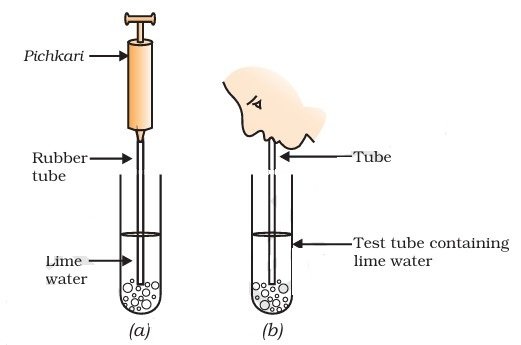
a) Exhaled air contains more carbon dioxide
b) Exhaled air contains more oxygen
c) Exhaled air contains more nitrogen
d) Exhaled air contains less water vapour
Answer: a) Exhaled air contains more carbon dioxide
Q. In Figure (Breakdown of glucose pathways), lactic acid formation occurs in:
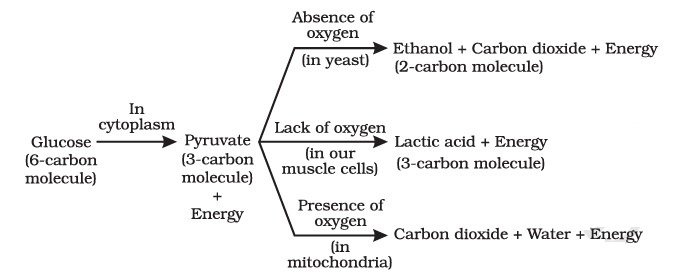
a) Yeast cells
b) Muscle cells during lack of oxygen
c) Plant cells during photosynthesis
d) Red blood cells
Answer: b) Muscle cells during lack of oxygen
Q. In Figure (Human respiratory system), the balloon-like structures where gas exchange occurs are:
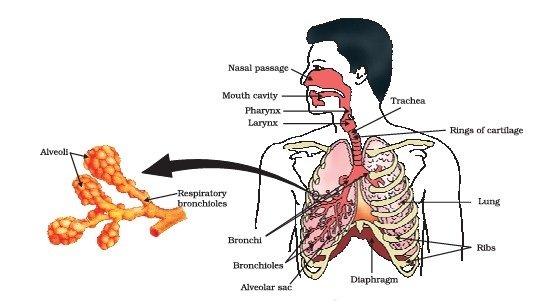
a) Bronchi
b) Alveoli
c) Trachea
d) Cartilage rings
Answer: b) Alveoli
Q. In Figure (Human heart sectional view), which chamber pumps oxygenated blood to the body?
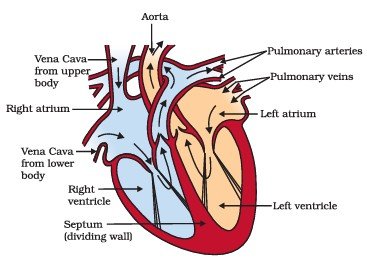
a) Right atrium
b) Left atrium
c) Right ventricle
d) Left ventricle
Answer: d) Left ventricle
Q. In Figure (Transport and exchange of gases), deoxygenated blood from the body enters:
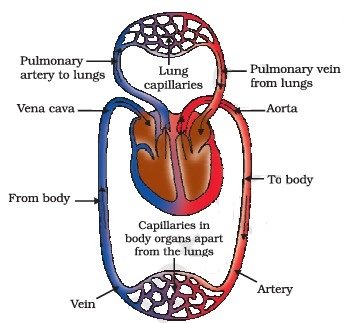
a) Left atrium
b) Right atrium
c) Left ventricle
d) Pulmonary veins
Answer: b) Right atrium
Q. In Figure (Movement of water during transpiration in a tree), the upward movement of water is mainly due to:
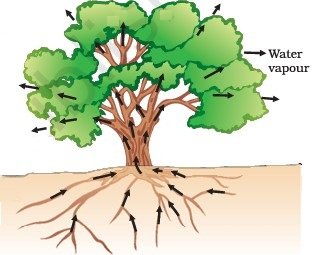
a) Root pressure
b) Transpiration pull
c) Diffusion of minerals
d) Capillary action only
Answer: b) Transpiration pull
Q. In Figure (Human excretory system), urine is stored before release in:
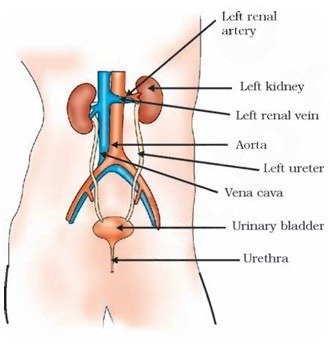
a) Kidney
b) Ureter
c) Urinary bladder
d) Urethra
Answer: c) Urinary bladder
Q. In Figure (Structure of a nephron), selective reabsorption of glucose and amino acids occurs in:
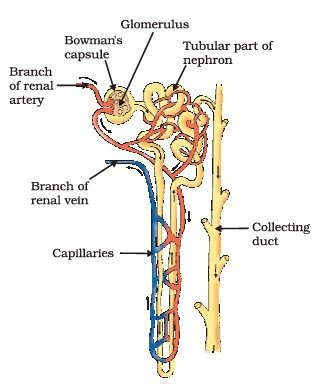
a) Bowman’s capsule
b) Tubule of nephron
c) Glomerulus
d) Ureter
Answer: b) Tubule of nephron
Disclaimer: The content that is present on our website is based on the NCERT Class 10 Science textbook and is provided for educational purposes only. All the content and images have been taken from Science Class 10 NCERT Textbook. Images and content shown above are the property of individual organizations and are used here for reference purposes only. To make it easy to understand, some of the content and images are generated by AI and cross-checked by the teachers.