
← Back to Class 10 Study Material
Carbon and Its Compounds Class 9 MCQ covers important concepts such as properties of carbon, covalent bonding, hydrocarbons, functional groups, homologous series, and chemical properties of carbon compounds. These MCQs are useful for exam preparation and quick revision.
Carbon and Its Compounds Class 9 MCQ
Conceptual Recall
Q. Atomic number of carbon is 6. Its electronic configuration is:
a) 2,4
b) 2,6
c) 2,8
d) 2,2,2
Answer: a) 2,4
Q. Carbon cannot form C⁴⁺ or C⁴⁻ ions easily because:
a) It is metallic
b) It requires too much energy to lose/gain 4 electrons
c) It has only 2 shells
d) It is inert
Answer: b) It requires too much energy to lose/gain 4 electrons
Q. The bond formed by sharing of electrons is called:
a) Ionic bond
b) Covalent bond
c) Metallic bond
d) Hydrogen bond
Answer: b) Covalent bond
Q. In a water molecule (H₂O), the type of bond between oxygen and hydrogen is:
a) Double covalent bond
b) Single covalent bond
c) Ionic bond
d) Metallic bond
Answer: b) Single covalent bond
Q. Nitrogen atom has atomic number 7. Its electronic configuration is:
a) 2,5
b) 2,7
c) 2,8
d) 2,6
Answer: a) 2,5
Q. Methane (CH₄) contains:
a) Four single covalent bonds
b) Two double bonds
c) One triple bond
d) Ionic bonds
Answer: a) Four single covalent bonds
Q. The property of carbon to form long chains with itself is called:
a) Tetravalency
b) Catenation
c) Saturation
d) Polymerisation
Answer: b) Catenation
Q. Compounds of carbon with only single bonds are called:
a) Unsaturated compounds
b) Saturated compounds
c) Ionic compounds
d) Metallic compounds
Answer: b) Saturated compounds
Q. Ethyne (C₂H₂) contains:
a) One double bond
b) One triple bond
c) Two single bonds
d) Four ionic bonds
Answer: b) One triple bond
Q. Compounds with the same molecular formula but different structures are called:
a) Isotopes
b) Isomers
c) Polymers
d) Allotropes
Answer: b) Isomers
Q. Cyclohexane (C₆H₁₂) is an example of:
a) Straight chain hydrocarbon
b) Branched chain hydrocarbon
c) Ring hydrocarbon
d) Unsaturated hydrocarbon
Answer: c) Ring hydrocarbon
Q. Hydrocarbons containing only single bonds are called:
a) Alkanes
b) Alkenes
c) Alkynes
d) Aromatic compounds
Answer: a) Alkanes
Q. A homologous series is a group of compounds in which successive members differ by:
a) –OH group
b) –CH₂ unit
c) –COOH group
d) –Cl atom
Answer: b) –CH₂ unit
Q. The general formula of alkanes is:
a) CnH₂n
b) CnH₂n+2
c) CnH₂n–2
d) CnH₂nO
Answer: b) CnH₂n+2
Q. The suffix used for naming alcohols is:
a) –al
b) –one
c) –ol
d) –ene
Answer: c) –ol
Q. Saturated hydrocarbons generally burn with:
a) Yellow sooty flame
b) Blue clean flame
c) Green flame
d) No flame
Answer: b) Blue clean flame
Q. Unsaturated hydrocarbons burn with:
a) Blue flame without smoke
b) Yellow flame with soot
c) Green flame with copper deposit
d) No flame at all
Answer: b) Yellow flame with soot
Q. The reaction of methane with chlorine in sunlight is an example of:
a) Addition reaction
b) Substitution reaction
c) Oxidation reaction
d) Neutralisation
Answer: b) Substitution reaction
Q. Vinegar is a dilute solution of:
a) Ethanol
b) Ethanoic acid
c) Methanol
d) Sodium acetate
Answer: b) Ethanoic acid
Q. Pure ethanoic acid is called glacial acetic acid because:
a) It is colourless
b) It freezes in cold climates
c) It is highly reactive
d) It is soluble in water
Answer: b) It freezes in cold climates
Q. Soaps are sodium or potassium salts of:
a) Long chain carboxylic acids
b) Sulphonic acids
c) Hydrocarbons
d) Alcohols
Answer: a) Long chain carboxylic acids
Application-Based
Q. Most carbon compounds have low melting and boiling points because:
a) They are ionic in nature
b) They have weak intermolecular forces
c) They are metallic compounds
d) They contain hydrogen bonds
Answer: b) They have weak intermolecular forces
Q. Carbon compounds are poor conductors of electricity because:
a) They contain free ions
b) They do not form ions in solution
c) They are amphoteric
d) They are metallic
Answer: b) They do not form ions in solution
Q. Ammonia (NH₃) molecule achieves noble gas configuration because:
a) Nitrogen shares three electrons with three hydrogens
b) Nitrogen loses three electrons
c) Hydrogen gains two electrons each
d) Nitrogen forms a triple bond with hydrogen
Answer: a) Nitrogen shares three electrons with three hydrogens
Q. Methane is widely used as a fuel because:
a) It is metallic in nature
b) It burns easily producing energy
c) It is a poor conductor of electricity
d) It has a triple bond
Answer: b) It burns easily producing energy
Q. Silicon shows catenation up to 7–8 atoms but not as extensively as carbon because:
a) Silicon is metallic
b) Silicon atoms are larger, so bonds are weaker
c) Silicon has valency 2
d) Silicon forms ionic bonds only
Answer: b) Silicon atoms are larger, so bonds are weaker
Q. Unsaturated hydrocarbons are more reactive than saturated hydrocarbons because:
a) They contain stronger bonds
b) They contain double or triple bonds
c) They are metallic in nature
d) They are ionic compounds
Answer: b) They contain double or triple bonds
Q. Butane (C₄H₁₀) exists in two forms — straight chain and branched chain. This shows:
a) Butane is an allotrope
b) Butane shows structural isomerism
c) Butane is aromatic
d) Butane is unsaturated
Answer: b) Butane shows structural isomerism
Q. Benzene (C₆H₆) is more reactive than hexane because:
a) It contains ionic bonds
b) It contains alternating double bonds in a ring
c) It is saturated
d) It is metallic
Answer: b) It contains alternating double bonds in a ring
Q. Methanol (CH₃OH), ethanol (C₂H₅OH), propanol (C₃H₇OH) belong to the same homologous series because:
a) They have different functional groups
b) They differ by –CH₂ unit but have same –OH group
c) They are unsaturated hydrocarbons
d) They are aromatic compounds
Answer: b) They differ by –CH₂ unit but have same –OH group
Q. Propane with a ketone group is named as:
a) Propanol
b) Propanone
c) Propanal
d) Propanoic acid
Answer: b) Propanone
Q. The bottoms of cooking vessels get blackened when:
a) Excess oxygen supply is present
b) Air holes of stove are blocked → incomplete combustion
c) Only saturated hydrocarbons are used
d) Copper vessels are used
Answer: b) Air holes of stove are blocked → incomplete combustion
Q. Vegetable oils are hydrogenated using nickel catalyst to form:
a) Unsaturated hydrocarbons
b) Saturated hydrocarbons (fats)
c) Alcohols
d) Carboxylic acids
Answer: b) Saturated hydrocarbons (fats)
Q. Ethanoic acid reacts with sodium carbonate to produce:
a) Hydrogen gas
b) Carbon dioxide gas
c) Chlorine gas
d) Oxygen gas
Answer: b) Carbon dioxide gas
Q. Soap cleans oily dirt because:
a) Soap dissolves oil directly in water
b) Soap molecules form micelles with hydrophobic tails in oil and hydrophilic heads in water
c) Soap reacts chemically with oil to form salts
d) Soap evaporates oil
Answer: b) Soap molecules form micelles with hydrophobic tails in oil and hydrophilic heads in water
Assertion–Reason
Q. Assertion (A): Oxygen forms a double bond in O₂ molecule.
Reason (R): Each oxygen atom shares two electrons to complete its octet.
a) Both A and R are true, and R is the correct explanation of A
b) Both A and R are true, but R is not the correct explanation of A
c) A is true, but R is false
d) A is false, but R is true
Answer: a) Both A and R are true, and R is the correct explanation of A
Q. Assertion (A): Nitrogen forms a triple bond in N₂ molecule.
Reason (R): Each nitrogen atom requires three electrons to complete its octet.
a) Both A and R are true, and R is the correct explanation of A
b) Both A and R are true, but R is not the correct explanation of A
c) A is true, but R is false
d) A is false, but R is true
Answer: a) Both A and R are true, and R is the correct explanation of A
Q. Assertion (A): Diamond is the hardest natural substance.
Reason (R): Each carbon atom in diamond is bonded to four other carbon atoms in a rigid 3D structure.
a) Both A and R are true, and R is the correct explanation of A
b) Both A and R are true, but R is not the correct explanation of A
c) A is true, but R is false
d) A is false, but R is true
Answer: a) Both A and R are true, and R is the correct explanation of A
Q. Assertion (A): Graphite conducts electricity.
Reason (R): Each carbon atom in graphite is bonded to three others, leaving free electrons to move.
a) Both A and R are true, and R is the correct explanation of A
b) Both A and R are true, but R is not the correct explanation of A
c) A is true, but R is false
d) A is false, but R is true
Answer: a) Both A and R are true, and R is the correct explanation of A
Q. Assertion (A): Carbon forms millions of compounds.
Reason (R): Carbon shows tetravalency and catenation.
a) Both A and R are true, and R is the correct explanation of A
b) Both A and R are true, but R is not the correct explanation of A
c) A is true, but R is false
d) A is false, but R is true
Answer: a) Both A and R are true, and R is the correct explanation of A
Q. Assertion (A): Ethane (C₂H₆) is a saturated hydrocarbon.
Reason (R): All valencies of carbon are satisfied by single bonds.
a) Both A and R are true, and R is the correct explanation of A
b) Both A and R are true, but R is not the correct explanation of A
c) A is true, but R is false
d) A is false, but R is true
Answer: a) Both A and R are true, and R is the correct explanation of A
Q. Assertion (A): Alkenes are more reactive than alkanes.
Reason (R): Alkenes contain double bonds which can easily break and react.
a) Both A and R are true, and R is the correct explanation of A
b) Both A and R are true, but R is not the correct explanation of A
c) A is true, but R is false
d) A is false, but R is true
Answer: a) Both A and R are true, and R is the correct explanation of A
Q. Assertion (A): Functional groups determine the properties of organic compounds.
Reason (R): They replace one or more hydrogen atoms in the carbon chain.
a) Both A and R are true, and R is the correct explanation of A
b) Both A and R are true, but R is not the correct explanation of A
c) A is true, but R is false
d) A is false, but R is true
Answer: a) Both A and R are true, and R is the correct explanation of A
Q. Assertion (A): Members of a homologous series show similar chemical properties.
Reason (R): Chemical properties are determined by the functional group present.
a) Both A and R are true, and R is the correct explanation of A
b) Both A and R are true, but R is not the correct explanation of A
c) A is true, but R is false
d) A is false, but R is true
Answer: a) Both A and R are true, and R is the correct explanation of A
Q. Assertion (A): The boiling points of alkanes increase with molecular mass.
Reason (R): As the chain length increases, intermolecular forces become stronger.
a) Both A and R are true, and R is the correct explanation of A
b) Both A and R are true, but R is not the correct explanation of A
c) A is true, but R is false
d) A is false, but R is true
Answer: a) Both A and R are true, and R is the correct explanation of A
Q. Assertion (A): Ethanol reacts with sodium to evolve hydrogen gas.
Reason (R): Sodium replaces hydrogen from the –OH group of ethanol.
a) Both A and R are true, and R is the correct explanation of A
b) Both A and R are true, but R is not the correct explanation of A
c) A is true, but R is false
d) A is false, but R is true
Answer: a) Both A and R are true, and R is the correct explanation of A
Q. Assertion (A): Ethanol is soluble in water in all proportions.
Reason (R): Ethanol molecules form hydrogen bonds with water molecules.
a) Both A and R are true, and R is the correct explanation of A
b) Both A and R are true, but R is not the correct explanation of A
c) A is true, but R is false
d) A is false, but R is true
Answer: a) Both A and R are true, and R is the correct explanation of A
Q. Assertion (A): Esters are sweet‑smelling compounds.
Reason (R): Esters are formed by reaction of alcohols with carboxylic acids in presence of acid catalyst.
a) Both A and R are true, and R is the correct explanation of A
b) Both A and R are true, but R is not the correct explanation of A
c) A is true, but R is false
d) A is false, but R is true
Answer: a) Both A and R are true, and R is the correct explanation of A
Q. Assertion (A): Detergents are more effective than soaps in hard water.
Reason (R): Detergents do not form insoluble precipitates with calcium and magnesium salts.
a) Both A and R are true, and R is the correct explanation of A
b) Both A and R are true, but R is not the correct explanation of A
c) A is true, but R is false
d) A is false, but R is true
Answer: a) Both A and R are true, and R is the correct explanation of A
Case/Experiment-Based
Q. A student compared melting points of NaCl (ionic) and CH₄ (covalent). He found NaCl melts at 1074 K while CH₄ melts at 90 K. This shows:
a) Ionic compounds have weak forces of attraction
b) Covalent compounds have strong forces of attraction
c) Ionic compounds have strong electrostatic forces, covalent compounds have weak intermolecular forces
d) Both have equal forces of attraction
Answer: c) Ionic compounds have strong electrostatic forces, covalent compounds have weak intermolecular forces
Q. A student studied methane (CH₄), ethene (C₂H₄), and ethyne (C₂H₂). He observed:
- Methane has only single bonds → less reactive
- Ethene has a double bond → more reactive
- Ethyne has a triple bond → highly reactive
This shows:
a) Reactivity decreases with increase in multiple bonds
b) Reactivity increases with presence of double/triple bonds
c) Saturated compounds are more reactive than unsaturated
d) Ionic compounds are more reactive than covalent
Answer: b) Reactivity increases with presence of double/triple bonds
Q. A student studied hydrocarbons:
- Ethane (C₂H₆) → saturated, less reactive
- Ethene (C₂H₄) → unsaturated, more reactive
- Benzene (C₆H₆) → cyclic, aromatic
This shows:
a) Reactivity depends only on number of carbons
b) Reactivity depends on presence of double/triple bonds
c) Saturated hydrocarbons are more reactive than unsaturated
d) Aromatic compounds are always saturated
Answer: b) Reactivity depends on presence of double/triple bonds
Q. A student compared CH₃OH, C₂H₅OH, C₃H₇OH, and C₄H₉OH. He found:
- All have similar chemical properties (due to –OH group).
- Physical properties like boiling point increase with molecular mass.
This shows:
a) They belong to different series
b) They form a homologous series of alcohols
c) They are unsaturated hydrocarbons
d) They are aromatic compounds
Answer: b) They form a homologous series of alcohols
Q. A student heated ethanol with concentrated H₂SO₄ at 443 K. He obtained ethene gas. This shows:
a) Ethanol undergoes oxidation
b) Ethanol undergoes dehydration to form unsaturated hydrocarbon
c) Ethanol undergoes substitution reaction
d) Ethanol undergoes neutralisation
Answer: b) Ethanol undergoes dehydration to form unsaturated hydrocarbon
Q. A student added dilute ethanoic acid to sodium carbonate. Effervescence was observed and the gas turned lime‑water milky. This shows:
a) Hydrogen gas was evolved
b) Carbon dioxide gas was evolved
c) Oxygen gas was evolved
d) Chlorine gas was evolved
Answer: b) Carbon dioxide gas was evolved
Diagram/Visual-Based
Q. In Figure (electron dot structure of H₂), the shared pair of electrons represents:
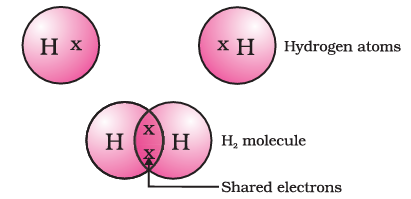
a) Ionic bond
b) Single covalent bond
c) Double bond
d) Metallic bond
Answer: b) Single covalent bond
Q. A student compared diamond and graphite. He found diamond is hard and non‑conducting, while graphite is soft and conducts electricity. This difference is due to:
a) Diamond has ionic bonds, graphite has covalent bonds
b) Diamond has 3D covalent bonding, graphite has layered structure with free electrons
c) Diamond is metallic, graphite is non‑metallic
d) Diamond has weak forces, graphite has strong forces
Answer: b) Diamond has 3D covalent bonding, graphite has layered structure with free electrons
Q. In Figure (electron dot structure of methane), the four shared pairs of electrons represent:
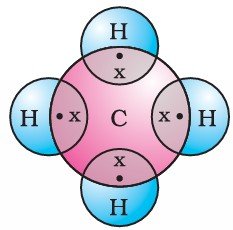
a) Four ionic bonds
b) Four single covalent bonds
c) Two double bonds
d) One triple bond
Answer: b) Four single covalent bonds
Q. In Figure (structure of ethene), the two carbon atoms are linked by:
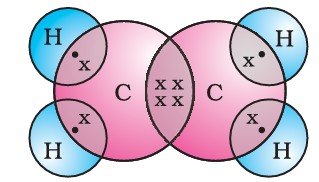
a) Single bond
b) Double bond
c) Triple bond
d) Ionic bond
Answer: b) Double bond
Q. In Figure (structure of cyclohexane), the carbon atoms are arranged in:
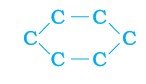
a) Straight chain
b) Branched chain
c) Ring structure
d) Triple bond chain
Answer: c) Ring structure
Q. The alkaline KMnO₄ was added to ethanol. The purple colour disappeared because:
a) KMnO₄ acted as a reducing agent
b) KMnO₄ oxidised ethanol to ethanoic acid
c) KMnO₄ formed a substitution product
d) KMnO₄ neutralised ethanol
Answer: b) KMnO₄ oxidised ethanol to ethanoic acid
Q. In Figure (micelle formation), the hydrophobic tail of soap molecules:
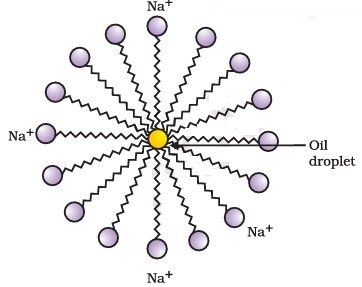
a) Points towards water
b) Points towards oil/dirt
c) Points towards air
d) Points towards detergent molecules
Answer: b) Points towards oil/dirt
Disclaimer: The content that is present on our website is based on the NCERT Class 10 Science textbook and is provided for educational purposes only. All the content and images have been taken from Science Class 10 NCERT Textbook. Images and content shown above are the property of individual organizations and are used here for reference purposes only. To make it easy to understand, some of the content and images are generated by AI and cross-checked by the teachers.