
← Back to Class 9 Social Science Notes
Explore Resistance and Resilience (1000 CE–1700 CE) Class 9 Social Science Notes to understand how Indian rulers, communities, and people protected their land, culture, traditions, and independence during this period. These notes cover the Rajputs, Maharana Pratap, the Ahom Kingdom, the Vijayanagara Empire, the Marathas, the Sikhs, the Jats, the Bhakti Movement, temples, agriculture, and Indian Ocean trade. Written in simple language, these notes help Class 9 students understand important historical events and prepare for examinations.
Resistance and Resilience 1000 CE 1700 CE Class 9 Notes
In India there are political, social, and cultural changes between the period of 1000 CE and 1700 CE. In that time there were invasions, wars, religious discrimination, and social problems. Many Indian rulers fought to protect their lands, people, culture, and tradition.
- Resilience: Resilience means the ability to face problems, survive difficult situations, and adapt to changes while keeping the culture and values alive. For example, people rebuilt temples, lived peacefully with different communities, and adjusted the same customs.
- Resistance: Resistance means opposing or fighting against the threat to protect one’s land, power, culture, or religion.
Resistance and resilience are both connected; resilience gives people the strength to continue, while resistance helps them to protect what is important. Because of both, the Indian civilization survived and remained strong during this period. This period is not only about the war, but it is also about the time of cooperation, adaptation, and cultural continuity.
Safeguarding Sovereignty: Resistance, Alliances, and Confederacies
From the 7th century, many invaders attacked India to capture land and spread their religion. India’s fertile plains and rich agriculture also attracted invaders.
- From the mid-7th century, the Arab forces attacked India by land and sea. The Indian rulers of Malwa, Deccan, Rajasthan, and Kashmir defeated them.
- In 1001, Mahmud of Ghazni attacked Jayapala of the Hindu Shahi dynasty.
- The Hindu Shahis, Chandellas, Solankis, and Chauhans fought against Turkish invaders.
- In 1178, Queen Naiki Devi defeated Muhammad Ghuri at Kasahrada.
- Gujarat, Malwa, and Bundelkhand resisted Turkish attacks for about 100 years.
- Turkish invaders failed to conquer Odisha and parts of Assam.
Rajput Dynasties: Confederacies and Resistance (1200–1500 CE)
The Delhi Sultanate was established in 1206. The Delhi Sultanate ruler expanded their territories and introduced a new iqta system to collect the land revenue.
- The Yadavas, Kakatiyas, Hoysalas, and Rajput rulers fought to protect their land, culture, and traditions.
- Mewar, Gwalior, Malwa, Ajmer, and other regions also opposed the Sultanate.
- Maharana Kumbha of Mewar strengthened resistance by building forts.
Rajput–Mughal Relations (1500–1700 CE)
- In 1526, Bābur defeated Ibrāhim Lodī in the First Battle of Panipat.
- Rāṇā Sāngā of Mewar united many Rajput rulers and fought against Bābur in the Battle of Khanua (1527).
- Some Rajput kingdoms resisted the Mughals, while others cooperated with them and received mansabs (ranks or offices).
Mewar’s Resistance Against the Mughals
- In 1568, Akbar attacked Chittor Fort, and the Rajputs fought bravely for more than five months.
- Later, Rana Udai Singh moved to the Aravalli Hills to continue resistance.
- The Maharana Pratap was the son of Rana Udai Singh.
- In 1576, Maharana Pratap fought the Mughals at the Battle of Haldighati.
- Maharana Pratap used guerrilla warfare (surprise attacks) against the Mughal army and regained many territories after the Battle of Dewair in 1582.
- The Bhil community helped Maharana Pratap in guerrilla warfare using archery and local knowledge.
- Maharana Amar Singh was the son of Maharana Pratap; he continued fighting against the Mughals.
- Finally, the Mughals signed a treaty with Mewar.
- Mewar kept its independence and special status.
Role of the Bhils
The Bhil community helped Maharana Pratap because he knew the Aravalli forests and hills very well. They act as a guide and warrior, and their support made Mewar’s resistance stronger.
The Ahom Kingdom: Centuries of Endurance
The Ahom Kingdom ruled Assam from 1228 to 1826. The Ahom Kingdom remained independent for almost 600 years. It successfully resisted several invasions, including attacks by the Mughals.
- They used their knowledge of rivers, forests, and rainy seasons in war.
- They avoid the direct battles and use the smart military strategies.
- They also use guerrilla warfare to surprise their enemies.
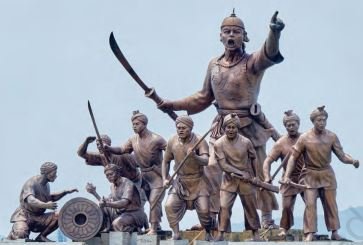
Important Events
- In 1615, the first battle between the Ahoms and the Mughals took place at Samdhara. Mugal captured some places, but Ahoms soon took it back.
- In 1662, the Mughal commander Mir Jumla captured the Ahom capital, Garhgaon. The King Jayadhvaj Singha accepted a treaty, but later he rejected it and continued resisting the Mughals.
- In 1671, the Ahom commander Lachit Borphukan defeated the Mughal army in the Battle of Saraighat, and the Ahom won the battle and protected Assam from Mughal control.
Vijayanagara Empire: Resilience against Expansion
The Delhi Sultanate expanded into southern India and attached kingdoms and temples. Mulik Kafur attacked Warangal, Belur, and Madurai
The Vijayanagara Empire was founded in 1336 CE by Harihara and Bukka. The capital was Vijayanagara (Hampi) in present-day Karnataka. It was established to stop the southern expansion of the Delhi Sultanate. Vijaynagara was strong because it was protected by hills, rivers, and rocky land.
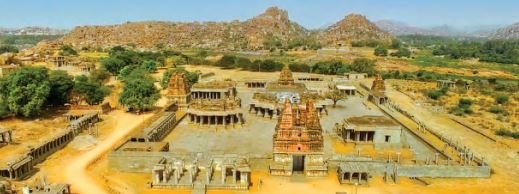
The empire expanded south of the Krishna and Tungabhadra rivers and became the richest and most powerful kingdom in South India. Languages like Kannada, Telugu, Tamil, and Sanskrit developed during this period.
Struggle Against the Madurai Sultanate
During Bukka’s reign, Vijayanagara defeated the Madurai Sultanate. Kumāra Kampana, Bukka’s son, led the campaign against Madurai. Kumara Kampana defeated and killed the Sultan and restored the temples such as
- Rajasimheshwara Temple (Kanchipuram)
- Sri Ranganathaswamy Temple (Srirangam)
Battle of Talikota (1565)
In 1565, the Vijayanagara army lost the Battle of Talikota against an alliance of Deccan sultanates. The capital was destroyed, and the empire gradually broke into smaller Nayaka kingdoms.
Marathas: The Quest for Swarājya
The Marathas became a powerful force in the Deccan during the 17th and 18th centuries. The Chhatrapati Shivaji Maharaj established an independent Maratha state in 1674.
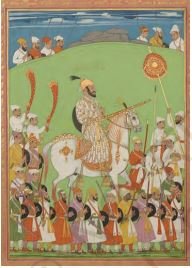
What is Swarajya?
The Swarajya means self-rule, or ruling one’s own land without outside control. Shivaji wanted an independent kingdom free from foreign domination.
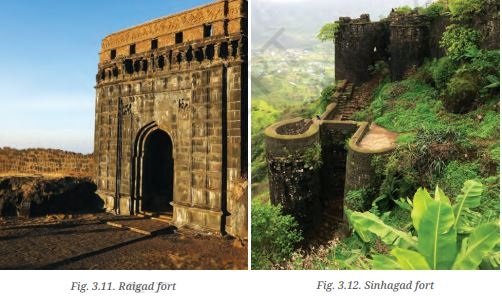
The Marathas used their knowledge of hills and valleys to fight effectively against the Mughals. The forts like Raigad and Sinhagad helped them to defend their territories. They used guerrilla warfare to resist the powerful enemies. They made the alliances to expand their influence over different regions.
The Marathas fought many battles against the Mughals. Mughal emperor Aurangzeb spent more than 20 years in the Deccan trying to defeat them. The king war weakened the Mughal Empire.
Reasons for Maratha Success
- Strong leadership of Chhatrapati Shivaji.
- Idea of Swarājya.
- Brave soldiers.
- Effective use of forts.
- Knowledge of local geography.
- Guerrilla warfare tactics.
The Sikhs: A Story of Spiritual and Political Resilience
Guru Nanak founded Sikhism in the late 15th century. Guru Nanak believed in one God, equality, and rejection of unnecessary rituals.
The Sikh community grew quickly in Punjab and nearby regions. The Mughals opposed the Sikh Gurus.
- Guru Arjan Dev was the fifth Sikh Guru; he was executed by Mughal Emperor Jahangir. His martyrdom was a turning point in Sikh history.
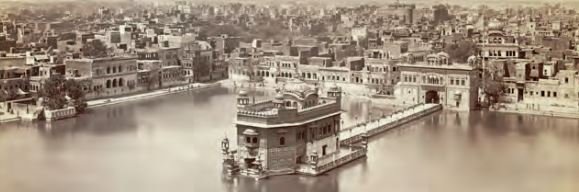
- The Guru Hargobind established the Akal Takht and promoted Miri-Piri (spiritual and worldly authority).
- In 1699, Guru Gobind Singh founded the Khalsa.
- The Sikhs formed Misals (armed groups) to protect themselves from Mughal attacks.
- The courage and sacrifices of the Sikh Gurus became an important part of Sikh identity.
Jat Resistance
The Jats were a farming community living in the Ganga-Yamuna Doab region. They suffered from heavy taxes and unfair treatment under the Mughals.
- In 1669, Gokul Jat led a rebellion against the Mughal Empire.
- The Jats continued fighting even after the rebellion was suppressed.
- In 1686, they rebelled again under the leaders of Sinsani and Sogar.
- Although the Mughals gained control by 1691, the Jat resistance continued.
Bhakti Tradition: Affirmation of the Spirit of Resilience
The Bhakti Movement was based on love and devotion to God. It promoted equality, simplicity, and inclusion.
- The Bhakti saints composed songs and hymns in local languages, making their teachings easy for people to understand.
- The movement spread across India between the 11th and 17th centuries. It had two main forms.
- Nirguna Bhakti: Worship of a formless God.
- Saguna Bhakti: Worship of God with form and qualities.
- Chaitanya Mahaprabhu, Ramananda, Guru Nanak, Eknath, and Sankardev were important Bhakti saints.
- Community singing (Sankirtan) helped unite people and spread devotion.
- Many women saints, such as Akka Mahadevi, Lal Ded, and Bahinabai, also contributed to the movement.
- The Bhakti Movement helped preserve India’s spiritual and cultural traditions.
Temples: The Resilience of Sacred Sites
The temples were not only for worship but also centers of education, culture, and economy. They provide jobs to artisans, musicians, priests, and workers. Many rulers supported the temple to strengthen their political power. The temple received money, land, and donations, which helped local development and irrigation. Some of the important temple towns are Thanjavur, Kanchipuram, and Puri.
- In the 11th century the temple was damaged during invasions.
- Local rulers and merchants work hard to repair and rebuild temples.
- The Kashi Vishwanath Temple, Govind Devji Temple, and Keshav Dev Temple are examples of restored or newly built temples.
- To protect temples from the destruction, some were built like ordinary houses. These were called Haveli Temples.
- The temple helped preserve Indian religion, culture, art, and traditions.
Indian Economy: Agriculture, Trading Networks, and Merchant Communities
Agriculture
- The agriculture expanded during the early second millennium CE.
- The land revenue was the main source of state income.
- Taxes become stricter and more exploitative over time.
- During Alauddin Khilji and Mohammad bin Tughlaq, land tax could reach 50% of agricultural production.
Irrigation
- Technologies such as the rope pulley, spinning wheel, and Persian wheel improved farming.
- The Vijayanagara Empire invested heavily in small-scale irrigation.
- The irrigation system included canals as well as rain-fed agriculture.
Trade Networks
- Inland trade routes connected Central Asia.
- The goods and skills were transported by trader groups called caravans.
- Growing towns and cities encouraged the expansion of trade.
Merchant Communities
- The Banjaras were important trading communities.
- They helped connect rural areas with urban markets.
- Revenue officials also played a role in trade networks.
Maritime Trade
- From the 13th century, sea trade increased significantly.
- Western India was linked to the Persian Gulf and Arabian Sea.
- India became a major center of the Indian Ocean trade network until the arrival of Europeans.
The World of the Indian Ocean: Continuity and Change
- Arrival of Europeans and Mughals
- In the 16th century, Europeans arrived for trade, and Mughals conquered northern India.
- They entered an already established economic system.
- The Portuguese tried to control ocean trade, while the Mughals centralized land revenue collection.
European Trading Companies
- Portuguese were followed by the Dutch, English, Danes, and French.
- Their interaction with Indian merchants made India a major center of global trade and cultural exchange.
Merchant Communities
- New merchant groups emerged in coastal and inland regions.
- They controlled wealth, production, supply chains, and financed states.
- Indian merchants worked as traders, bankers, brokers, diplomats, translators (dubhashis), and bureaucrats.
Textile Production
- Peasants produced raw materials.
- Weavers, dyers, bleachers, and other workers prepared cotton textiles for trade.
Indian Ocean Trade
- Before the 15th century, Arab, Chinese, and Indian merchants dominated the Indian Ocean trade.
- Later, Gujarati merchants became major beneficiaries.
- Merchant groups of Malabar, Coromandel, and Bengal also flourished.
Participation of Different Communities
- Trade was not limited to traditional merchant groups.
- Vellalars and many peasant communities participated in commerce.
- Many learned Portuguese, French, English, and Persian to support trade activities.
Economic Strength and Resilience
India’s economy remained strong despite invasions and political changes.
Key factors:
- Agricultural innovations
- Irrigation systems
- Markets
- Merchant groups
- Hundi (financial instrument)
- Indian Ocean trade
Resistance and Resilience
Rajputs, Ahoms, Vijayanagara rulers, Marathas, Sikhs, and Jats defended their lands and identities.
They used:
- Military resistance
- Guerrilla warfare
- Local geographical knowledge
- Diplomacy and alliances
Disclaimer: The content that is present on our website is based on the NCERT Class 9 Social Science textbook and is provided for educational purposes only. All the content and images have been taken from Social Science Class 9 NCERT Textbook and CBSE Support material. Images and content shown above are the property of individual organizations and are used here for reference purposes only. To make it easy to understand, some of the content and images are generated by AI and cross-checked by the teachers.