
The World of Numbers introduces students to the fascinating journey of numbers and their importance in mathematics and daily life. The chapter explores different types of numbers, including natural numbers, whole numbers, integers, rational numbers, and irrational numbers. It explains how numbers have evolved over time and how they help us solve problems, make calculations, and understand the world around us. Through interesting examples and activities, students learn the beauty and significance of numbers in mathematics.
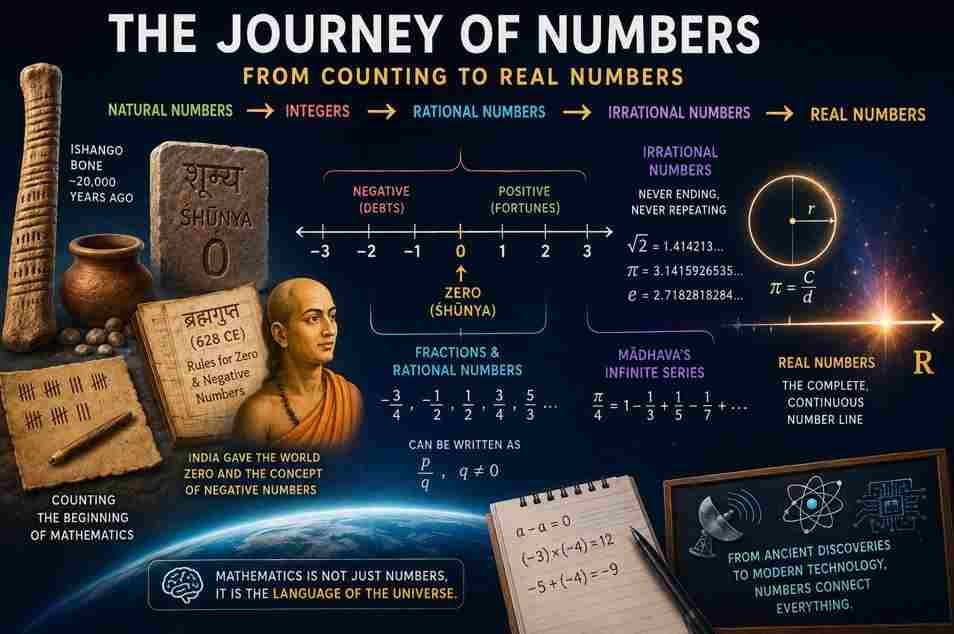
The World of Numbers Class 9 Notes
The Dawn of Mathematics: The Human Need to Count
Mathematics started with simple daily needs. In ancient times, people did not know the number. So that time they used a simple method called one-to-one correspondence.
For every cow going to the forest, one pebble was kept in a pot. When a cow returned, one pebble was removed. If all the pebbles were removed, all the cows had returned safely. If some pebbles were left, some cows were missing.
From this simple idea, humans slowly learned counting. This was the beginning of natural numbers; natural numbers are the numbers we use for counting.
N={1,2,3,4,…}
A History Written in Bone
Long ago, to count the things, they used small marks called tally marks on bones, wood or stones. One of the oldest examples is the Lebombo Bone, which was found in Africa and is about 35,000 years old. The bone has 26 small marks. Scientists believe that the early humans used to count days to keep track of the Moon’s phases.
Another famous example is the Ishango Bone found near the Nile River in Africa. It is about 20,000 years old.
These discoveries show that the humans started understanding numbers thousands of years ago.

The Indian Context: Trade and Astronomy
When the civilisation grew, the people needed bigger numbers for trade and counting. In ancient cities like Lothal and Harappa, they use standard weights and measures to buy and sell goods.
During Vedic times, Indians also used very large numbers. In the Vedas, the number 1012 was called parārdha. Later, in the book Lalitavistara, Buddha describes names up to 1053,which is called tallakshana.
For example:
- 101 = 10
- 102 = 100
- 103 = 1000
This idea later developed into the place value system, which is used all over the world today.
The Indian number system also gave the world one of the greatest inventions in mathematics — zero (0).
The Revolution of Śhūnya: When Nothing Became Something
Long ago, people did not have a number for “nothing”. For example, if you have 5 apples and you have given all, you simply have no apples, but at that time there was no number like 0 to show this.
Some ancient people used a sign to show an empty space, but they did not treat “nothing” as a real number.
Later, in 628 CE, an Indian mathematician named Brahmagupta explained zero (śhūnya) properly.
He showed that:
- “Zero” means “nothing”.
- Zero can be used in maths like other numbers.
The zero made calculations much easier and changed mathematics forever.
From Philosophy to Mathematics: The Concept of Śhūnyatā
In the texts Upanishads and Buddhist writings, hūnyatā described a peaceful mental state. It meant:
- emptying the mind of all thoughts,
- reaching calmness and stillness through meditation.
Śhūnyatā was also mentioned in Patanjali (Patanjali is a yoga sutra).
Later, Indian mathematicians like Āryabhaṭa and Brahmagupta used this idea and developed the number zero.
The Bakhśhālī Manuscript and Brahmagupta’s Rules
In the Bakhshali Manuscript, zero was shown as a dot (.) called ‘bindu’. This dot is used to show an empty place in numbers. Later, the mathematician Brahmagupta wrote rules for zero in his book Brāhmasphuṭasiddhānta (628 CE).
He explained:
- Zero is the result when a number is subtracted from itself. a – a = 0
Integers: Expanding the Horizon
Brahmagupta did not stop after explaining zero. He thought about another situation. What happens when a smaller number is subtracted from a bigger one?
For example:
- 3 – 5 = ?
To explain this, Brahmagupta connected maths with real-life situations, like trade and money. He said there are two types of situations:
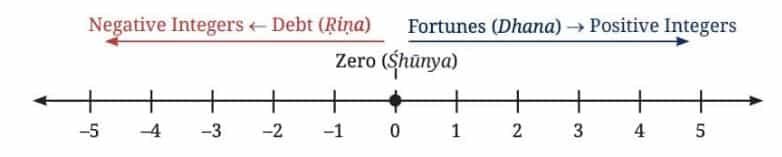
- Fortunes (Dhana): money you have (positive numbers)
- Debts (Ṛiṇa): money you owe (negative numbers)
So, if you go below zero, it represents debt.
The combination of positive natural numbers, their negative counterparts, and zero creates the set of integers, denoted by the symbol Z (from the German word Zahlen, meaning numbers).
The Arithmetic of Integers
Brahmagupta gave explicit rules for adding and multiplying these integers, which we still use exactly as he wrote them over 1,300 years ago:
- A fortune plus a fortune is a fortune: 5 + 4 = 9.
- A debt plus a debt is a debt: (– 5) + (– 4) = –9. (If you owe
5 and borrow4 more, you owe `9.) - A fortune minus zero is a fortune, a debt minus zero is a debt: 7 – 0 = 7, and – 6 – 0 = – 6.
- The product of a debt and a fortune is a debt: (– 3) × 4 = –12. (If you take on 4 debts of
3, your total debt is12.) - The product of two debts is a fortune: (–3) × (–4) = 12.
Filling the Spaces: Fractions and Rational Numbers
A people need numbers not only for counting but also for measuring and sharing things. For example –
- If a pizza, you want to share among 4 friends.
- If a person wants half a cup of milk
We can use a fraction to represent it; the numbers which show the parts of a whole are called fractions. Examples of fractions are
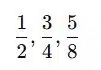
In the above example, the top number is called the numerator and the bottom number is called the denominator.
The above example has a positive fraction, but you can also make a negative fraction just like negative integers. Examples of negative fractions are
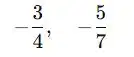
In the negative fraction we can write in different ways by combining it like positive and negative fractions, whole numbers, natural numbers and integers.
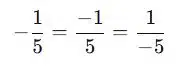
When we combine all integers and all fractions (both positive and negative), we get the set of Rational Numbers, denoted by ℚ (for quotient).
A rational number is defined as any number that can be expressed in the form of –
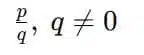
where:
- p and q are integers, and
- q is not equal to zero.
Some examples of rational numbers:
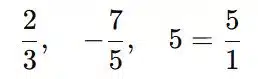
This means all integers are also rational numbers.
We must make some important observations at this stage.
Equivalent Rational Numbers
A rational number can be written in many forms; if rational numbers can represent the same value, they are known as equivalent rational numbers. Example –
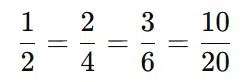
We can simplify the fraction number by dividing the numerator and denominator by the same number. For example,
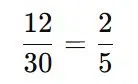
Here, you can see that both fractions represent the same rational number. when
Usually, we write rational numbers in their simplest form, where the numerator and denominator have no common factor except 1. For example,

is the simplest form of:
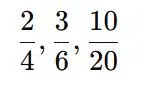
Here are the various laws
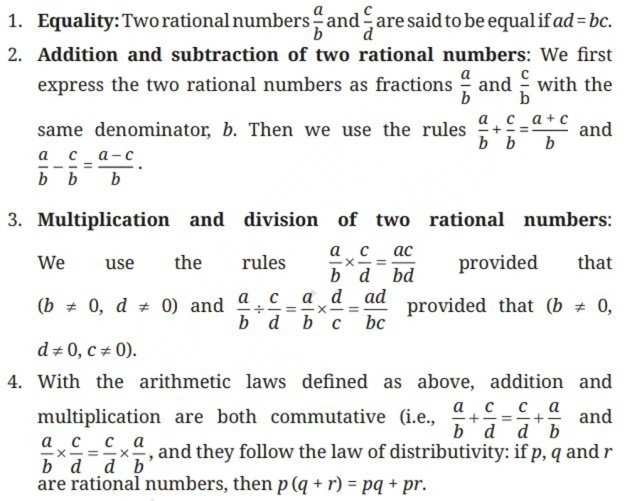
Rational numbers are closed under addition, subtraction, and multiplication; that is, if one adds two rational numbers, or subtracts two rational numbers, or multiplies two rational numbers, a rational number is again obtained. Rational numbers are also closed under division, provided that one does not divide by zero. That is, the quotient of two rational numbers is again a rational number, as long as one does not divide by zero.
Representation of Rational Numbers on the Number Line
We know how to represent the number, for example, −3, −2, −1, 0, 1, 2, 3. If we want to represent the number on a number line, then the middle point will be marked as 0, which is called the origin. The left side from the origin represents a negative number, and the right side from the origin represents a positive number. Example,

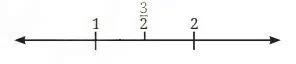
Rational numbers can also be represented on the number line, but unlike integers, the rational numbers may lie between two integers. For example,  lies exactly halfway between 0 and 1, and
  lies between –1 and 0.

Some of the fractions are bigger than 1, for example, =  so it lies between 2 and 3. We divide the interval between 2 and 3 into four equal parts and move one part to the right of 2.

Absolute value of a rational number
Absolute value means how far a number is from 0 on a number line; we write it like this: |x|. It always gives a positive number or zero, never a negative number. We only care about distance.
Suppose you want to find the distance from 0 to +3; it means you moved 3 steps. Now the distance will be 3 steps. If you want to find the distance between 0 and -3, you still moved 3 steps. Even if the number is negative, then also the distance is still 3. Absolute values do not care about left or right direction. To find the distance between two numbers we use |a – b|, for example, if you want to find the distance between -4 and 3, then –
- Formula, | a – b |
- |−4 − 3|
- = |−7|
- = 7

The Density of Rational Numbers
Rational numbers are called dense because between any two rational numbers we can find another rational number. It does not matter how close two rational numbers are; there is always another one between them.
For example: between 1 and 2 we can find:
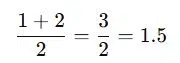
Another example: between 1 and 1.5 we can find:
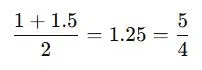

This means that there are infinitely many rational numbers between any two points. It feels as though the rational numbers must completely fill the number line, leaving no gaps whatsoever. But do they?
Irrational Numbers
Mathematicians believed that every length could be written as a fraction, like:
These numbers are called ‘rational numbers’ because they can be written in the form:

Where p and q are integers and q≠0.
But later the mathematicians understand that some numbers cannot be written as fractions. These numbers are called irrational numbers.
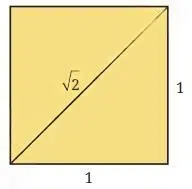
Example of an Irrational Number
Imagine a square whose each side is 1 unit long. Now we want to find the length of the diagonal using the Baudhāyana–Pythagoras theorem:
- 1² + 1² = d²
- 1 + 1 = d²
- 2 = d²
- d = √2
The diagonal length is √2.
Why is √2 special?
Mathematicians found that √2 cannot be written as a fraction; √2 has digits that never end and the digits never repeat. The approximate value of √2 is 1.414213…
So, √2 is an irrational number.
Examples of irrational numbers:
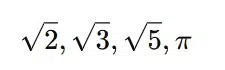
The Proof of Irrationality of √2
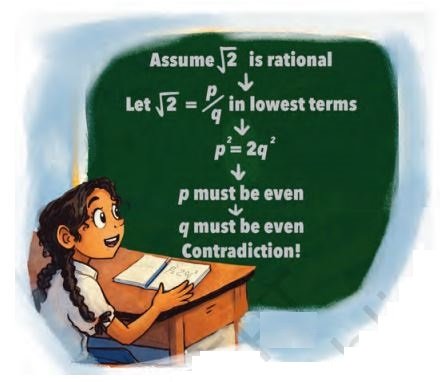
We want to prove that √2 is irrational, meaning it cannot be written as a fraction number.
Suppose √2 is rational; then we can write the following:
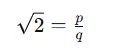
where:
- p and q are integers.
- The fraction is in its simplest form (no common factor).
Example of simplest form:
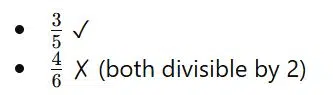
Step 1: Square both sides
if,
then

Multiply by q2:
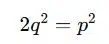
Step 2: What does this tell us?
Since:
p2 = 2q2
p2 is divisible by 2, so p2 is an even number.
If the square of a number is even, then the number itself must also be even.
Look at some examples
| p | p2 |
|---|---|
| 2 | 4 (even) |
| 4 | 16 (even) |
Notice that whenever p is even, p2 is also even.
Now let’s look at odd numbers:
| p | p2 |
|---|---|
| 1 | 1 (even) |
| 3 | 9 (even) |
Notice that whenever p is odd, p2 is also odd.
Therefore, if p2 is even, p cannot be odd. So p must be even.
Writing an even number
Every even number can be written as:
even number = 2 × integer
For example:
- 4 = 2 × 2
- 8 = 2 × 4
- 10 = 2 × 5
- 20 = 2 × 10
Instead of writing different numbers every time, mathematicians use a variable and write:
p = 2k
where k is an integer.
This simply means that p is an even number.
Now substitute p = 2k into the equation:
- 2q2 = p2
- 2q2 = (2k)2
- 2q2 = 4k2
Dividing both sides by 2, we get:
q2 = 2k2
This shows that q2 is also even. Therefore, q must also be even.
So both p and q are even, which means they are both divisible by 2. But we started by assuming that p and q had no common factor. This contradiction proves that our assumption was wrong. Therefore, √2 is irrational.
Construction of Length √2
We want to show where is √2 on the number line, to find the postion on the number line we can proceed as follows.
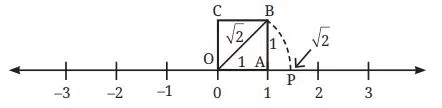
- Step 1: First we have to measure OA = 1 unit and draw a perpendicular on OA through A.
- Step 2: On this perpendicular line we mark the point B such that AB = 1 unit and join the origin to B. Clearly, OB = √2 units.
- Step 3: With O as centre and OB as radius, with a compass we draw an arc which intersects the number line at P. Clearly, OP = √2 units. Hence P represents the irractional number √2
The Story of Pi (π) and Madhava’s Infinite Series
What is π (Pi)?
π (Pi) is a special number used in circles. It is the ratio of a circle’s circumference (distance around the circle) to its diameter (distance across the circle through the centre).
π = 3.14159
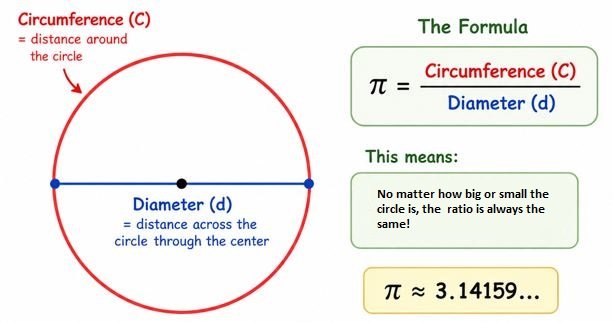
This means that if the diameter of a circle is 1 unit, its circumference is about 3.14159 units. It does not matter how big or small the circle is; the ratio always remains the same.
Early Approximations of π
Long ago, at that time, mathematicians tried to find the exact value of π. In around 499 CE, the Indian mathematician Aryabhata gave an excellent approximation.
This value is very close to π. Aryabhat understood that this was only an approximation, not the exact value.
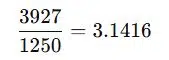
Why Can’t We Write π Exactly as a Fraction?
π is an irrational number, meaning it cannot be written as a simple fraction; it has decimal digits that never end, and π has a digit which never repeats in a pattern.
For example, π=3.141592653589793…
This digit keeps going forever. So, no single fraction can give the exact value of π.
Mādhava’s Great Discovery
About 900 years later, there was a great mathematician, Madhava of Sungamagrama, who made an amazing discovery. He said that if a fraction is not enough, then we can add infinitely many fractions together to become closer to π. He discovered the infinite series.

This is called Madhava’s Infinite Series.
How Does the Series Work?
Let’s understand how the series works.
First term
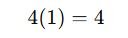
This is not very close to π.
First two terms
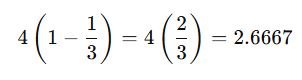
Still not close
First three terms
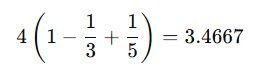
Close to π.
When we add more and more terms, then the answer gets closer:
Here, in the infinite series, when a few terms are added, then we get an approximate number. When we add more terms, then we get a better approximation, and if we add more terms than the previous terms, then we get even closer.
Real Numbers: Decimals and Cyclic Patterns
When we combine rational numbers and irrational numbers, we get the set of real numbers (R). Think of the number line:
- Rational numbers fill many points on the line.
- Irrational numbers fill the remaining gaps.
Together, they form one complete, continuous number line, which is called a real number system. You can identify whether the number is rational or irrational by looking at its decimal expansion.
Rational Decimals: Terminating and Repeating
A rational number can always be written as a fraction:

Where p and q are integers and q ≠ 0. When we divide p by q, then two things happen: it can terminate the decimal or it can repeat the decimal.
It terminates (terminating decimals):
The division eventually leaves a remainder of 0. The decimal stops.
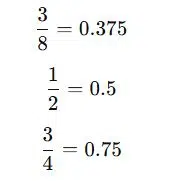
If the decimal stops, then it is known as a terminating decimal.
It repeats (Repeating Decimals)
Sometimes the division never ends, but the pattern repeats forever. For example,
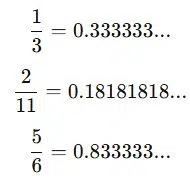
Note:
- 3 repeats again and again in 0.3333…
- 18 repeats again and again in 0.181818…
- 3 repeats again and again in 0.833333…
These are called repeating (recurring) decimals.
Why Do Repeating Decimals Occur?
Let’s look at one example.

When you want to find long division, then the answer will be –

Now look carefully! When we divide the decimal, we have reached the remainder 1 again. When a remainder repeats, the same steps repeat, so the same digits repeat. That is why repeating decimals are formed.
Predicting the Type of Decimal Expansion
We can predict the decimal, whether it will terminate or repeat, without dividing. Let’s understand the basic rule—
- If the denominator contains only 2s and/or 5s, the decimal terminates.
- Otherwise, the decimal repeats.
Let’s see the first example.
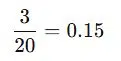
- Denominator = 20 = 22 x 5 (here, only 2 and 5)
- So, the decimal terminates.
Let’s see the second example.
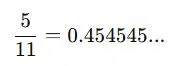
- Denominator = 11 (here, not 2 or 5)
- So, decimal repeats
Converting Rational Decimals into the Form p/q
Case 1: Terminating Decimals
Convert 0.35 into a fraction.
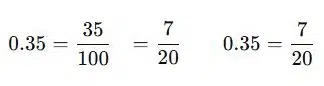
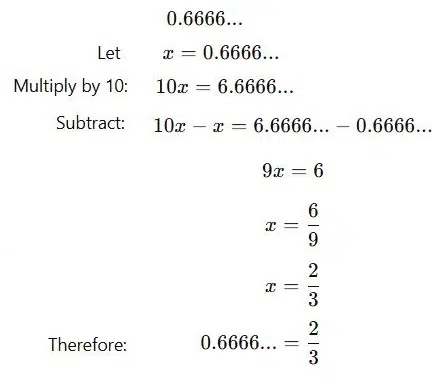
Case 2: Pure Repeating Decimals
A pure repeating decimal starts repeating immediately after the decimal point.
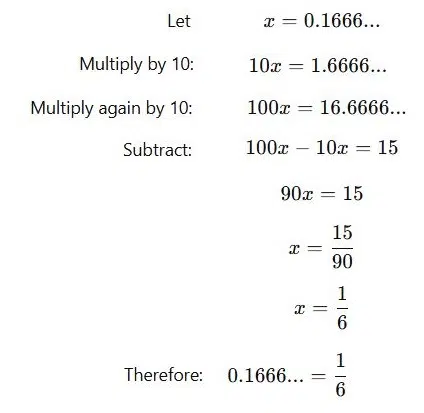
Case 3: General Repeating Decimals
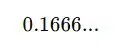
These have some non-repeating digits followed by repeating digits.
Notice:
- 1 is non-repeating
- 6 repeats
The Magic of Cyclic Numbers
Let’s take one example.
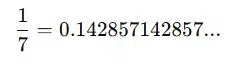
The repeating block is 142857.
This is called a cyclic number because its digits rotate when multiplied.
| Multiplication | Result |
|---|---|
| 142857 × 1 | 142857 |
| 142857 × 2 | 285714 |
| 142857 × 3 | 428571 |
| 142857 × 4 | 571428 |
| 142857 × 5 | 714285 |
| 142857 × 6 | 857142 |
Notice that the same digits appear again and again; only their positions change. This is one of the most beautiful patterns in mathematics.
Irrational Decimals: Chaos and Infinity
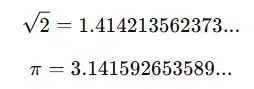
Irrational numbers, however, possess decimal expansions that never end and never repeat. There is no cyclic block, no pattern that loops forever. Examples include:
Disclaimer: The content that is present on our website is based on the NCERT Class 9 Mathematics textbook and is provided for educational purposes only. All the content and images have been taken from Mathematics Class 9 NCERT Textbook and CBSE Support material. Images and content shown above are the property of individual organizations and are used here for reference purposes only. To make it easy to understand, some of the content and images are generated by AI and cross-checked by the teachers.