
Practice Tissues in Action Class 9 MCQs with answers based on the latest NCERT and CBSE exam pattern. These competency-based MCQs include conceptual, application-based, assertion–reason, case study, and diagram questions to help you revise important topics and prepare confidently for school exams.
Tissues in Action Class 9 MCQ
Conceptual Recall MCQs
1. Plant cells have a rigid structure because of a special covering. Which structure is absent in animal cells?
a) Nucleus
b) Cell wall
c) Cytoplasm
d) Plasma membrane
Answer: b) Cell wall
2. Where is the apical meristem located in plants?
a) Tip of roots and shoots
b) Middle of stem
c) Base of leaves
d) Surface of bark
Answer: a) Tip of roots and shoots
3. Which meristematic tissue is responsible for the increase in girth of stems?
a) Apical meristem
b) Lateral meristem
c) Intercalary meristem
d) Permanent tissue
Answer: b) Lateral meristem
4. What process converts meristematic tissue into permanent tissue?
a) Photosynthesis
b) Differentiation
c) Transpiration
d) Respiration
Answer: b) Differentiation
5. Which tissue forms the outermost protective layer of plants?
a) Parenchyma
b) Epidermis
c) Collenchyma
d) Phloem
Answer: b) Epidermis
6. Which simple permanent tissue has living cells with thin walls and intercellular spaces?
a) Collenchyma
b) Parenchyma
c) Sclerenchyma
d) Xylem
Answer: b) Parenchyma
7. Which tissue forms the outer covering of the body and lines internal organs?
a) Connective tissue
b) Epithelial tissue
c) Muscular tissue
d) Nervous tissue
Answer: b) Epithelial tissue
8. Which type of epithelial tissue allows rapid diffusion of gases and liquids?
a) Columnar epithelium
b) Squamous epithelium
c) Cuboidal epithelium
d) Ciliated epithelium
Answer: b) Squamous epithelium
9. Which connective tissue has a fluid matrix and transports nutrients, gases, and hormones?
a) Bone
b) Cartilage
c) Blood
d) Ligament
Answer: c) Blood
10. Which connective tissue connects muscle to bone?
a) Ligament
b) Tendon
c) Cartilage
d) Bone
Answer: b) Tendon
11. Which muscles are voluntary, striated, and multinucleate?
a) Smooth muscles
b) Skeletal muscles
c) Cardiac muscles
d) Ligaments
Answer: b) Skeletal muscles
12. Which tissue controls and coordinates body activities?
a) Muscular tissue
b) Connective tissue
c) Nervous tissue
d) Epithelial tissue
Answer: c) Nervous tissue
13. Which type of joint allows free movement in all directions?
a) Hinge joint
b) Pivot joint
c) Ball and socket joint
d) Fixed joint
Answer: c) Ball and socket joint
14. Which joint connects the skull to the backbone and allows side-to-side movement?
a) Hinge joint
b) Pivot joint
c) Ball and socket joint
d) Fixed joint
Answer: b) Pivot joint
15. Which part of the skeletal system is made up of a series of small bones called vertebrae?
a) Skull
b) Rib cage
c) Vertebral column (spine)
d) Sternum
Answer: c) Vertebral column (spine)
16. How many pairs of ribs are present in the human rib cage?
a) 10
b) 12
c) 14
d) 16
Answer: b) 12
Application-Based MCQs
17. When you press your ear or nose, it bends but regains shape. Which connective tissue is responsible?
a) Bone
b) Cartilage
c) Ligament
d) Tendon
Answer: b) Cartilage
18. During exercise, your face turns red because:
a) Platelets clot blood.
b) WBCs fight infection.
c) Blood flow increases to supply oxygen.
d) Bones become flexible.
Answer: c) Blood flow increases to supply oxygen.
19. When food moves automatically in the intestine, which muscle tissue is responsible?
a) Skeletal muscle
b) Smooth muscle
c) Cardiac muscle
d) Ligament
Answer: b) Smooth muscle
20. The heart beats continuously without fatigue because of the following:
a) Skeletal muscles
b) Smooth muscles
c) Cardiac muscles (Fig. 3.13)
d) Ligaments
Answer: c) Cardiac muscles
21. Animals can move easily because their cells
a) Have rigid cell walls
b) Lack cell walls, allowing flexibility
c) Contain chloroplasts
d) Have fixed shapes
Answer: b) Lack cell walls, allowing flexibility
22. Grass grows again after grazing because of which meristematic tissue?
a) Apical meristem
b) Lateral meristem
c) Intercalary meristem
d) Permanent tissue
Answer: c) Intercalary meristem
23. By counting the annual rings in a tree trunk, scientists can estimate:
a) The type of meristem present
b) The age of the tree and climatic conditions
c) The amount of chlorophyll in leaves
d) The number of branches in the tree
Answer: b) The age of the tree and climatic conditions
24. Why do meristematic cells lack vacuoles?
a) To store more food
b) To allow continuous cell division without space for storage
c) To increase water absorption
d) To make cells rigid
Answer: b) To allow continuous cell division without space for storage
25. Coconut husk fibers are hard and brittle because they contain the following:
a) Collenchyma
b) Parenchyma
c) Sclerenchyma
d) Phloem
Answer: c) Sclerenchyma
26. Coriander leaf stalks bend easily because of the following:
a) Collenchyma
b) Parenchyma
c) Xylem
d) Sclerenchyma
Answer: a) Collenchyma
27. When you blink your eyes quickly, which epithelial tissue helps in protection?
a) Squamous epithelium
b) Stratified epithelium
c) Cuboidal epithelium
d) Columnar epithelium
Answer: b) Stratified epithelium
28. Which epithelial tissue in the small intestine helps in the absorption of nutrients?
a) Cuboidal epithelium
b) Columnar epithelium
c) Squamous epithelium
d) Stratified epithelium
Answer: b) Columnar epithelium
29. When you bend your elbow or knee, which type of joint is used?
a) Ball-and-socket joint
b) Pivot joint
c) Hinge joint
d) Fixed joint
Answer: c) Hinge joint
30. Why can the skull bones not move?
a) They are connected by hinge joints.
b) They are connected by fixed joints.
c) They are connected by pivot joints.
d) They are connected by ball-and-socket joints.
Answer: b) They are connected by fixed joints.
31. Why can the rib cage expand and contract during breathing?
a) It is made of bones only.
b) It is joined by flexible cartilage.
c) It is connected to muscles directly.
d) It is hollow inside.
Answer: b) It is joined by flexible cartilage.
32. Injury to the ribs makes breathing painful because
a) Ribs protect the spinal cord.
b) Ribs protect the heart and lungs.
c) Ribs are connected to the skull.
d) Ribs are made of cartilage only.
Answer: b) Ribs protect the heart and lungs.
Assertion–Reason MCQs
33. Assertion (A): Plant tissues help in photosynthesis.
Reason (R): Plants have chloroplasts that capture solar energy.
a) Both A and R are true, and R explains A.
b) Both A and R are true, but R does not explain A.
c) A is true, R is false.
d) A is false, and R is true.
Answer: a) Both A and R are true, and R explains A.
34. Assertion (A): The apical meristem helps in increasing the length of the plant.
Reason (R): It is located at the tips of roots and shoots.
a) Both A and R are true, and R explains A.
b) Both A and R are true, but R does not explain A.
c) A is true, R is false.
d) A is false, and R is true.
Answer: a) Both A and R are true, and R explains A.
35. Assertion (A): Lateral meristem increases the girth of stems.
Reason (R): It is located along the circumference of stems and divides in a concentric manner.
a) Both A and R are true, and R explains A.
b) Both A and R are true, but R does not explain A.
c) A is true, R is false.
d) A is false, and R is true.
Answer: a) Both A and R are true, and R explains A.
36. Assertion (A): Intercalary meristem helps grass regrow after mowing.
Reason (R): It is located at the nodes of the stem.
a) Both A and R are true, and R explains A.
b) Both A and R are true, but R does not explain A.
c) A is true, R is false.
d) A is false, and R is true.
Answer: a) Both A and R are true, and R explains A.
37. Assertion (A): Xylem transports water and minerals.
Reason (R): Xylem consists of tracheids, vessels, fibers, and parenchyma.
a) Both A and R are true, and R explains A.
b) Both A and R are true, but R does not explain A.
c) A is true, R is false.
d) A is false, and R is true.
Answer: a) Both A and R are true, and R explains A.
38. Assertion (A): Phloem transports food prepared in leaves.
Reason (R): Sieve tubes and companion cells are the main conducting elements.
a) Both A and R are true, and R explains A.
b) Both A and R are true, but R does not explain A.
c) A is true, R is false.
d) A is false, and R is true.
Answer: a) Both A and R are true, and R explains A.
39. Assertion (A): Ciliated epithelium helps in sensory functions like smell and balance.
Reason (R): It contains receptor cells with hair-like cilia.
a) Both A and R are true, and R explains A.
b) Both A and R are true, but R does not explain A.
c) A is true, R is false.
d) A is false, and R is true.
Answer: a) Both A and R are true, and R explains A.
40. Assertion (A): Cuboidal epithelium is found in glands.
Reason (R): It is specialized for secretion of substances like mucus and enzymes.
a) Both A and R are true, and R explains A.
b) Both A and R are true, but R does not explain A.
c) A is true, R is false.
d) A is false, and R is true.
Answer: a) Both A and R are true, and R explains A.
41. Assertion (A): Bones provide strength and rigidity.
Reason (R): Their matrix contains calcium and phosphorus compounds.
a) Both A and R are true, and R explains A.
b) Both A and R are true, but R does not explain A.
c) A is true, R is false.
d) A is false, and R is true.
Answer: a) Both A and R are true, and R explains A.
42. Assertion (A): Ligaments connect bone to bone.
Reason (R): They provide stability and prevent dislocation.
a) Both A and R are true, and R explains A.
b) Both A and R are true, but R does not explain A.
c) A is true, R is false.
d) A is false, and R is true.
Answer: a) Both A and R are true, and R explains A.
43. Assertion (A): Skeletal muscles help in voluntary movements like running and writing.
Reason (R): They are attached to bones and show striations.
a) Both A and R are true, and R explains A.
b) Both A and R are true, but R does not explain A.
c) A is true, R is false.
d) A is false, and R is true.
Answer: a) Both A and R are true, and R explains A.
44. Assertion (A): Neurons transmit messages quickly across the body.
Reason (R): They have dendrites to receive signals and axons to carry impulses.
a) Both A and R are true, and R explains A.
b) Both A and R are true, but R does not explain A.
c) A is true, R is false.
d) A is false, and R is true.
Answer: a) Both A and R are true, and R explains A.
45. Assertion (A): The shoulder joint allows circular movement of the arm.
Reason (R): It is a ball and socket joint.
a) Both A and R are true, and R explains A.
b) Both A and R are true, but R does not explain A.
c) A is true, R is false.
d) A is false, and R is true.
Answer: a) Both A and R are true, and R explains A.
46. Assertion (A): The elbow joint allows movement in one direction only.
Reason (R): It is a hinge joint similar to a door hinge.
a) Both A and R are true, and R explains A.
b) Both A and R are true, but R does not explain A.
c) A is true, R is false.
d) A is false, and R is true.
Answer: a) Both A and R are true, and R explains A.
47. Assertion (A): The vertebral column helps us stand upright.
Reason (R): It is flexible due to cartilage discs between vertebrae.
a) Both A and R are true, and R explains A.
b) Both A and R are true, but R does not explain A.
c) A is true, R is false.
d) A is false, and R is true.
Answer: a) Both A and R are true, and R explains A.
48. Assertion (A): The rib cage is a protective cage.
Reason (R): It protects delicate organs like the heart and lungs.
a) Both A and R are true, and R explains A.
b) Both A and R are true, but R does not explain A.
c) A is true, R is false.
d) A is false, and R is true.
Answer: a) Both A and R are true, and R explains A.
Case-Based MCQ
49. Case Study: Two onion bulbs are placed in jars A and B. On day 3, the root tips of the bulb in Jar B are cut. After this, roots in Jar A continue to grow, but roots in Jar B stop growing.
What conclusion can be drawn from this experiment?
a) Roots grow because of the lateral meristem.
b) Root tips contain apical meristems responsible for growth.
c) Cutting root tips increases growth rate.
d) Growth occurs only in stems, not in roots
Answer: b) Root tips contain apical meristems responsible for growth.
50. Case Study: Roots in Jar A continues to grow, while roots in Jar B stop growing after tips are cut.
What does this experiment prove?
a) Roots grow from their base.
b) Roots grow only from their tips containing apical meristems.
c) Cutting tips increases growth rate.
d) Growth occurs only in shoots.
Answer: b) Roots grow only from their tips containing apical meristems.
51. Case Study: A student observes the T.S. of a sunflower stem under a microscope. They notice different tissues arranged in layers.
What conclusion can be drawn?
a) All cells are identical in shape and size.
b) Different tissues are present, each specialized for specific functions.
c) Only the epidermis is visible.
d) Only xylem and phloem are present.
Answer: b) Different tissues are present, each specialized for specific functions.
52. Case Study: A student clenches and opens their fist, breathes deeply, and touches a warm object.
Which epithelial tissue is directly involved in the exchange of gases during breathing?
a) Columnar epithelium
b) Squamous epithelium
c) Cuboidal epithelium
d) Stratified epithelium
Answer: b) Squamous epithelium
53. Case Study: A student gets a small cut. Blood oozes out, but a clot forms after some time.
Which blood component is mainly responsible for clotting?
a) RBCs
b) WBCs
c) Platelets
d) Plasma
Answer: c) Platelets
54. Case Study: An adult male weighs 60 kg. His bone mass is ~15% and muscle mass is ~45%.
What is the approximate weight of his bones and muscles?
a) Bones = 9 kg, Muscles = 27 kg
b) Bones = 6 kg, muscles = 30 kg.
c) Bones = 12 kg, Muscles = 27 kg
d) Bones = 9 kg, Muscles = 30 kg
Answer: d) Bones = 9 kg, Muscles = 30 kg
55. Case Study: A student observes that the elbow bends but does not rotate, while the shoulder allows rotation in many directions.
What conclusion can be drawn?
a) The elbow has a ball and socket joint; the shoulder has a hinge joint.
b) The elbow has a hinge joint; the shoulder has a ball and socket joint.
c) Both elbow and shoulder have pivot joints.
d) Both elbow and shoulder have fixed joints.
Answer: b) The elbow has a hinge joint, and the shoulder has a ball and socket joint.
56. Case Study: A student feels pain while breathing after a fall. Doctors confirm a rib injury.
Why does rib injury affect breathing?
a) Ribs are connected to the skull.
b) Ribs expand and contract during breathing.
c) Ribs are made of muscles.
d) Ribs are fixed and immovable.
Answer: b) Ribs expand and contract during breathing.
Diagram-Based MCQ
58. In the diagram of a growing onion root, the shaded region at the tip represents the following:
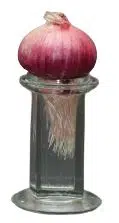
a) Permanent tissue
b) Apical meristem
c) Xylem tissue
d) Collenchyma
Answer: b) Apical meristem
59. In the diagram of a cut tree trunk, ring-like patterns are visible. What do these rings represent?
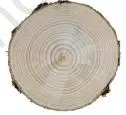
a) Xylem vessels
b) Annual growth rings
c) Phloem tissue
d) Collenchyma cells
Answer: b) Annual growth rings
60. In the diagram of tissue systems in plants, which tissue system forms the outer covering?
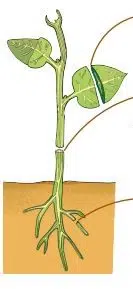
a) Ground tissue system
b) Vascular tissue system
c) Dermal tissue system
d) Collenchyma tissue system
Answer: c) Dermal tissue system
61. In the diagram of epithelial tissues (Fig. 3.11), which type is shown as tall, pillar-like cells with hair-like structures?
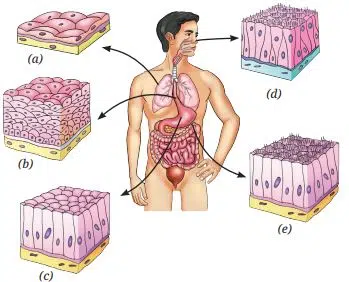
a) Cuboidal epithelium
b) Columnar epithelium
c) Squamous epithelium
d) Stratified epithelium
Answer: b) Columnar epithelium
62. In the diagram of connective tissues, which structure connects bone to bone?
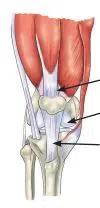
a) Tendon
b) Ligament
c) Cartilage
d) Muscle
Answer: b) Ligament
63. In the diagram of the musculoskeletal system, which structure connects muscle to bone?
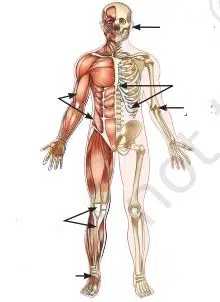
a) Ligament
b) Tendon
c) Cartilage
d) Joint
Answer: b) Tendon
64. In the diagram of the ball and socket joint, which bone fits into the hollow socket of the shoulder bone?
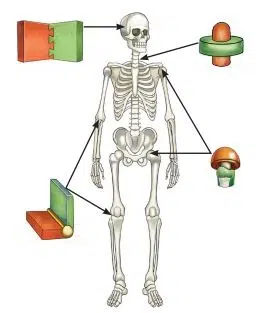
a) Collar bone
b) Upper arm bone
c) Skull bone
d) Backbone
Answer: b) Upper arm bone
65. In the diagram of the rib cage, which bone connects the ribs in the front?
a) Vertebrae
b) Sternum (breast bone)
c) Collar bone
d) Skull bone
Answer: b) Sternum (breast bone)
Disclaimer: The content that is present on our website is based on the NCERT Class 9 Science textbook and is provided for educational purposes only. All the content and images have been taken from Science Class 9 NCERT Textbook and CBSE Support material. Images and content shown above are the property of individual organizations and are used here for reference purposes only. To make it easy to understand, some of the content and images are generated by AI and cross-checked by the teachers.