
Get Health The Ultimate Treasure Class 8 Notes with easy explanations, short summaries, key points, important definitions, diagrams, and exam questions. These notes are perfect for quick revision and better exam preparation.
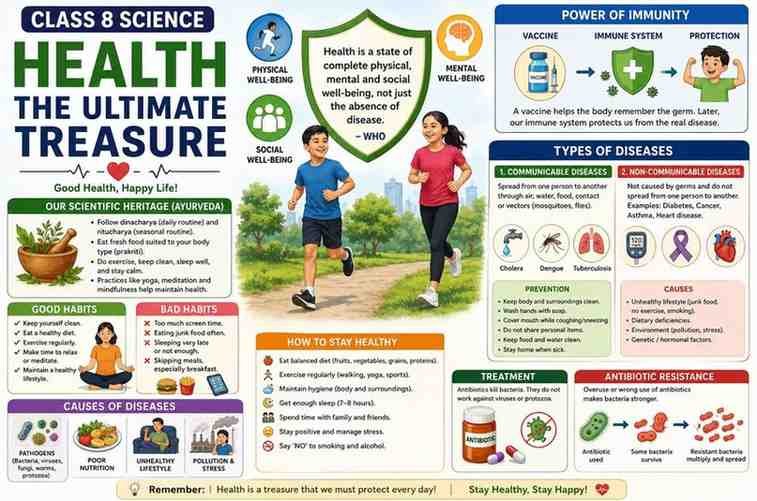
Health the Ultimate Treasure Class 8 Notes
Health: Is It More Than Not Falling Sick?
A healthy person takes care of their body, maintains a positive mindset, and enjoys social life. Let us now explore what it truly means to be healthy.
WHO Definition
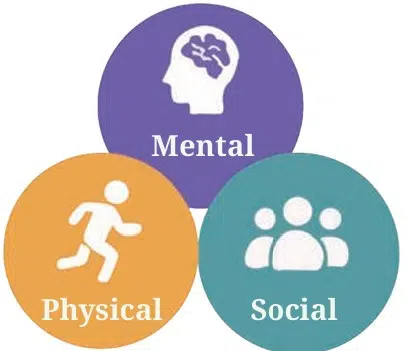
The World Health Organization (WHO) says: “Health is a state of complete physical, mental, and social well‑being, not just the absence of disease.”
Our scientific heritage
- Ayurveda teaches us that true health is a balance of body, mind, and surroundings.
- Follow dinacharya (daily routine) and ritucharya (seasonal routine).
- Eat fresh food suited to your body type (prakriti).
- Do exercise, keep clean, sleep well, and stay calm.
- Practices like yoga, meditation, and mindfulness help maintain health.
How Can We Stay Healthy?
Health means taking care of both body and mind. To stay healthy, we should:
- Eat nutritious food.
- Maintain hygiene.
- Stay in a clean place.
- Exercise regularly.
- Get proper sleep.
- Spend time with family and friends.
- Have a positive attitude.
Good Habits
- Keep yourself clean by maintaining personal hygiene.
- Eat a healthy and balanced diet.
- Exercise regularly.
- Make time to relax or meditate every day.
Bad Habits
- Too much time on mobile or screens.
- Eating junk food often.
- Sleeping very late or not enough.
- Skipping meals, especially breakfast.
Maintain a healthy lifestyle.
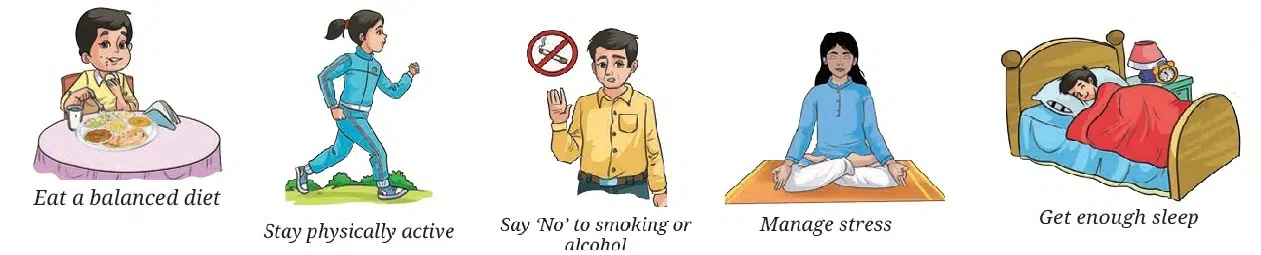
- Eat a balanced diet: fresh fruits, vegetables, grains, and proteins.
- Exercise regularly: walking, yoga, or sports.
- Maintain hygiene: keep body and surroundings clean.
- Get enough sleep: rest helps the body recover.
- Spend time with family and friends: social life keeps us happy.
- Stay positive: manage stress with relaxation or meditation.
- Say ‘no’ to smoking or alcohol: they harm the body.
How Do We Know That We Are Unwell?
Our body works in a special way to keep us healthy. When we feel sick, it means something inside is not working properly. We may notice:
- Symptoms: “Symptoms” means what we feel like, such as pain, tiredness, or dizziness.
- Sign: A sign is something that can be seen or measured, like fever, rash, swelling, or high blood pressure.
Doctors use these clues to find out what is wrong and how to make us better.
Diseases: What Are the Causes and Types?
What is a disease?
A disease means the body or mind does not work normally. It happens if one or more organs are not working properly. The causes of diseases are
- Pathogens: Pathogens are the microorganisms that make us sick, like bacteria, viruses, fungi, worms, or protozoa.
- Poor nutrition: Not eating healthy food.
- Unhealthy lifestyle: Too much junk food, no exercise, smoking, etc.
Types of Diseases
There are two types of diseases—
- Communicable diseases
- Non‑communicable diseases
1. Communicable diseases
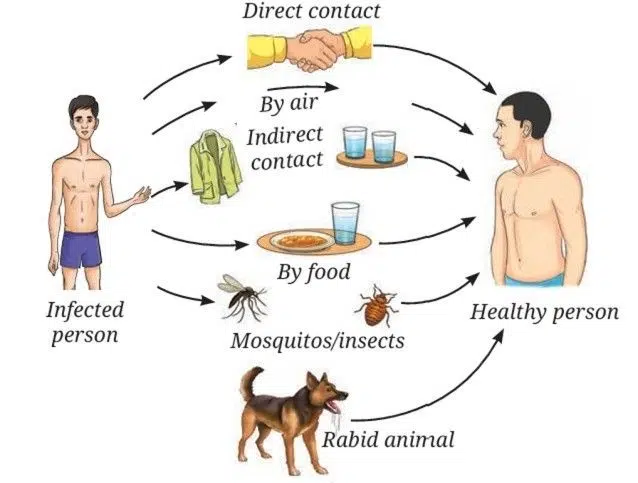
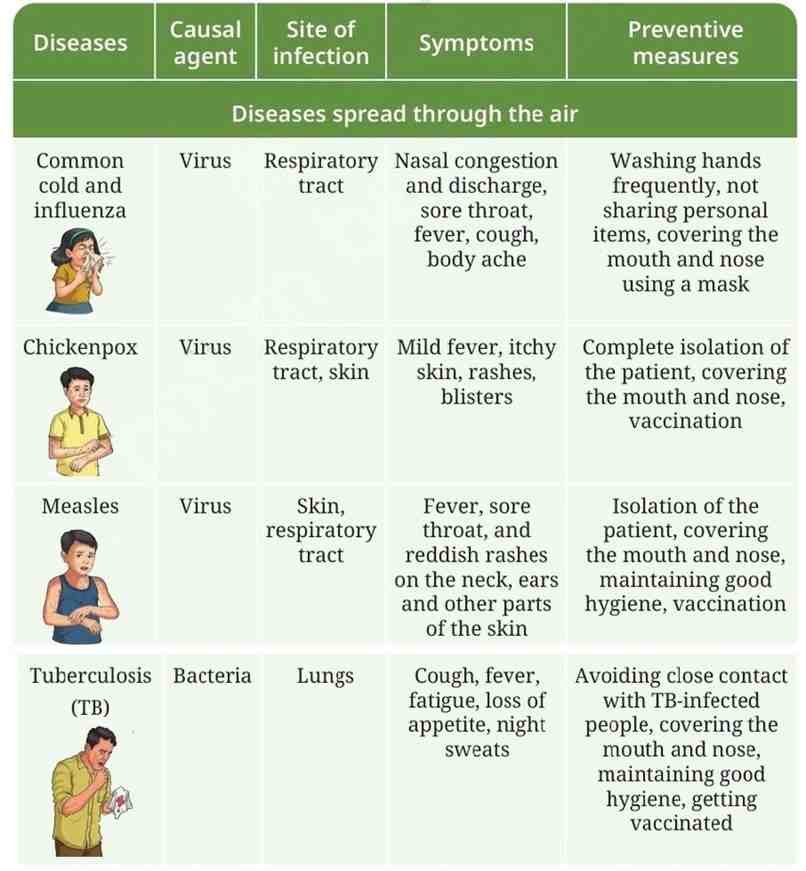
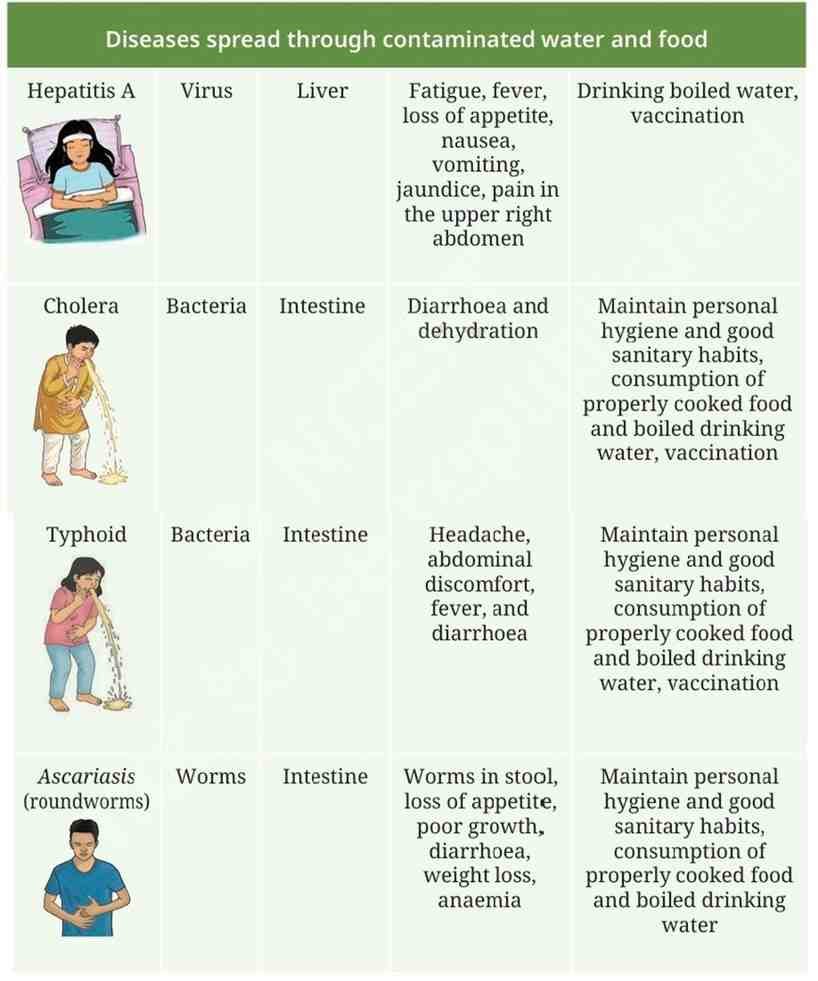
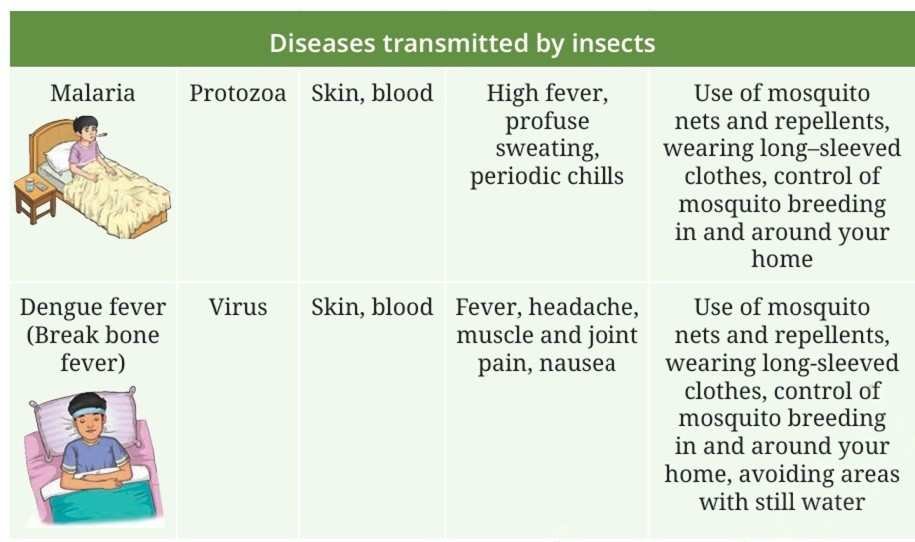
All communicable diseases are caused by pathogens like bacteria, viruses, fungi, protozoa, or worms. These germs enter our bodies through the air we breathe, food and water we consume, or by contact with infected people or animals. Some pathogens are also spread by insects like mosquitos and houseflies—these insects are called vectors.
Some common communicable diseases affecting humans
Diseases spread through contaminated water and food
Diseases transmitted by insects
How to prevent this disease
- Keep the body and surroundings clean.
- Wash hands with soap and water.
- Covering our mouth and nose while coughing or sneezing.
- Wearing a mask in crowded places provides protection.
- Do not share towels, utensils, or handkerchiefs.
- Keeping our home, food, and water clean.
- Stay home to recover and avoid spreading germs.
2. Non‑communicable diseases
Diseases that are not caused by germs and do not spread from one person to another are called non-communicable diseases. These diseases are chronic diseases that can stay in the body for a long time and need regular care. For example, diabetes, cancer, asthma, heart disease, etc.
Causes of Non‑Communicable Diseases
- Lifestyle factors: like eating too much junk food, lack of exercise, smoking, or alcohol use.
- Dietary deficiencies: due to lack of vitamins or minerals in food are called deficiency diseases.
- Environment: Environment also causes these diseases, like pollution, stress, or unhealthy surroundings.
- Genetic/hormonal factors: some diseases run in families or are linked to hormone imbalances.
Why is it important?
In India, NCDs are now the leading cause of death due to people eating more processed food and due to less exercise. Understanding this causes helps us to prevent them by eating healthy food, staying active, and avoiding harmful habits.
How to Prevent and Control Diseases?
Prevention is better than cure; we can protect ourselves from both communicable disease and non-communicable disease by following healthy habits.
Case Study: Odisha Sanitation Campaign
In Bhadrak district, Odisha, people started a sanitation campaign. They built and used toilets. This reduced open defecation means going to the toilet in open places. Because of this the children became healthier. It shows that if the community wants to work together, then public health improves.
Ability of the body to fight diseases
Some people get sick more often than others. The reason behind it is immunity, the body’s natural power to fight diseases. Our body has a special system called the immune system, which provides protection from the harmful germs.
A vaccine contains a weak, dead, or harmless part of a germ. A vaccine does not make you sick, but it helps the immune system to remember the germ. Later, if the real germ enters your body, then the immune system can easily recognize it quickly and destroy it before it can make you seriously ill.
What is acquired immunity?
Acquired immunity means protection that your body gains after learning about a disease. You can get acquired immunity in two ways:
- By getting vaccinated
- By recovering from the actual disease.
Edward Jenner and the smallpox vaccine
The first vaccine was made by Edward Jenner in the late 1700s. He discovered that the people who had cowpox did not get smallpox. This discovery led to the invention of the smallpox vaccine.
Treatment of diseases
If our immune system fails against an infectious disease, we fall ill and need to visit a doctor. Doctors give antibiotic medicine, which kills bacteria. They work only against bacterial infection. They do not work against viruses or diseases caused by protozoa.
Importance of Antibiotics
- The antibiotics have saved millions of lives since discovery.
- But using them too much or wrongly has caused antibiotic resistance.
What is antibiotic resistance?
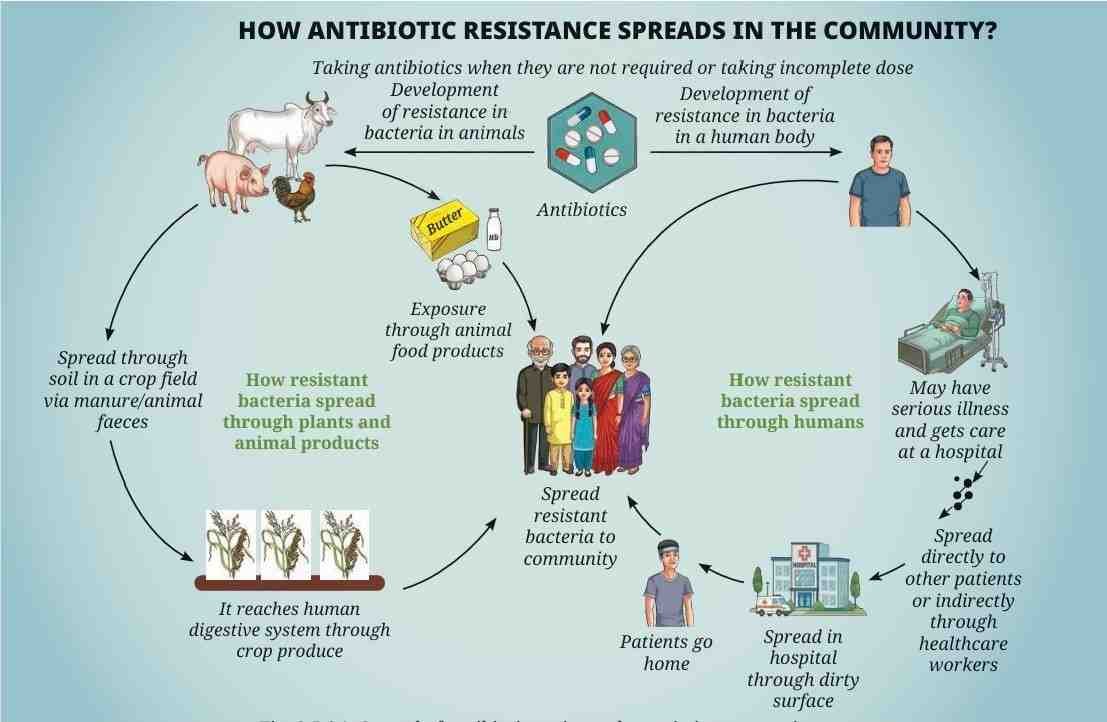
Antibiotics kill bacteria, but if they are used too often or in the wrong way, then some bacteria survive. These surviving bacteria become resistant; they no longer die when the same antibiotic is used. Over time resistant bacteria multiply and spread, making infections harder to treat.
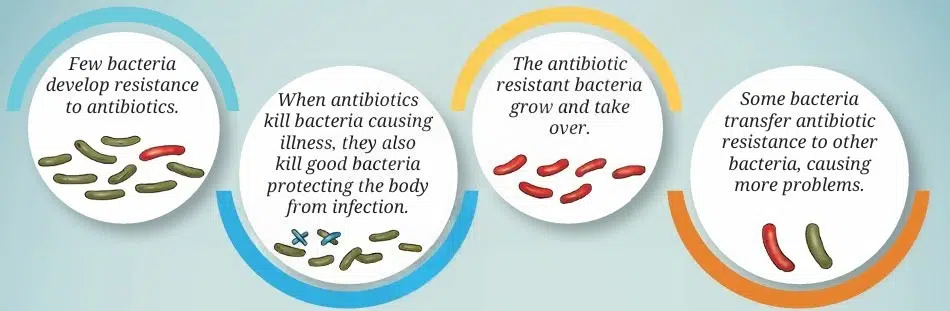
Precautions to Reduce Resistance
- Use antibiotics only when prescribed.
- Taking the right amount of dose.
- Avoid unnecessary use.
- Complete the full course.
HOW ANTIBIOTIC RESISTANCE SPREADS IN THE COMMUNITY
Traditional Medicine
Traditional medicine systems like Ayurveda, Siddha, and Unani have been used in India for many years to manage common health problems. This traditional method focused on a healthy lifestyle and balanced diet. This method is useful for everyday well-being, but not effective for all diseases or stages.
Non‑Communicable Diseases
For diseases like diabetes, cancer, or asthma:
- Treatment focuses on managing symptoms.
- Includes medication, lifestyle changes, and rehabilitation.
- Early diagnosis and continuous care are key to preventing complications.
Think like a scientist
- Kamal Ranadive: A pioneering biomedical researcher. He studied how hormones and viruses cause cancer. He showed how tobacco, diet, and pollution increase cancer risk.
- Variolation in India: Long before modern vaccines, India used variolation to protect against smallpox. Material from a smallpox sore was scratched into the skin and caused a mild infection. This built immunity. The people who did this were called teekedaars.
- India’s Role in Vaccine Production: India is one of the largest vaccine producers in the world. India supplies vaccines to many countries. During the COVID-19 pandemic, India played an important role and supplied COVID-19 vaccines to many countries.
- Maharaj Kishan Bhan: A well-known Indian doctor and scientist. He helped to develop the rotavirus vaccine and protect children from diarrhea.
- Discovery of Penicillin: Penicillin was discovered in 1928 by Alexander Fleming. He noticed a mold on a petri dish stopped bacteria from growing. The mold released a substance that killed bacteria. This led to penicillin, the first antibiotic, and helps to save millions of lives.
Disclaimer: The content that is present on our website is based on the NCERT Class 8 Science textbook and is provided for educational purposes only. All the content and images have been taken from Science Class 8 NCERT Textbook. Images and content shown above are the property of individual organizations and are used here for reference purposes only. To make it easy to understand, some of the content and images are generated by AI and cross-checked by the teachers.
It is a perfect notes.
It helps me very well.
Thankyou for this 🥰.
Very nice to read and also very understandable 😊😊