
Patterns in Life Diversity and Classification Class 9 MCQs designed according to the latest CBSE Class 9 Science syllabus. These competency-based and NCERT-oriented multiple-choice questions help students understand biological classification, the diversity of living organisms, kingdoms, and the basis of classification. Practising these MCQs is an excellent way to strengthen concepts and improve exam performance.
Patterns in Life Diversity and Classification Class 9 MCQ
Conceptual Recall MCQs
Q1. Biodiversity refers to the following:
a) Only plants on Earth
b) Variety of living organisms on Earth
c) Only animals in forests
d) Only microscopic organisms
Answer: b) Variety of living organisms on Earth
Q2. Which of the following is an endemic species found only in India?
a) Kangaroo
b) Nilgiri tahr
c) Polar bear
d) Bald eagle
Answer: b) Nilgiri tahr
Q3. Which of the following is not a criterion used for classifying organisms?
a) External features
b) Mode of nutrition
c) Color of eyes
d) Cell structure
Answer: c) Color of eyes
Q4. Biological classification means the following:
a) Naming organisms randomly
b) Grouping organisms based on similarities and differences
c) Studying only plants
d) Studying only animals
Answer: b) Grouping organisms based on similarities and differences
Q5. Aristotle classified animals mainly on the basis of the following:
a) Internal organs
b) Habitat (land, water, air)
c) Genetic similarity
d) Mode of reproduction
Answer: b) Habitat (land, water, air)
Q6. In the two-kingdom system, organisms were divided into the following:
a) Monera and Protista
b) Plantae and Animalia
c) Fungi and Protista
d) Plantae and Monera
Answer: b) Plantae and Animalia
Q7. Which of the following is not a criterion for five-kingdom classification?
a) Cell type
b) Cell structure
c) Level of organization
d) Color of organism
Answer: d) Color of organism
Q8. Members of Monera are:
a) Multicellular eukaryotes
b) Unicellular prokaryotes
c) Unicellular eukaryotes
d) Multicellular autotrophs
Answer: b) Unicellular prokaryotes
Q9. Fungi have cell walls made of:
a) Cellulose
b) Chitin
c) Protein
d) Starch
Answer: b) Chitin
Q10. The cell wall of plants is mainly made of the following:
a) Chitin
b) Cellulose
c) Protein
d) Lipids
Answer: b) Cellulose
Q11. Bryophytes are called the “amphibians of the plant kingdom” because _________.
a) They live only in water.
b) They require water for reproduction.
c) They produce seeds.
d) They have vascular tissues.
Answer: b) They require water for reproduction.
Q12. Which tissues in pteridophytes transport water and food?
a) Rhizoids and spores
b) Xylem and phloem
c) Cone and seed
d) Leaf and stem
Answer: b) Xylem and phloem
Q13. Animals are classified as:
a) Multicellular autotrophs
b) Multicellular heterotrophs
c) Unicellular autotrophs
d) Unicellular heterotrophs
Answer: b) Multicellular heterotrophs
Q14. The presence or absence of which structure is a major criterion for classifying animals?
a) Tentacles
b) Notochord
c) Rhizoids
d) Spores
Answer: b) Notochord
Q15. Vertebrates are animals that possess:
a) Tentacles
b) Notochord only
c) Vertebral column (backbone)
d) External skeleton
Answer: c) Vertebral column (backbone)
Q16. Who introduced the binomial system of naming organisms?
a) Aristotle
b) Carolus Linnaeus
c) Charles Darwin
d) Carl Woese
Answer: b) Carolus Linnaeus
Q17. Fossils help scientists because _________.
a) They show how biodiversity decreases
b) They act as natural records of life’s history.
c) They are only found in oceans.
d) They prove only dinosaur existence.
Answer: b) They act as natural records of life’s history.
Q18. Which of the following is not a human activity reducing biodiversity?
a) Pollution
b) Deforestation
c) Climate change
d) Photosynthesis
Answer: d) Photosynthesis
Application-Based MCQs
Q19. If fungi and bacteria stopped decomposing waste, what would happen?
a) Soil would remain fertile.
b) Waste would pile up and soil fertility would reduce.
c) Oxygen levels would increase.
d) Pollination would stop.
Answer: b) Waste would pile up and soil fertility would reduce.
Q20. Farmers conserve diverse crop varieties because:
a) It reduces crop-failure risk.
b) It increases soil erosion.
c) It reduces food security
d) It decreases biodiversity.
Answer: a) It reduces crop-failure risk.
Q21. Why is classification compared to arranging books in a library?
a) It makes finding organisms easier, just like finding books.
b) It reduces biodiversity.
c) It increases extinction.
d) It avoids reading books.
Answer: a) It makes finding organisms easier, just like finding books.
Q22. Scientists classify four hornbill species in Pakke Tiger Reserve because _________.
a) They look identical.
b) It helps understand biodiversity and species distribution.
c) It reduces the number of birds.
d) It avoids conservation efforts.
Answer: b) It helps understand biodiversity and species distribution.
Q23. Why were Amoeba and Paramecium placed in Protista instead of Animalia?
a) They are multicellular.
b) They are unicellular with a true nucleus.
c) They are autotrophic.
d) They are prokaryotic.
Answer: b) They are unicellular with a true nucleus.
Q24. Fungi were placed in a separate kingdom because _________.
a) They move like animals.
b) They are autotrophic like plants.
c) They absorb nutrients from dead matter.
d) They are unicellular prokaryotes.
Answer: c) They absorb nutrients from dead matter.
Q25. Which bacteria help in biogas production from dung of ruminants?
a) Rhizobium
b) Lactobacillus
c) Methanogenic bacteria
d) Cyanobacteria
Answer: c) Methanogenic bacteria
Q26. Protists are important in aquatic food chains because _________.
a) They produce oxygen and serve as food for small animals.
b) They absorb nutrients from dead matter.
c) They fix nitrogen in soil.
d) They decompose oil spills only.
Answer: a) They produce oxygen and serve as food for small animals.
Q27. If fungi stopped decomposing dead matter, what would happen?
a) Soil fertility would reduce
b) Oxygen levels would increase.
c) Photosynthesis would stop.
d) Plants would grow faster.
Answer: a) Soil fertility would reduce
Q28. Why is mushroom farming considered a promising livelihood?
a) Requires minimal space and investment
b) Needs very high investment
c) Takes many years to grow
d) Requires no knowledge of fungi
Answer: a) Requires minimal space and investment
Q29. Gymnosperms survive in dry regions because _________.
a) They have needle-like leaves that reduce water loss.
b) They depend on water for fertilization.
c) Their seeds are enclosed in fruits.
d) They lack vascular tissues.
Answer: a) They have needle-like leaves that reduce water loss.
Q30. Why are angiosperms the most diverse plant group?
a) They reproduce only asexually.
b) They produce flowers and fruits that aid pollination and seed dispersal.
c) They lack vascular tissues.
d) Their seeds are exposed on cones.
Answer: b) They produce flowers and fruits that aid pollination and seed dispersal.
Q31. Why can sponges (Porifera) not survive on land?
a) They lack pores.
b) They depend on continuous water flow for food and oxygen.
c) They produce seeds.
d) They have vascular tissues.
Answer: b) They depend on continuous water flow for food and oxygen.
Q32. Cnidarians like Hydra and jellyfish capture prey using _________.
a) Pores
b) Tentacles
c) Rhizoids
d) Hooks and suckers
Answer: b) Tentacles
Q33. Roundworms differ from flatworms because they have the following:
a) Only one opening
b) Two openings (mouth and anus)
c) No digestive system
d) A hard skeleton
Answer: b) Two openings (mouth and anus)
Q34. Which feature is unique to annelids like earthworms?
a) Segmentation with body cavity
b) Tentacles for feeding
c) Hooks and suckers
d) External skeleton
Answer: a) Segmentation with body cavity
Q35. Why does the external skeleton help arthropods survive in dry environments?
a) It stores food
b) It reduces water loss and provides protection.
c) It helps in photosynthesis.
d) It produces spores.
Answer: b) It reduces water loss and provides protection.
Q36. Why do many mollusks develop shells?
a) To aid locomotion
b) To protect their soft bodies
c) To reduce reproduction
d) To absorb water
Answer: b) To protect their soft bodies
Q37. Mangrove forests reduced destruction during the Orissa super cyclone (1999) because _________.
a) They absorbed oxygen.
b) Their tree diversity acted as a physical barrier.
c) They produced seeds.
d) They reduced rainfall.
Answer: b) Their tree diversity acted as a physical barrier.
Q38. Which adaptation helps birds in flight?
a) Thick fur
b) Hollow bones and feathers
c) Mammary glands
d) Fat storage
Answer: b) Hollow bones and feathers
Q39. The discovery of the purple frog in Kerala (2003) highlighted the following:
a) Need for biodiversity conservation in Western Ghats
b) That frogs live only in deserts
c) That amphibians do not depend on water
d) That fossils are not useful
Answer: a) Need for biodiversity conservation in Western Ghats
Q40. Why is the Sangai deer endangered?
a) Loss of Phumdis habitat in Loktak Lake
b) Lack of food in forests
c) Excessive hunting in deserts
d) Dependence on marine ecosystems
Answer: a) Loss of phumdi habitat in Loktak Lake
Assertion–Reason MCQs
Q41. Assertion (A): Western Ghats are a biodiversity hotspot.
Reason (R): They support many endemic species and have faced habitat loss.
a) Both A and R are true, and R explains A.
b) Both A and R are true, but R does not explain A.
c) A is true, R is false.
d) A is false, R is true.
Answer: a) Both A and R are true, and R explains A.
Q42. Assertion (A): Classification makes the study of organisms systematic.
Reason (R): It helps scientists worldwide discuss organisms using a common system.
a) Both A and R are true, and R explains A.
b) Both A and R are true, but R does not explain A.
c) A is true, R is false.
d) A is false, R is true.
Answer: a) Both A and R are true, and R explains A.
Q43. Assertion (A): Bacteria were placed in Monera.
Reason (R): They are unicellular organisms without a true nucleus.
a) Both A and R are true, and R explains A.
b) Both A and R are true, but R does not explain A.
c) A is true, R is false.
d) A is false, R is true.
Answer: a) Both A and R are true, and R explains A.
Q44. Assertion (A): Cyanobacteria were among the first organisms to produce oxygen.
Reason (R): They carried out photosynthesis about 2.5 billion years ago.
a) Both A and R are true, and R explains A.
b) Both A and R are true, but R does not explain A.
c) A is true, R is false.
d) A is false, R is true.
Answer: a) Both A and R are true, and R explains A.
Q45. Assertion (A): Fungi reproduce by forming spores.
Reason (R): Spores help fungi survive in warm and moist conditions.
a) Both A and R are true, and R explains A.
b) Both A and R are true, but R does not explain A.
c) A is true, R is false.
d) A is false, R is true.
Answer: a) Both A and R are true, and R explains A.
Q46. Assertion (A): Seeds protect the developing embryo and store food.
Reason (R): This adaptation reduces dependence on water for reproduction.
a) Both A and R are true, and R explains A.
b) Both A and R are true, but R does not explain A.
c) A is true, R is false.
d) A is false, R is true.
Answer: a) Both A and R are true, and R explains A.
Q47. Assertion (A): Flatworms show bilateral symmetry.
Reason (R): Bilateral symmetry allows directional movement and better coordination.
a) Both A and R are true, and R explains A.
b) Both A and R are true, but R does not explain A.
c) A is true, R is false.
d) A is false, R is true.
Answer: a) Both A and R are true, and R explains A.
Q48. Assertion (A): Echinoderms possess an internal skeleton made of calcium carbonate.
Reason (R): This skeleton provides protection and controlled movement.
a) Both A and R are true, and R explains A.
b) Both A and R are true, but R does not explain A.
c) A is true, R is false.
d) A is false, R is true.
Answer: a) Both A and R are true, and R explains A.
Q49. Assertion (A): Scientific names avoid confusion across languages.
Reason (R): They are written in Latin and follow universal rules.
a) Both A and R are true, and R explains A.
b) Both A and R are true, but R does not explain A.
c) A is true, R is false.
d) A is false, R is true.
Answer: a) Both A and R are true, and R explains A.
Q50. Assertion (A): Each species plays an important role in nature.
Reason (R): Plants produce oxygen, animals pollinate, and microorganisms recycle nutrients.
a) Both A and R are true, and R explains A.
b) Both A and R are true, but R does not explain A.
c) A is true, R is false.
d) A is false, R is true.
Answer: a) Both A and R are true, and R explains A.
Case Study-Based MCQ
Q51. Read the passage and answer: A farmer in drought-prone Rajasthan grows traditional millet varieties. These crops survive in poor soils and resist pests better than modern hybrids.
Q: What does this case show?
a) Biodiversity helps in food security.
b) Biodiversity reduces soil fertility.
c) Biodiversity increases habitat loss.
d) Biodiversity is harmful to farming.
Answer: a) Biodiversity helps in food security.
Q52. Case: Pakke Tiger Reserve has nearly 300 bird species, including four hornbill species that depend on large old trees for nesting.
Q: What would happen if large old trees disappeared?
a) Hornbill species would decline due to loss of nesting sites.
b) Hornbill species would increase rapidly.
c) Biodiversity would remain unaffected.
d) More hornbill species would evolve immediately.
Answer: a) Hornbill species would decline due to loss of nesting sites.
Q53. Case: Early scientists classified organisms into Plantae and Animalia. Later, Protista and Monera were added, and finally, Fungi became a separate kingdom.
Q: What does this evolution of classification show?
a) Scientific knowledge improves with better tools like microscopes.
b) Classification never changes.
c) Organisms stopped evolving.
d) Biodiversity decreased over time.
Answer: a) Scientific knowledge improves with better tools like microscopes.
Q54. Case: Ram Bux Singh developed India’s first scientifically designed biogas plant in 1957 and promoted renewable energy.
Q: His work shows that bacteria can be
a) Only harmful pathogens
b) Useful in waste management and energy production
c) Always autotrophic
d) Always multicellular
Answer: b) Useful in waste management and energy production
Q55. Case: Tribal communities in India use traditional knowledge to identify edible and poisonous mushrooms.
Q: What does this case highlight?
a) Importance of folk taxonomy in biodiversity use
b) Mushrooms are always poisonous.
c) Mushrooms cannot be cultivated.
d) Mushrooms reduce soil fertility.
Answer: a) Importance of folk taxonomy in biodiversity use
Q56. Case: Hortus Malabaricus (17th century) documented hundreds of Indian plants and their medicinal uses with the help of Itty Achudan and local experts.
Q: What does this case highlight?
a) Importance of combining traditional knowledge with scientific study
b) Plants cannot be classified.
c) Angiosperms are always poisonous.
d) Gymnosperms are the most diverse group.
Answer: a) Importance of combining traditional knowledge with scientific study
Q57. Case: Research shows that one kilogram of sponge can filter up to 24,000 liters of seawater per day.
Q: What does this case highlight?
a) Sponges are efficient filter feeders.
b) Sponges depend on buds for reproduction.
c) Sponges survive only in wet conditions.
d) Sponges have bilateral symmetry.
Answer: a) Sponges are efficient filter feeders.
Q58. Case: An earthworm (Annelida) and a beetle (Arthropoda) both have segmented bodies, but the beetle has a hard external skeleton.
Q: How does the beetle’s skeleton help it survive?
a) It reduces water loss and provides protection.
b) It helps in photosynthesis.
c) It makes reproduction easier.
d) It replaces segmentation
Answer: a) It reduces water loss and provides protection.
Q59. Case: Rich biodiversity in the Western Ghats reduces the risk of monkey fever (KFD) because many animals act as hosts where the virus cannot replicate.
Q: What does this case highlight?
a) Biodiversity acts as a biological barrier against diseases.
b) Biodiversity reduces soil fertility.
c) Biodiversity increases cyclone damage.
d) Biodiversity prevents seed dispersal.
Answer: a) Biodiversity acts as a biological barrier against diseases.
Q60. Case: Sangai deer, endemic to Manipur, was rediscovered in 1953 after being declared extinct. It depends on phumdis in Loktak Lake.
Q: What conservation step is most important?
a) Protecting and restoring phumdi’s habitat
b) Introducing the deer to deserts
c) Removing all vegetation from phumdis
d) Ignoring habitat loss
Answer: a) Protecting and restoring phumdi’s habitat
Diagram-Based MCQ
Q61. Identify the species shown in Figure from the chapter:
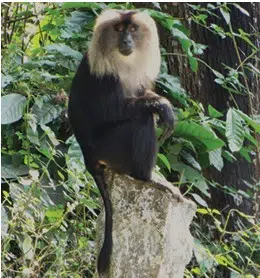
a) Neelakurinji
b) Lion-tailed macaque
c) Nepenthes khasiana
d) Nilgiri tahr
Answer: b) Lion-tailed macaque
Q62. Figure shows four hornbill species. Which feature helps scientists distinguish them?
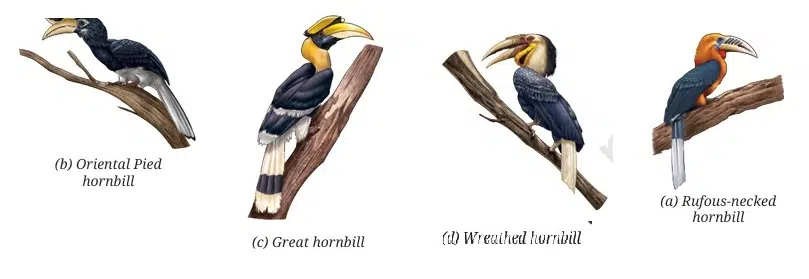
a) Size of feathers
b) Shape of beak and neck color
c) Type of soil
d) Presence of wings
Answer: b) Shape of beak and neck color
Q63. Figure shows the five-kingdom classification. Which kingdom includes unicellular organisms without a true nucleus?
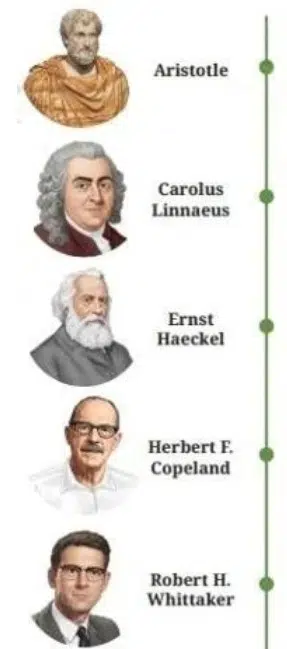
a) Protista
b) Monera
c) Fungi
d) Plantae
Answer: b) Monera
Q64. Figure shows Amoeba, Paramecium, and Euglena. These belong to:
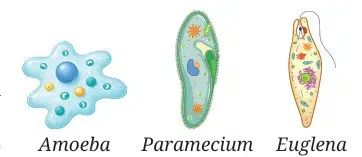
a) Monera
b) Protista
c) Fungi
d) Plantae
Answer: b) Protista
Q65. Figure shows Spirogyra. It belongs to:
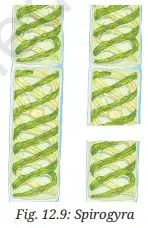
a) Bryophyta
b) Pteridophyta
c) Thallophyta
d) Gymnosperm
Answer: c) Thallophyta
Q66. Figure shows a fern stem cross-section. Which tissues are visible?
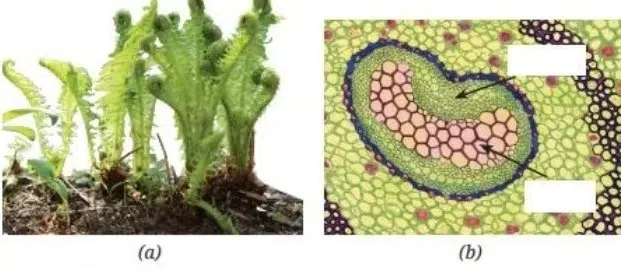
a) Rhizoids and cones
b) Xylem and phloem
c) Spores and cones
d) Cones
Answer: b) Xylem and phloem
Q67. Fig. 12.16c shows hooks and suckers. These structures are found in:
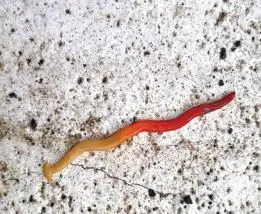
a) Porifera
b) Cnidaria
c) Platyhelminthes (parasitic flatworms)
d) Angiosperms
Answer: c) Platyhelminthes (parasitic flatworms)
Q68. Amphioxus belongs to the following:
a) Porifera
b) Protochordata
c) Arthropoda
d) Mollusca
Answer: b) Protochordata
Q70. Figure shows a purple frog. Which feature makes it unique?
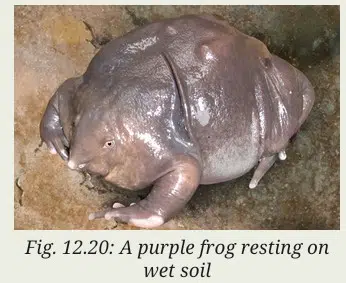
a) Lives underground most of the year, emerging only during monsoon to breed
b) Lives only in deserts
c) Has feathers for flight
d) Produces seeds
Answer: a) Lives underground most of the year, emerging only during monsoon to breed
Disclaimer: The content that is present on our website is based on the NCERT Class 9 Science textbook and is provided for educational purposes only. All the content and images have been taken from Science Class 9 NCERT Textbook and CBSE Support material. Images and content shown above are the property of individual organizations and are used here for reference purposes only. To make it easy to understand, some of the content and images are generated by AI and cross-checked by the teachers.