
Work, Energy and Simple Machines Class 9 Competency-Based MCQs designed as per the latest CBSE guidelines. These questions assess conceptual understanding, analytical thinking, and real-life application of topics such as work, energy, power, kinetic energy, potential energy, conservation of energy, levers, pulleys, inclined planes, wheel and axle, mechanical advantage, efficiency, and other simple machines.
Work Energy and Simple Machines Class 9 MCQ
Conceptual Recall MCQs
Q1. Work done by a constant force is defined as __.
(a) Force ÷ displacement
(b) Force × displacement in the direction of force
(c) Displacement ÷ force
(d) Force + displacement
Answer: (b) Force × displacement in the direction of force
Q2. The SI unit of work is __.
(a) Newton
(b) Joule
(c) Watt
(d) Kilogram
Answer: (b) Joule
Q3. A lever is a _.
(a) Rigid bar that rotates about a fixed point
(b) Wheel with a groove
(c) Inclined plane
(d) Pulley system
Answer: (a) Rigid bar that rotates about a fixed point
Q4. The fixed point about which a lever rotates is called the __.
(a) Load
(b) Effort
(c) Fulcrum
(d) Axis
Answer: (c) Fulcrum
Q5. A fixed pulley helps by __.
(a) Reducing the effort required
(b) Changing the direction of effort
(c) Increasing the load
(d) Reducing the weight of the object
Answer: (b) Changing the direction of effort
Q6. The mechanical advantage of a fixed pulley is __.
(a) Greater than 1
(b) Equal to 1
(c) Less than 1
(d) Zero
Answer: (b) Equal to 1
Q7. The mechanical energy of an object is the sum of the following:
(a) Kinetic energy and heat energy
(b) Potential energy and kinetic energy
(c) Potential energy and sound energy
(d) Kinetic energy and chemical energy
Answer: (b) Potential energy and kinetic energy
Q8. Mechanical energy remains constant when __.
(a) Friction acts on the object.
(b) No external forces other than gravity act on the object.
(c) The mass of the object changes.
(d) The velocity of the object is zero.
Answer: (b) No external forces other than gravity act on the object.
Q9. The gravitational potential energy of an object at height ℎ is given by:
(a) 𝑈 = (1/2)mv²/sup>
(b) 𝑈 = mgh
(c) 𝑈 = (1/2)kx²/sup>
(d) 𝑈 = F x s
Answer: (b) 𝑈 = mgh
Q10. The SI unit of gravitational potential energy is:
(a) Newton
(b) Joule
(c) Watt
(d) Kilogram
Answer: (b) Joule
Q11. The energy stored in an object due to its position or configuration is called __.
(a) Kinetic energy
(b) Potential energy
(c) Thermal energy
(d) Nuclear energy
Answer: (b) Potential energy
Q12. Which of the following is an example of potential energy?
(a) A rolling ball
(b) A stretched spring
(c) A moving bicycle
(d) A ringing bell
Answer: (b) A stretched spring
Q13. Energy is defined as __.
(a) Capacity to apply force
(b) Capacity to do work
(c) Capacity to move objects only
(d) Capacity to produce heat only
Answer: (b) Capacity to do work
Q14. The energy possessed by an object due to its motion is called __.
(a) Potential energy
(b) Kinetic energy
(c) Thermal energy
(d) Nuclear energy
Answer: (b) Kinetic energy
Q15. The work-energy theorem states:
(a) Work done = force × displacement
(b) Work done = Change in energy of the object
(c) Work done = mass × acceleration
(d) Work done = Momentum × velocity
Answer: (b) Work done = Change in energy of the object
Q16. The SI unit of energy is the same as that of work, which is the __.
(a) Newton
(b) Joule
(c) Watt
(d) Kilogram
Answer: (b) Joule
Q17. Work done is zero when __.
(a) Force is applied, but displacement is zero.
(b) Displacement occurs, but force is zero.
(c) Force and displacement are perpendicular.
(d) All of the above
Answer: (d) All of the above
Q18. Work is a __ quantity.
(a) Vector
(b) Scalar
(c) Tensor
(d) None of these
Answer: (b) Scalar
Application-Based MCQs
Q19. A bag of mass 5 kg is lifted to a height of 1 m. If 𝑔=10 𝑚/𝑠², the work done is __.
(a) 5 J
(b) 10 J
(c) 50 J
(d) 500 J
Answer: (c) 50 J
Q20. If three identical bags are lifted together to the same height, the work done is __.
(a) Same as one bag
(b) Three times that of one bag
(c) Half of one bag
(d) Zero
Answer: (b) Three times that of one bag
Q21. In a seesaw, if a lighter child sits farther from the fulcrum, the seesaw balances because __.
(a) The child gains weight.
(b) The effort arm increases, reducing effort required.
(c) The fulcrum shifts
(d) The load decreases.
Answer: (b) The effort arm increases, reducing the effort required.
Q22. A stapler is lifted using a lever with erasers on the other side. This is possible because of the following:
(a) The erasers are heavier.
(b) The lever increases force by increasing the effort arm.
(c) The stapler loses weight.
(d) The fulcrum disappears.
Answer: (b) The lever increases force by increasing the effort arm.
Q23. A movable pulley system is useful because __.
(a) It reduces the load.
(b) It increases the mechanical advantage.
(c) It changes the direction of effort only.
(d) It reduces displacement.
Answer: (b) It increases the mechanical advantage.
Q24. When a box is moved up an inclined plane instead of lifting vertically:
(a) The force required decreases, but the distance increases.
(b) The force required increases, but the distance decreases.
(c) Both force and distance decrease
(d) Both force and distance increase.
Answer: (a) The force required decreases, but the distance increases.
Q25. A child slides down from a height h. At the bottom of the slide, the child’s velocity depends on:
(a) Mass of the child
(b) Shape of the slide
(c) Height of the slide
(d) Friction only
Answer: (c) Height of the slide
Q26. In a pendulum, at the extreme positions, the bob has __.
(a) Only kinetic energy
(b) Only potential energy
(c) Both kinetic and potential energy
(d) No energy
Answer: (b) Only potential energy
Q27. A ball of mass 2 kg is raised to a height of 5 m. If g = 10 m/s², its potential energy is __.
(a) 10 J
(b) 50 J
(c) 100 J
(d) 200 J
Answer: (d) 100 J
Q28. A ball dropped from 2 m creates a deeper depression in sand than when dropped from 1 m because __.
(a) It has more mass.
(b) It has more gravitational potential energy at greater height.
(c) Gravity increases with height.
(d) Sand becomes softer at higher drops.
Answer: (b) It has more gravitational potential energy at greater heights.
Q29. An archer pulls back the string of a bow. The energy stored in the bow is __.
(a) Kinetic energy
(b) Potential energy
(c) Sound energy
(d) Electrical energy
Answer: (b) Potential energy
Q30. A ball lifted to a height possesses potential energy because __.
(a) Work is done against gravity.
(b) It has mass only.
(c) It is moving fast.
(d) It is compressed.
Answer: (a) Work is done against gravity.
Q31. A moving bicycle has energy because __.
(a) It has mass.
(b) It has velocity.
(c) Work was done to set it in motion.
(d) All of the above
Answer: (d) All of the above
Q32. If the velocity of a vehicle doubles, its kinetic energy becomes __.
(a) Twice
(b) Four times
(c) Half
(d) Same
Answer: (b) Four times
Q33. A flowerpot raised to a height has energy because __.
(a) It has mass.
(b) Work was done on it to raise it.
(c) It is at rest.
(d) It is made of clay.
Answer: (b) Work was done on it to raise it.
Q34. A cricket ball thrown by a fielder knocks down the wickets. This shows that __.
(a) The ball has gained energy from work done on it.
(b) The wickets have no energy.
(c) Energy cannot be transferred.
(d) Work and energy are unrelated.
Answer: (a) The ball has gained energy from work done on it.
Q35. A girl pushes a rigid wall with a force of 100 N, but the wall does not move. The work done on the wall is __.
(a) 100 J
(b) 0 J
(c) Infinite
(d) Cannot be calculated
Answer: (b) 0 J
Q36. A girl carries a box while walking horizontally. She applies an upward force equal to the weight of the box. The work done by this upward force is __.
(a) Positive
(b) Negative
(c) Zero
(d) Infinite
Answer: (c) Zero
Assertion–Reason MCQs
Q37. Assertion (A): Work has no direction.
Reason (R): Work is a scalar quantity, expressed only by magnitude.
(a) Both A and R are true, and R is the correct explanation of A.
(b) Both A and R are true, but R is not the correct explanation of A.
(c) A is true, R is false.
(d) A is false, R is true.
Answer: (a) Both A and R are true, and R is the correct explanation of A.
Q38. Assertion (A): A lever reduces the effort required to lift a load.
Reason (R): Effort × effort arm = Load × load arm.
(a) Both A and R are true, and R is the correct explanation of A.
(b) Both A and R are true, but R is not the correct explanation of A.
(c) A is true, R is false.
(d) A is false, R is true.
Answer: (a) Both A and R are true, and R is the correct explanation of A.
Q39. Assertion (A): Mechanical advantage of an inclined plane is greater than 1.
Reason (R): The length of the inclined plane is greater than its height, reducing the effort required.
(a) Both A and R are true, and R is the correct explanation of A.
(b) Both A and R are true, but R is not the correct explanation of A.
(c) A is true, R is false.
(d) A is false, R is true.
Answer: (a) Both A and R are true, and R is the correct explanation of A.
Q40. Assertion (A): As an object falls freely, its potential energy decreases and kinetic energy increases.
Reason (R): The lost potential energy is converted into kinetic energy, keeping mechanical energy constant.
(a) Both A and R are true, and R is the correct explanation of A.
(b) Both A and R are true, but R is not the correct explanation of A.
(c) A is true, R is false.
(d) A is false, R is true.
Answer: (a) Both A and R are true, and R is the correct explanation of A.
Q41. Assertion (A): Raising a ball to a greater height increases its gravitational potential energy.
Reason (R): Work is done against gravity to lift the ball.
(a) Both A and R are true, and R is the correct explanation of A.
(b) Both A and R are true, but R is not the correct explanation of A.
(c) A is true, R is false.
(d) A is false, R is true.
Answer: (a) Both A and R are true, and R is the correct explanation of A.
Q42. Assertion (A): A compressed spring stores energy.
Reason (R): Work is done on the spring to change its shape.
(a) Both A and R are true, and R is the correct explanation of A.
(b) Both A and R are true, but R is not the correct explanation of A.
(c) A is true, R is false.
(d) A is false, R is true.
Answer: (a) Both A and R are true, and R is the correct explanation of A.
Q43. Assertion (A): Kinetic energy depends on both the mass and velocity of the object.
Reason (R): The formula for kinetic energy is (1/2)mv².
(a) Both A and R are true, and R is the correct explanation of A.
(b) Both A and R are true, but R is not the correct explanation of A.
(c) A is true, R is false.
(d) A is false, R is true.
Answer: (a) Both A and R are true, and R is the correct explanation of A.
Q44. Assertion (A): Work done on an object appears as a change in its energy.
Reason (R): Positive work increases energy, while negative work decreases energy.
(a) Both A and R are true, and R is the correct explanation of A.
(b) Both A and R are true, but R is not the correct explanation of A.
(c) A is true, R is false.
(d) A is false, R is true.
Answer: (a) Both A and R are true, and R is the correct explanation of A.
Q45. Assertion (A): Work done can be positive or negative.
Reason (R): It depends on whether the force is in the same or opposite direction to displacement.
(a) Both A and R are true, and R is the correct explanation of A.
(b) Both A and R are true, but R is not the correct explanation of A.
(c) A is true, R is false.
(d) A is false, R is true.
Answer: (a) Both A and R are true, and R is the correct explanation of A.
Case-Based MCQ
Q46. A student uses a spring balance to pull a block horizontally with a constant force of 10 N. The block moves 2 m in the direction of the force.
Case Study Question: What is the work done by the student?
(a) 5 J
(b) 10 J
(c) 20 J
(d) 200 J
Answer: (c) 20 J
Q47. In a beam balance experiment, 1 coin at 10 cm from the fulcrum balances 2 coins at 5 cm from the fulcrum.
Case Study Question: Which principle explains this balance?
(a) Effort × effort arm = Load × load arm
(b) Force = mass × acceleration
(c) Work = force × displacement
(d) Energy = mass × velocity²
Answer: (a) Effort × effort arm = Load × load arm
Q48. A student uses a spring balance to lift a cart vertically and then along an inclined plank. The reading of the spring balance is smaller in the second case.
Case Study Question: Why is the force smaller when using the inclined plank?
(a) Because the cart loses weight
(b) Because the inclined plane reduces effort by increasing distance
(c) Because gravity decreases
(d) Because friction disappears
Answer: (b) Because the inclined plane reduces effort by increasing distance
Q49. A truck of mass 10000 kg moves at 72 km/h and enters an escape ramp inclined at 30°. The sand exerts a force of 50000 N opposite to motion.
Case Study Question: What is the minimum length of the ramp required to stop the truck?
(a) 10 m
(b) 20 m
(c) 50 m
(d) 100 m
Answer: (b) 20 m
Q50. A fielder throws a cricket ball of mass 200 g to a height of 10 m.
Case Study Question: What is the gravitational potential energy of the ball at its maximum height (take g = 10 m/s²)?
(a) 2 J
(b) 20 J
(c) 200 J
(d) 2000 J
Answer: (b) 20 J
Q51. A slingshot is stretched and a stone is placed in it. When released, the stone shoots forward.
Case Study Question: Which statement is correct?
(a) The stone had kinetic energy stored inside it.
(b) The stretched band stored potential energy, which converted to kinetic energy of the stone.
(c) No energy was involved.
(d) The stone gained energy from gravity only.
Answer: (b) The stretched band stored potential energy, which converted to the kinetic energy of the stone.
Q52. A jet aircraft of mass 15000 kg is stopped by a wire exerting a backward force of 367500 N over 100 m.
Case Study Question: What was the velocity of the aircraft just before stopping?
(a) 50 m/s
(b) 70 m/s
(c) 100 m/s
(d) 150 m/s
Answer: (b) 70 m/s
Q53. In a game of carrom, a striker hits a white coin, which then collides with a black coin.
Case Study Question: Which of the following is correct?
(a) Striker does positive work on the white coin, increasing its energy.
(b) The white coin does negative work on the striker, decreasing its energy.
(c) The white coin does positive work on the black coin, increasing its energy.
(d) All of the above
Answer: (d) All of the above
Q54. A goalkeeper applies a force of 200 N to stop a ball. Her hand moves back by 15 cm while stopping it.
Case Study Question: What is the work done by the goalkeeper on the ball?
(a) +30 J
(b) –30 J
(c) 200 J
(d) 0 J
Answer: (b) –30 J
Diagram-Based MCQs
Q55. In Figure, a 5 kg bag is lifted to a height of 3 m. Compared to lifting it to 1 m, the work done is ___________.
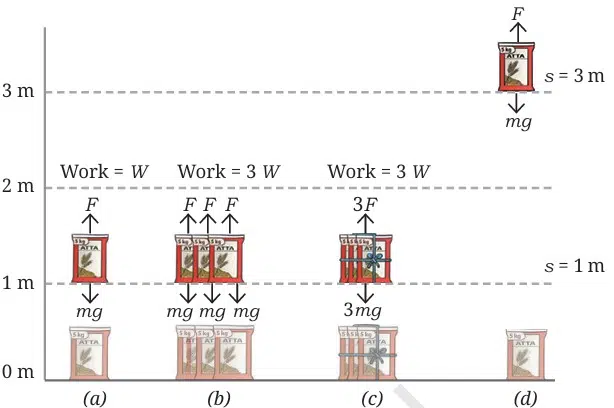
(a) Same
(b) Three times more
(c) Half
(d) Zero
Answer: (b) Three times more
Q56. In Figure, the force-displacement graph shows a constant force of 10 N applied over 1 m. The work done is equal to:
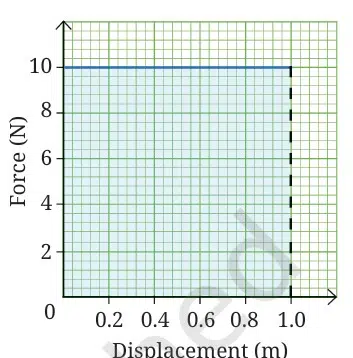
(a) Area under the graph = 10 J
(b) Area under the graph = 1 J
(c) Area under the graph = 100 J
(d) Zero
Answer: (a) Area under the graph = 10 J
Q57. In Figure, a girl carries a box horizontally while applying an upward force. The work done by this upward force is:
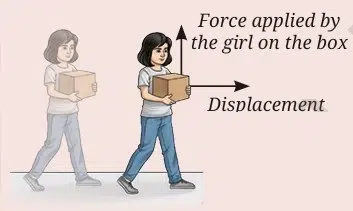
(a) Positive
(b) Negative
(c) Zero
(d) Cannot be determined
Answer: (c) Zero
Q58. In Figure, a boy pushes a wheelchair forward. The work done is:
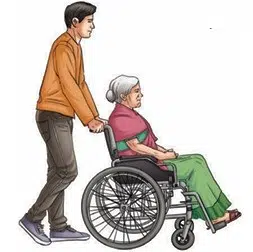
(a) Positive
(b) Negative
(c) Zero
(d) None of these
Answer: (a) Positive
Q59. In Figure, the ball knocks down the wickets because ___________.
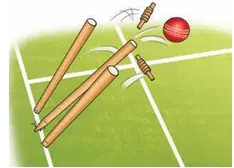
(a) The ball transfers its energy to the wickets.
(b) The wickets apply no force.
(c) The ball loses mass.
(d) The ball has no energy.
Answer: (a) The ball transfers its energy to the wickets.
Q60. In Figure (carrom board), the striker’s energy decreases because ___________.
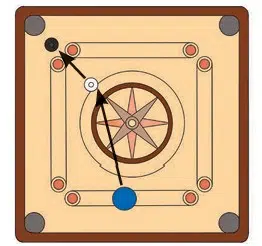
(a) The striker gains velocity
(b) The white coin does negative work on the striker.
(c) The striker has no mass.
(d) The striker stops moving.
Answer: (b) The white coin does negative work on the striker.
Q61. In Figure, electrical energy in a bulb is converted into ___________.

(a) Mechanical energy
(b) Light energy
(c) Nuclear energy
(d) Sound energy
Answer: (b) Light energy
Q62. In Figure, when a force acts on a stationary object and gives it velocity, the energy gained is ___________.

(a) Potential energy
(b) Kinetic energy
(c) Thermal energy
(d) Sound energy
Answer: (b) Kinetic energy
Q63. In Figure, a ball lifted above the ground possesses the following:
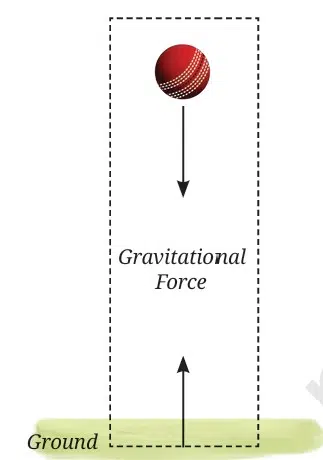
(a) Potential energy due to position
(b) Kinetic energy due to motion
(c) Sound energy due to vibration
(d) Electrical energy due to charges
Answer: (a) Potential energy due to position
Q65. In Figure, the force applied to raise the ball is equal to the following:
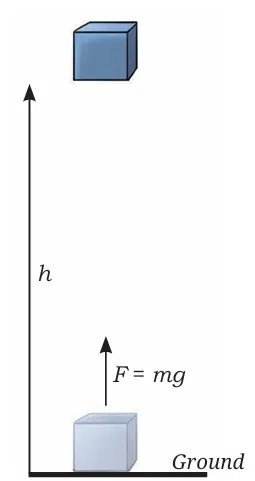
(a) Mass of ball
(b) Velocity of ball
(c) Gravitational force 𝑚𝑔
(d) Potential energy 𝑚𝑔ℎ
Answer: (c) Gravitational force 𝑚𝑔
Q66. In Figure, when a ball falls freely, its mechanical energy at any point is ___________.
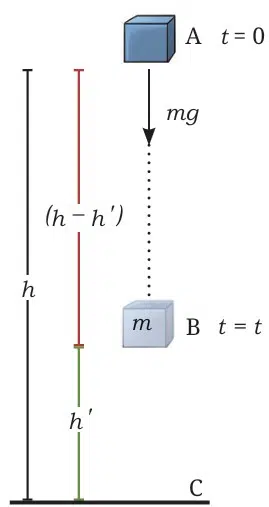
(a) Increasing
(b) Decreasing
(c) Constant and equal to 𝑚𝑔h
(d) Zero
Answer: (c) Constant and equal to 𝑚𝑔h
Q67. In Figure (pendulum), at point Q (lowest position), the bob has ___________.
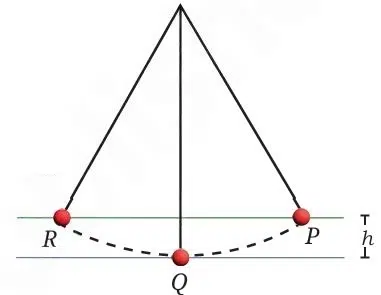
(a) Only potential energy
(b) Only kinetic energy
(c) Both kinetic and potential energy
(d) No energy
Answer: (b) Only kinetic energy
Q69. In Figure, the ramp has height 30 cm and length 50 cm. The mechanical advantage is ___________.
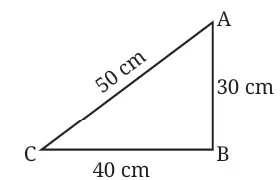
(a) 1
(b) 1.5
(c) 1.67
(d) 2
Answer: (c) 1.67
Q70. In Figure, the lever lifts a heavy rock because ___________.
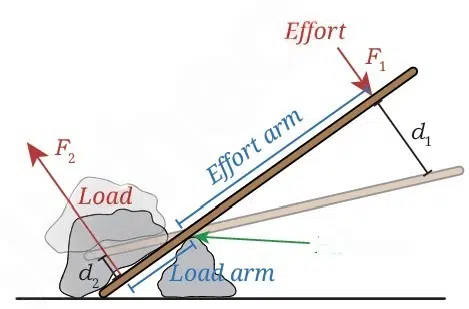
(a) The load arm is longer than the effort arm.
(b) The effort arm is longer than the load arm.
(c) The fulcrum is removed.
(d) The rock loses weight.
Answer: (b) The effort arm is longer than the load arm.
Q71. In Figure (seesaw), a 15 kg child sits at seat A (2 m from fulcrum). To balance, a 30 kg child should sit at the following ___________.
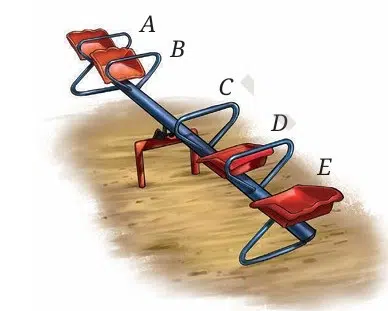
(a) Seat B (2 m)
(b) Seat D (1 m)
(c) Seat E (2 m)
(d) Seat C (fulcrum)
Answer: (b) Seat D (1 m)
Disclaimer: The content that is present on our website is based on the NCERT Class 9 Science textbook and is provided for educational purposes only. All the content and images have been taken from Science Class 9 NCERT Textbook and CBSE Support material. Images and content shown above are the property of individual organizations and are used here for reference purposes only. To make it easy to understand, some of the content and images are generated by AI and cross-checked by the teachers.