
The Beauty and Wellness Industry in India is one of the fastest-growing sectors, offering a wide range of services related to personal care, grooming, fitness, and well-being. It includes beauty salons, spas, skincare, haircare, makeup services, yoga centers, and wellness clinics. With increasing awareness about health, hygiene, and appearance, the demand for beauty and wellness services has grown significantly.
Beauty and Wellness Industry in India Class 9 Notes
The beauty and wellness sector is growing at a fast pace and is an important industry in India. It plays an important role in the field of the country’s economy and is also creating millions of jobs.
Why is the beauty and wellness industry in India growing so fast?
- Consumerism: Many people are spending a lot of money on personal care and lifestyle products.
- Globalisation: Many international brands are introducing their products in India.
- Changing lifestyles: Everyone wants to look stylish and feel confident.
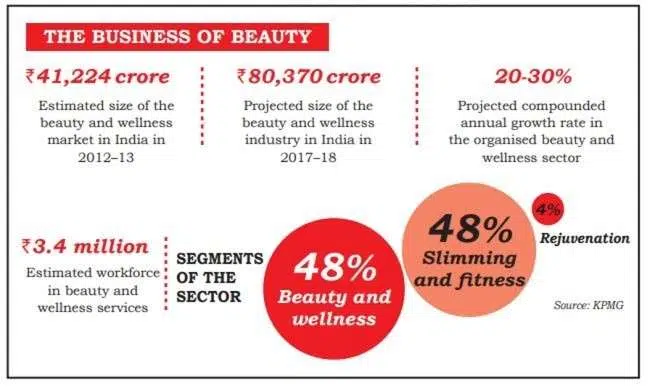
Many companies, both big and small, entered the beauty and wellness market. So, there is huge demand for trained beauty therapists and skilled professionals. Customers visit salons for the treatment and expect a satisfying experience.
Growing Segments in India’s Beauty Industry
The beauty industry in India has many parts, but some are growing faster than others.
- Specialised Hair Care: The hair care services, like hair treatment and styling, are becoming very popular.
- Bridal Make-up: When the wedding is there, then the brides visit salons, and now every bridegroom’s friends and relatives also take salon services.
The reasons for the growth of the beauty and wellness sector are as follows:
- People are buying more beauty products.
- People are moving to cities and spending more money to avail themselves of beauty products and services.
- Young people are being exposed to advertisements through media, which increases their aspiration to look beautiful and presentable at all times.
- There is an obsession with young-looking skin as more and more consumers ask for cosmetic treatments and anti-ageing products.
- More product innovation is being done for enhancing marketability.
Session 1: career opportunities in the beauty and wellness sector
Major sub-segments in the beauty and wellness sector
- Beauty centres: Beauty centres provide services like skin care, hair care, nail care, and therapies to improve overall appearance.
- Hair salons: Hair salons specialise in haircuts, shampooing, styling, colouring, and scalp treatments. Some also offer nail and skincare services.
- Product and counter sales: They sell cosmetics, beauty products, and toiletries to the customers based on age-related products.
- Fitness and slimming: The centre includes gyms, aerobics, yoga and weight-loss programmes based on physical health and body shaping.
- Rejuvenation centres: The spa services aimed at relaxation and stress relief, including spa education, events and products.
- Alternate therapy centres: In this centre, focus on natural healing methods like vibration therapy, naturopathy, cupping, and crystal healing.
- Unisex services: The salons offering beauty and wellness services to both men and women are mostly popular in urban areas.
- International beauty brands: There are a lot of beauty brands that are worldwide, like Lakme, Himalaya, VLCC, Biotique, Forest Essentials, Shahnaz Husain, Maybelline, L’Oreal and MAC. These products are available only.
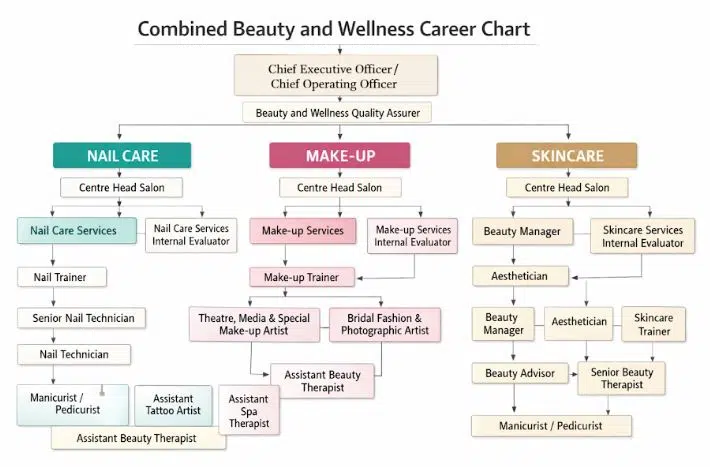
Career path for an assistant beauty therapist
Most assistant beauty therapists begin their careers in beauty centres or hair salons. These are the places where they learn basic skills and gain experience by working with clients.
Session 2: Beauty therapy services
‘Beauty therapy’ means providing different kinds of beauty and wellness treatments from head to toe. Each one has its own step-by-step procedure, and it must be done carefully to avoid problems like rashes, allergies or infections.
Let us take a look at beauty therapies and services generally provided by a salon.
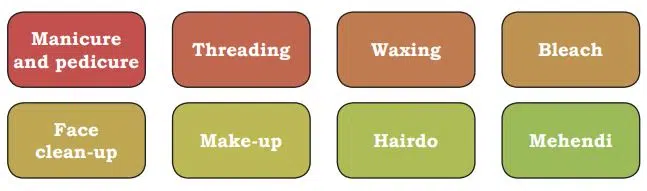
1. Manicure
‘Manicure’ means the treatment for hands and nails, like removing dead skin, pushing back cuticles, exfoliating, applying nail polish, massaging, etc.
Benefits
- Softens hand
- Improves blood circulation
- Relaxes muscles
- Enhances appearance of hands and nails.
2. Pedicure
A pedicure is a treatment of feet and toenails, like pumice stone use, exfoliation, nail paint, toenail shaping, etc.
Benefits:
- Softens feet
- Improves blood circulation
- Shapes toenails
- Relaxes aching feet
- Removes hard/dead skin
3. Threading
Threading is a method of hair removal using cotton thread in a twisting motion.
Benefits:
- Less painful than plucking
- Quicker & safer than waxing
- Suitable for sensitive skin
- No chemicals used
- Gives a clean look to face/eyebrows.
4. Waxing
In this method hair is removed by using hot wax, like strip waxing (cloth/paper strip), stripless waxing (wax hardens, no strip), etc.
Benefits:
- Removes hair from root
- Lasts 3–6 weeks
- Stripless waxing is less painful and removes fine hair.
5. Bleach
Bleach is basically used for lightening skin tone or facial hair, like reducing dark spots/freckles, brightening skin and lightening facial hair (less visible).
6. Face Clean-up
This method includes cleansing, moisturising to unclog pores, exfoliation, etc.
Benefits:
- Healthy glow
- Removes dirt, bacteria, pollution
- Prevents acne/pimples
- Improves blood circulation
7. Make-up
‘Make-up’ means when you apply cosmetics like eyeliner, lipstick, foundation, etc. to enhance appearance.
Benefits:
- Creates a good first impression.
- Boosts confidence
- Hides skin flaws
- Protects skin from pollution
- Adds desired look/expression
8. Hairdo / Hairstyling
Hairdo / hairstyling is basically styling hair using combs, gels, dryers and accessories.
Benefits:
- Enhances appearance
- Tames unruly hair
- A well-groomed look increases confidence.
9. Mehendi (Henna)
It is the art of decorating hands/feet with natural henna dye.
Benefits:
- Maroon-red cooling effect
- Used in weddings, festivals, ceremonies
- Can also dye hair & condition it
Session 3: Preparing and Maintaining the Work Area
A salon must always be kept clean, safe and professional. This ensures good service, protects clients and maintains the salon’s reputation.
Key Requirements
- Cleanliness: The salon must be disinfected regularly.
- Comfort: Maintain proper lighting and a suitable temperature.
- Safety: Follow safety rules to avoid accidents.
- Reputation: Poor hygiene or accidents can damage the salon’s name, and clients may even take legal action.
Hygiene Practices
- Keep the work area clean before seating a customer.
- Place all tools and equipment ready for use before starting treatment.
- Ensure waste disposal is done immediately after each service.
- Disinfect tools after every use — this is mandatory.
To be maintained in the beauty salon in the following sections.
1. Maintenance of record cards
A record card is an important document, which contains the following:
- past treatments taken by a client
- treatment the client has booked for
- history of the client about the products to be used, her/his skin type, and if s/he is allergic to any product
2. Essentials of the work area
Usually, a work area is used for providing multiple services. So, it must have the following:
- clean and disinfected environment
- clean treatment couch or chair, towels and aprons
- adequate ventilation and lights
- temperature controllers
- space to allow movement and for keeping the belongings of clients
- a quiet atmosphere with soft and soothing music being played in the background as it helps in relaxation
- tools and products needed for a procedure
- tools arranged in a trolley for a treatment
- pen and a record card of clients
- adequate cotton and tissues
3. Sterilisation and disinfection methods
Keeping tools and equipment clean is important to prevent contamination and infection in salons.
- Cleaning: It helps to remove dirt and dust from the tools and clean before sterilisation and disinfection.
- Disinfection: Disinfection helps to kill bacteria, viruses and fungi. The cleaning agents should be changed regularly during the process.
- Sterilisation: It is a method where the microorganisms are killed using steam and pressure. It is done with an autoclave and suitable for metal tools.
- Sanitising: Sanitising helps to destroy germs completely using heat or chemicals like household bleach and alcohol solution.
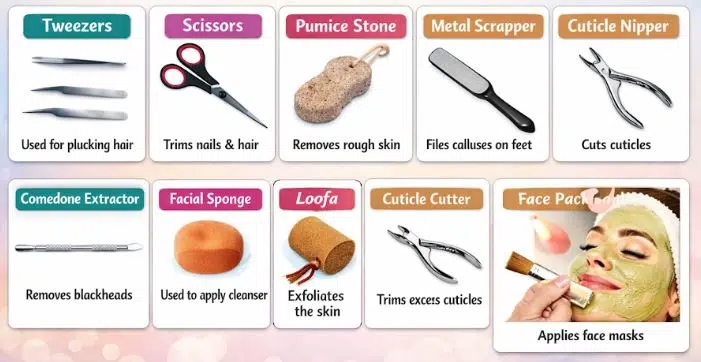
Equipment and material used in a beauty salon
The various equipment and material used in a beauty salon are shown in the figure.
Personal presentation and behaviour
The way a beauty therapist looks, speaks and behaves affects their professional success. Every action like greeting, communication and appearance should reflect professionalism and respect.
Tips for Assistant Beauty Therapists
An assistant beauty therapist must:
- Wear a clean uniform — neat, ironed, and professional.
- Maintain hygiene — you work closely with clients.
- Keep hair tidy — tie long hair in a ponytail or bun.
- Use light make-up — avoid heavy or flashy looks.
- Ensure fresh breath — avoid food or tobacco smells.
- Trimmed and clean nails are essential for hygiene and safety.
- Wear minimal jewellery — simple and safe.
- Choose comfortable footwear — it protects feet and supports long hours.
- Avoid eating or drinking in the work area.
- Speak politely and greet clients warmly.
- Listen patiently — understand clients’ needs clearly.
- Inform clients about waiting time or delays.
- Wash hands before every procedure.
Safe disposal of waste
Proper waste disposal is important in a salon to prevent contamination and infection. Improper waste management can harm both staff and clients and create a bad impression.
Best Practices for Waste Disposal
- Use covered dustbins.
- Sweep the floor.
- Keep surroundings neat.
- Close bottle lids
- Clean during waiting time
- Clean and sterilise tools after every service.
- ‘Work quietly’ means cleaning should not disturb clients.
- Follow equipment instructions to ensure safety and longer life of tools.
- Disinfect workspace after every procedure.
- Change towels and sheets after each treatment; keep used ones in a laundry basket.
Storage of tools and equipment
- Always clean, disinfect, and sterilise tools before storing them.
- Prevent injuries by keeping sharp tools in designated storage areas.
- Ensure safe use of electrical appliances to avoid accidents.
- Switch off electrical tools when not in use to save energy and prevent hazards.
Compliance of rules and norms
The rules and regulations for setting up a beauty salon vary in different states/union territories of India. Every salon must register under the Shops and Establishments Act within 30 days of starting work. The act covers the working hours of employees, opening and closing guidelines, leaves and termination procedures. There are certain generic norms that a beauty salon must follow.
There are certain generic norms that a beauty salon must follow:
- Must be registered and have a valid licence.
- Display business permits and employee training certificates.
- Provide drinking water and a clean washroom.
- Maintain separate bins for different types of waste.
- Use approved disinfectants and sanitisers in original containers.
- Discard single‑use items after every treatment.
- Sterilise or disinfect reusable tools.
- Keep the floor clean and dispose of waste immediately.
- Ensure all beauty products are properly labelled.
- Staff must wear personal protective equipment (PPE).
- Maintain a full employee list with police verification before hiring.
- Keep client records updated.
- Always have a first aid kit accessible.
Responsibilities of an Assistant Beauty Therapist
- Suggest service plans to meet client needs.
- Ask questions to identify allergies or contraindications.
- Inform clients about emergency procedures if required.
- Estimate time for treatments and keep clients updated.
- Prepare clients with protective apparel before treatment.
- Ensure privacy and comfort during procedures.
- Organise products and tools before starting.
- Sanitise hands before every service.
- Select and apply products suited to client needs.
- Discontinue service if adverse reactions occur, and advise clients.
- Clean skin after procedures (tone & moisturise).
- Provide home care advice and recommend further services.
- Check satisfaction by asking clients about results.
- Report hazards to concerned personnel.
- Inform the supervisor about work issues or unruly clients.
- Complete documentation in the required format.
- Minimise the wastage of products.
- Ensure the safe disposal of waste material.
- Thank customers for post-service feedback.
Session 4: Health and Safety In the work area
The safety of both staff and clients is very important. The beauty therapists work with different tools, equipment and products that can harm the staff and client. The following steps should be taken to prevent hazards.
- identifying hazards and evaluating risks at a workplace
- health and safety laws like fire safety, electrical safety, chemical safety, posture, lifting and carrying.
- workplace policies
- maintaining hygiene in the workplace
Fire safety
In a salon there are many items that can lead to a fire. Recognise materials in the salon that can easily catch fire, like:
- combustible oils
- flammable liquids and gases
- fuel-fired equipment
- refrigeration equipment
Types of fires
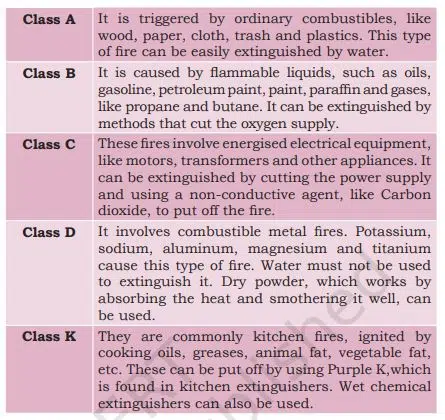
All fires are not the same. The classification of fires as A, B, C, D and K is based on fuels that trigger a type of fire.
Types of fire extinguishers
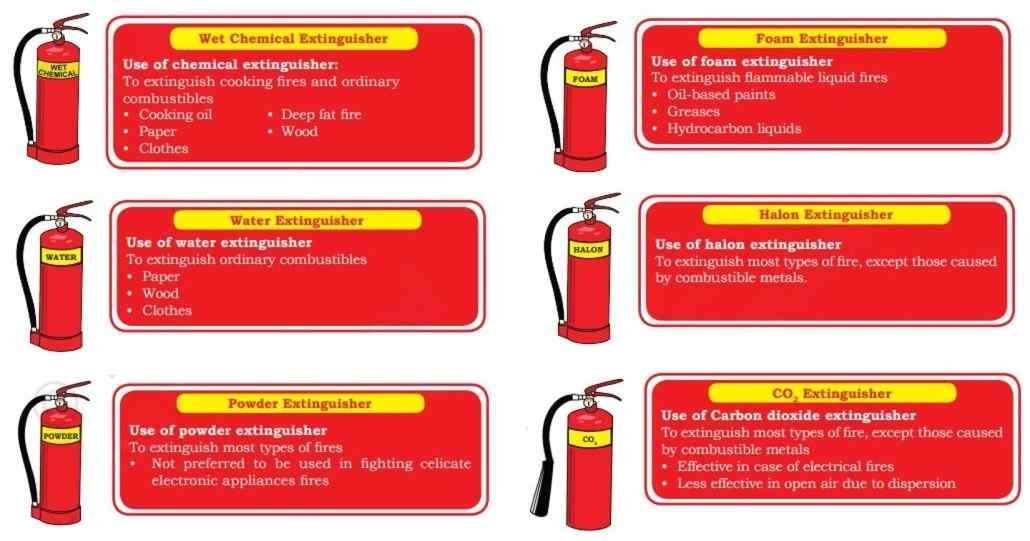
Fire needs heat + oxygen + fuel. Extinguishers work by removing one or more of these elements. Different fuels cause different classes of fire, so the extinguisher must match the fire type.
- Water: Removes heat and is used for Class A fires like wood, paper, cloth, etc.
- Foam: It removes heat + covers fuel, basically used for Class A and B fires.
- Carbon dioxide (CO₂): It helps to cut oxygen and cools heat; it is basically used for Class B and C fires.
- Dry Chemical: It creates a barrier between oxygen and fuel; it can be used for multiple purposes, like Class A, B and C fires.
- Wet chemical: It is used for neutralising cooking oils/fats; basically, it is used for Class K fires (kitchen).
- Clean agent: It uses halon/halocarbon to stop combustion and is basically used for Class B and C fires.
- Dry powder: It creates a barrier between oxygen and fuel, basically used for Class D fires (metal).
- Water mist: It helps to remove heat and is used for Class A fires and safe for Class C.
- Cartridge-operated dry chemical: It helps to cut oxygen supply and is mainly used for Class A fires.
First Action During Fire Emergency
- Stay calm — do not panic.
- Alert others nearby immediately.
- Dial 101 — the fire service helpline in India.
- Decide wisely — escape in case of a major fire; try extinguishing only if it is minor.
- Use the correct extinguisher depending on the fire type.
- Escape safely if unable to control the blaze.
- Move to the assembly point or designated safe area.
- Use stairs — never use the lift during evacuation.
- Inform firemen if someone is trapped; never re-enter the building.
First aid for fire and burns
If Clothes Catch Fire: Stop, drop, cover, and roll → immediately roll on the ground to douse flames.
For Burns
- Cool the burn — place under running cold water for at least 20 minutes.
- Use wet cloth if water is unavailable.
- Avoid ice, butter, and creams — they worsen the injury.
- Remove clothing/jewellery – prevents further heat damage and circulation issues.
- Do not burst blisters — it increases pain and infection risk.
- Check for other injuries – bleeding, fractures, and head injuries.
- Give breathing space — avoid crowding around the victim.
- Seek medical help immediately.
Rescue techniques
When a fire breaks out, the first priority is to escape safely. While rescuing others, stay alert and cautious.
Steps for Safe Rescue
- Find the nearest exit door or window.
- Shout for trapped people while leaving.
- Protect casualties with a blanket from falling debris.
- Remove debris carefully and avoid triggering collapse.
- Check doors safely and use the back of your hand; if warm, don’t open.
- Avoid smoke and stay low; cover your mouth with a damp cloth.
- Use stairs; never use the lift.
- Move quickly and safely to the nearest stairway and assembly point.
Electrical safety
Shocks from faulty or damaged equipment can cause severe injuries and can even lead to permanent disability. One needs to be careful while working around machines or exposed cables.
Risks
The main risk associated here is the death of a person or severe injuries.
People at risk
- Maintenance staff, who look after machines and their operations
- Workers working near equipment and those working without taking any training or precautions
- People who misuse equipment or try to use faulty equipment
Causes of common hazards
- Exposed electrical parts, like cables, broken plugs and sockets, damaged appliances, etc.
- Improper installation of insulated grounding system or earthing
- Inadequate wiring or damaged wiring, like cracks in cables leading to damaged insulation
- Overloaded circuits, which may lead to short circuits in some cases.
- Faulty equipment and tools, outer cable insulation not secured into plugs, leading to exposed parts
- Wet areas, as water is a good conductor of electricity
Electrocution
Electrocution occurs when a person comes in contact with voltage strong enough to cause current flow through the body.
- Minimum current felt: 1 mA
- Fatal current: 100 mA or more
- Risks: serious injury, burns, heart complications, or even death.
Effects of Electrocution
- Burns: shocks above 500V can damage internal organs, especially the heart.
- Neurological effects: Damage to the peripheral and central nervous systems may affect heart and lung control.
- Fibrillation: Irregular contraction of heart muscles (ventricles) can stop heartbeat.
- Bone damage: Severe muscle contractions may cause fractures or dislocations.
- Respiratory paralysis: Breathing may stop, affecting heartbeat.
Preventing Electric Shocks
- Unplug appliances when not in use or during power cuts.
- Avoid overloaded cords.
- Keep appliances away from water.
- Do not touch with wet hands.
- Ensure proper earthing.
- Do not self‑repair.
Rescue Techniques (During Electrocution)
- Do not touch the victim directly.
- Cut off power before rescue; stand on insulating material.
- Call the emergency helpline immediately.
- Plan carefully.
Chemical safety
In the beauty industry, various products, containing chemicals, are used. Frequent contact with these products can lead to some adverse health effects.
Harmful chemicals
Some chemicals used in salons are harmful to health but may be difficult to avoid due to limited alternatives. It is important to identify them, know the products they are found in, and take precautions.
| Chemical | Found In | Health Risks |
|---|---|---|
| Dibutyl Phthalate (DBP) | Nail Polish | Nausea, dizziness, birth defects |
| Formaldehyde | Nail products, shampoos, hair straighteners | Breathing problems, cancer, skin irritation |
| Toluene | Nail polish, hair dye, nail glue | Headache, dizziness, liver & kidney damage |
| Methyl Methacrylate (MMA) | Artificial Nails | Chest pain, breathing issues, asthma |
| Cyclopentasiloxane | Heat Protection Sprays | Can release formaldehyde when heated |
| Styrene | Hair Extension Glue | Vision problems, cancer risk |
| Trichloroethylene | Hair Extension Glue | Dizziness, liver & kidney damage |
| 1,4-Dioxane | Hair Extension Glue | Eye irritation, cancer risk |
| 2-Butoxyethanol | Cleaners, Disinfectants | Headache, reproductive toxicity |
| Quaternary Ammonium Compounds | Disinfectants | Skin irritation, asthma |
| P-Phenylenediamine (PPD) | Hair Dye, Henna Tattoo | Skin irritation, dermatitis |
| Ammonium Persulfate | Hair Bleach | Eye irritation, asthma |
| Ethyl Methacrylate | Artificial Nails | Skin irritation, asthma |
| Acetone | Nail Polish Remover | Eye and throat irritation, dizziness |
| Methacrylic Acid | Nail Primer, Eyelash Glue | Skin burns, kidney damage |
Safe Chemical Handling Practices
- Wear PPE kits like gloves, masks, aprons, etc.
- Do not store chemicals on work areas.
- Bottle lids must be tightly shut and bottles kept away from edges to prevent spills.
- Use trays or carts whenever carrying chemicals.
- Always check inventory to identify the expired chemicals.
- Keeps the floors clean from chemicals to avoid accidents.
Safe Chemical Storage Practices
- Separate storage area
- Arrange the chemicals based on compatibility.
- Do not place chemicals above 1.5 m from ground level.
- Large or flammable bottles should be kept in safety cabinets.
- Every chemical must have a fixed storage spot and be returned after use.
- Store chemicals in cool, shaded areas.
- Each container must have clear labels with name, hazard pictogram, and description.
First Aid for Chemical Exposure
Immediate Actions
- Contact emergency services and workplace supervisors.
- ‘Do not neutralise with chemicals’ means adding another chemical can worsen the injury.
- Do not apply ointments or burst blisters; wait for medical care.
- Stay calm and keep checking their condition until help arrives.
- Identify the substance that caused the injury for doctors.
Posture, lifting and carrying
An incorrect posture may lead to disorders related to bones and muscles. Elevated arms can lead to musculoskeletal disorders, affecting the neck and shoulders, while bending and standing for long hours can affect the backbone and other body parts.
Methods to avoid posture-related problems
- Do not stress one body part for long.
- Move and stretch between services or every 30 minutes.
- Vary services and activities to avoid stiffness.
- While sitting, ensure a proper ergonomic position.
- Keep the body fit and flexible.
Measures to adopt while lifting and carrying loads
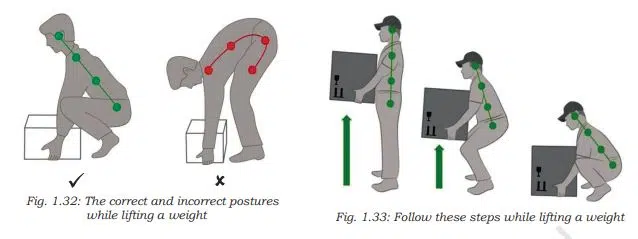
- Get help while carrying heavy and large loads.
- While lifting, bend at the knees to sit, hold the load with both hands, lift using legs, keep the load between knees and chest, and stand straight (not bending at the waist).
- While turning, move the legs and feet; avoid twisting at the waist.
- Always use the leg and buttock muscles while lifting the load, as they are strong.
- Use equipment, like hand trucks or forklifts, to carry the load, as they minimise the risk of injury.
Risks at the workplace
Hazards in salons can lead to accidents if not managed properly. Common risks include:
- Tripping over wires — loose cables on the floor.
- Bumping into equipment – items placed in walkways can cause falls or injuries.
- Electric shock or fire — due to frayed or loose cables.
- Slipping on spills — water or chemicals on the floor.
- Infections from unsterilised tools – poor hygiene practices spread diseases.
- Burns — caused by heating rods, hot water, or other equipment.
Parlour hygiene
An assistant beauty therapist’s role in maintaining hygiene in a salon is of utmost importance, as it can make or mar its image. S/he must be careful about how to clean and maintain hygiene in the salon. A few important areas that need to be taken care of are mentioned below.
- Wash hands before and after treatments; use antibacterial soap or sanitiser.
- Work surface — clean and disinfect desks, mirrors, and glasses; cover with clean sheets.
- Chairs and couches — clean daily; avoid ethanol disinfectants on PVC/vinyl to prevent cracks and microbe build-up.
- Tools and instruments — clean and disinfect before use; follow the manufacturer’s instructions.
- Floor — clean regularly with quality disinfectant; wipe spills immediately.
Personal Protective Equipment (PPE):
PPE is important for the safety of the salon staff, as it protects their clothes from stains and getting soiled. It includes the following:
- Apron: It protects the clothes from stains and reduces the risk of injury.
- Gloves: They protect hands from getting contaminated and catching infections.
- Head cover: It prevents the hair from coming in contact with any product or chemical, creating a hindrance while providing a treatment.
- Shoes: It protects a worker’s feet from spills or broken things.
- Mask: It prevents cross-infection and inhalation of chemical fumes and gases.
Disclaimer: We have taken an effort to provide you with the accurate handout of “Beauty and Wellness Industry in India Class 9 Notes“. If you feel that there is any error or mistake, please contact me at anuraganand2017@gmail.com. The above CBSE study material present on our websites is for education purpose, not our copyrights. All the above content and Screenshot are taken from Beauty and Wellness Class 9 CBSE Textbook and Support Material which is present in CBSEACADEMIC website, This Textbook and Support Material are legally copyright by Central Board of Secondary Education. We are only providing a medium and helping the students to improve the performances in the examination.
For more information, refer to the official CBSE textbooks available at cbseacademic.nic.in