
Earth as a System: Energy, Matter and Life Class 9 MCQ questions designed according to the latest NCERT Class 9 Science syllabus. These comprehensive multiple-choice questions cover important concepts such as Earth’s systems, the flow of energy, the cycling of matter, ecosystems, and the interdependence of living and non-living components.
Earth as a System Energy Matter and Life Class 9 MCQ
Conceptual Recall MCQs
Q1. Which sphere of the Earth includes glaciers, snow, and polar ice caps?
a) Geosphere
b) Hydrosphere
c) Cryosphere
d) Biosphere
Answer: c) Cryosphere
Q2. The average solar constant value is approximately:
a) 1.4 J s⁻¹ m⁻²
b) 1400 kW m⁻²
c) 1.4 kW m⁻²
d) 14 kW m⁻²
Answer: c) 1.4 kW m⁻²
Q3. Which part of solar radiation is mainly responsible for photosynthesis?
a) Gamma rays
b) Visible light
c) Infrared radiation
d) Microwaves
Answer: b) Visible light
Q4. The fraction of solar radiation reflected by a surface is called:
a) Insolation
b) Albedo
c) Reflection constant
d) Solar constant
Answer: b) Albedo
Q5. Which surface has the highest albedo?
a) Black soil
b) Ocean water
c) Snow
d) Crushed rock
Answer: c) Snow
Q6. Which gas makes up the largest proportion of Earth’s atmosphere?
a) Oxygen
b) Nitrogen
c) Carbon dioxide
d) Argon
Answer: b) Nitrogen
Q7. Nearly all weather phenomena occur in which atmospheric layer?
a) Stratosphere
b) Troposphere
c) Mesosphere
d) Thermosphere
Answer: b) Troposphere
Q8. The ozone layer is located in which atmospheric layer?
a) Troposphere
b) Stratosphere
c) Mesosphere
d) Exosphere
Answer: b) Stratosphere
Q9. Wind is the movement of air from __________.
a) Low pressure to high pressure
b) High pressure to low pressure
c) Cold region to hot region
d) Equator to poles
Answer: b) High pressure to low pressure.
Q10. Which local wind occurs during the day in mountainous regions?
a) Mountain breeze
b) Valley breeze
c) Sea breeze
d) Land breeze
Answer: b) Valley breeze
Q11. Ocean currents are mainly driven by:
a) Earth’s tilt
b) Planetary winds and pressure differences
c) Moon’s gravity
d) Volcanoes
Answer: b) Planetary winds and pressure differences
Q12. The cyclic movement of matter and energy between abiotic and biotic components is called:
a) Photosynthesis
b) Biogeochemical cycle
c) Respiration cycle
d) Hydrological cycle
Answer: b) Biogeochemical cycle
Q13. Which process in the water cycle involves water seeping through soil and rocks?
a) Evaporation
b) Condensation
c) Infiltration
d) Transpiration
Answer: c) Infiltration
Q14. Carbon is present in which of the following molecules?
a) Proteins
b) Carbohydrates
c) DNA
d) All of the above
Answer: d) All of the above.
Q15. The largest reservoir of nitrogen is:
a) Soil
b) Oceans
c) Atmosphere
d) Plants
Answer: c) Atmosphere
Q16. Which bacteria convert ammonia into nitrite?
a) Rhizobium
b) Nitrosomonas
c) Nitrobacter
d) Pseudomonas
Answer: b) Nitrosomonas
Q17. Which process in the nitrogen cycle returns nitrates back to nitrogen gas?
a) Nitrification
b) Assimilation
c) Ammonification
d) Denitrification
Answer: d) Denitrification
Q18. Excess atmospheric CO₂ absorbed by oceans makes seawater:
a) Less salty
b) More acidic
c) Cooler
d) Neutral
Answer: b) More acidic
Q19. The process where excessive nitrates cause algal blooms and fish death is called:
a) Photosynthesis
b) Eutrophication
c) Denitrification
d) Combustion
Answer: b) Eutrophication
Q20. Which international agreement successfully started recovery of the ozone layer?
a) Kyoto Protocol
b) Paris Agreement
c) Montreal Protocol
d) Mission LiFE
Answer: c) Montreal Protocol
Application-Based MCQs
Q21. If snowfall decreases for several years, what will be the most direct effect on the hydrosphere?
a) Increase in groundwater recharge
b) Decrease in lake water levels
c) Increase in rainfall
d) Rise in sea level
Answer: b) Decrease in lake water levels
Q22. India receives abundant sunlight due to its location in tropical and sub-tropical regions. Which natural process is most influenced by this insolation?
a) Soil erosion
b) Southwest monsoon
c) Glacier melting
d) Ocean currents in polar regions
Answer: b) Southwest monsoon
Q23. Why do dark-colored clothes feel hotter than white ones in summer?
a) They reflect more sunlight
b) They absorb more sunlight.
c) They scatter sunlight.
d) They block radiation completely.
Answer: b) They absorb more sunlight.
Q24. A city with many concrete buildings experiences higher temperatures than nearby rural areas. This is due to:
a) Greenhouse effect
b) Urban heat island effect
c) Albedo effect
d) Solar constant
Answer: b) Urban heat island effect
Q25. Why do ports in northwestern Europe remain ice-free in winter?
a) Presence of ozone layer
b) Warm North Atlantic Drift current
c) High albedo of snow
d) Mountain breezes from the Alps
Answer: b) Warm North Atlantic Drift current
Q26. Farmers in hilly regions benefit from mountain breezes because __________.
a) They increase soil erosion.
b) They cool crops and regulate moisture.
c) They block rainfall.
d) They reduce soil fertility.
Answer: b) They cool crops and regulate moisture.
Q27. Why are equatorial regions warmer than polar regions?
a) They receive more greenhouse gases.
b) Sun’s rays are concentrated over a smaller area.
c) They have more ozone.
d) They are closer to the Moon.
Answer: b) The sun’s rays are concentrated over a smaller area.
Q28. Venus is hotter than Mercury even though Mercury is closer to the Sun. This is because __________.
a) Venus has a stronger magnetic field.
b) Venus has an atmosphere causing an uncontrolled greenhouse effect.
c) Mercury rotates faster.
d) Venus receives more solar radiation.
Answer: b) Venus has an atmosphere causing an uncontrolled greenhouse effect.
Q29. Melting glaciers add more water to rivers. What long-term impact does this have?
a) Decrease in sea level
b) Increase in sea level, threatening coastal cities
c) More groundwater recharge
d) Reduced rainfall
Answer: b) Increase in sea level, threatening coastal cities
Q30. Farmers face difficulty in sustaining agriculture during dry months because __________.
a) More infiltration increases groundwater recharge.
b) Intense rainfall causes more runoff and less infiltration.
c) Glaciers store too much water.
d) Oceans absorb excess CO₂.
Answer: b) Intense rainfall causes more runoff and less infiltration.
Q31. Farmers grow legumes like peas and beans to improve soil fertility because:
a) Their roots store oxygen.
b) Their root nodules contain nitrogen‑fixing bacteria.
c) They absorb more carbon dioxide
d) They prevent soil erosion.
Answer: b) Their root nodules contain nitrogen‑fixing bacteria.
Q32. Overuse of fertilizers adds excess nitrates to water bodies. What is the most likely consequence?
a) Increased oxygen levels
b) Eutrophication and fish death
c) More groundwater recharge
d) Reduced rainfall
Answer: b) Eutrophication and fish death
Q33. Deforestation reduces transpiration. What is the most direct consequence?
a) Increase in rainfall
b) Decline in local rainfall
c) Rise in sea level
d) More groundwater recharge
Answer: b) Decline in local rainfall
Q34. Vehicular emissions reacting with sunlight form ground-level ozone. Why is this harmful?
a) It blocks UV radiation.
b) It reduces oxygen levels.
c) It causes smog and health problems.
d) It increases rainfall.
Answer: c) It causes smog and health problems.
Assertion–Reason MCQs
Q35. Assertion (A): The ozone layer absorbs most of the harmful UV radiation.
Reason (R): UV radiation has higher energy than visible light and can damage living tissues.
a) Both A and R are true, and R is the correct explanation of A.
b) Both A and R are true, but R is not the correct explanation of A.
c) A is true, R is false.
d) A is false, R is true.
Answer: a) Both A and R are true, and R is the correct explanation of A.
Q36. Assertion (A): Infrared radiation warms the Earth’s surface.
Reason (R): Greenhouse gases trap part of the outgoing infrared radiation.
a) Both A and R are true, and R is the correct explanation of A.
b) Both A and R are true, but R is not the correct explanation of A.
c) A is true, R is false.
d) A is false, R is true.
Answer: a) Both A and R are true, and R is the correct explanation of A.
Q37. Assertion (A): Snow-covered regions remain cooler than black soil regions.
Reason (R): Snow has high albedo and reflects most of the solar radiation.
a) Both A and R are true, and R explains A.
b) Both A and R are true, but R does not explain A.
c) A is true, R is false.
d) A is false, R is true.
Answer: a) Both A and R are true, and R explains a).
Q38. Assertion (A): Concrete houses feel hot at night in summer.
Reason (R): Concrete absorbs solar radiation during the day and re-radiates heat at night.
a) Both A and R are true, and R explains A.
b) Both A and R are true, but R does not explain A.
c) A is true, R is false.
d) A is false, R is true.
Answer: a) Both A and R are true, and R explains a).
Q39. Assertion (A): The troposphere is the layer where storms and winds occur.
Reason (R): The troposphere is heated from the Earth’s surface, and temperature decreases with height.
a) Both A and R are true, and R explains A.
b) Both A and R are true, but R does not explain A.
c) A is true, R is false.
d) A is false, R is true.
Answer: a) Both A and R are true, and R explains a).
Q40. Assertion (A): The stratosphere is calm compared to the troposphere.
Reason (R): Temperature increases with height in the stratosphere, preventing vertical mixing of air.
a) Both A and R are true, and R explains A.
b) Both A and R are true, but R does not explain A.
c) A is true, R is false.
d) A is false, R is true.
Answer: a) Both A and R are true, and R explains a).
Q41. Assertion (A): Planetary winds follow curved paths instead of straight lines.
Reason (R): The Earth’s rotation deflects winds to the right in the Northern Hemisphere and to the left in the Southern Hemisphere.
a) Both A and R are true, and R explains A.
b) Both A and R are true, but R does not explain A.
c) A is true, R is false.
d) A is false, R is true.
Answer: a) Both A and R are true, and R explains a).
Q42. Assertion (A): Warm equatorial waters move towards the poles.
Reason (R): This movement reduces temperature differences across the planet.
a) Both A and R are true, and R explains A.
b) Both A and R are true, but R does not explain A.
c) A is true, R is false.
d) A is false, R is true.
Answer: a) Both A and R are true, and R explains a).
Q43. Assertion (A): Excess CO₂ intensifies the greenhouse effect.
Reason (R): CO₂ traps outgoing infrared radiation, warming the Earth.
a) Both A and R are true, and R explains A.
b) Both A and R are true, but R does not explain A.
c) A is true, R is false.
d) A is false, R is true.
Answer: a) Both A and R are true, and R explains a).
Q44. Assertion (A): The Keeling curve shows seasonal dips in atmospheric CO₂.
Reason (R): Plant growth in the Northern Hemisphere absorbs CO₂ during certain months.
a) Both A and R are true, and R explains A.
b) Both A and R are true, but R does not explain A.
c) A is true, R is false.
d) A is false, R is true.
Answer: a) Both A and R are true, and R explains a).
Q45. Assertion (A): Nitrogen gas cannot be directly used by plants.
Reason (R): Nitrogen is non‑reactive and must be converted into soluble compounds first.
a) Both A and R are true, and R explains A.
b) Both A and R are true, but R does not explain A.
c) A is true, R is false.
d) A is false, R is true.
Answer: a) Both A and R are true, and R explains a).
Q46. Assertion (A): Oxygen levels in the atmosphere are maintained by a balance of photosynthesis and respiration.
Reason (R): Photosynthesis releases oxygen, while respiration and combustion consume oxygen.
a) Both A and R are true, and R explains A.
b) Both A and R are true, but R does not explain A.
c) A is true, R is false.
d) A is false, R is true.
Answer: a) Both A and R are true, and R explains a).
Q47. Assertion (A): Excess CO₂ intensifies greenhouse warming.
Reason (R): Burning fossil fuels and deforestation saturate natural carbon sinks.
a) Both A and R are true, and R explains A.
b) Both A and R are true, but R does not explain A.
c) A is true, R is false.
d) A is false, R is true.
Answer: a) Both A and R are true, and R explains a).
Q48. Assertion (A): Mission LiFE promotes eco-friendly lifestyles.
Reason (R): Simple habits like saving energy and conserving resources help restore environmental balance.
a) Both A and R are true, and R explains A.
b) Both A and R are true, but R does not explain A.
c) A is true, R is false.
d) A is false, R is true.
Answer: a) Both A and R are true, and R explains a).
Case-Based MCQ
Q49. Case Study (Activity 13.1): Students observed a mountain region with snow, a nearby lake, grassland, and grazing sheep. They discussed how different spheres interact.
Q. Based on this observation, which of the following is the correct sequence of interaction?
a) Cryosphere → Hydrosphere → Biosphere
b) Atmosphere → Geosphere → Cryosphere
c) Biosphere → Atmosphere → Geosphere
d) Hydrosphere → Cryosphere → Atmosphere
Answer: a) Cryosphere → Hydrosphere → Biosphere
Q50. Case Study (Activity 13.2): Students measured albedo of different surfaces: snow (0.80–0.90), ice (0.50–0.70), crushed rock (0.25–0.30), black soil (low), and ocean water (low).
Q. Which of the following conclusions is correct?
a) Surfaces with high albedo absorb more heat.
b) Surfaces with low albedo reflect more sunlight.
c) Snow reflects most sunlight, keeping polar regions cold.
d) Ocean water reflects more sunlight than snow.
Answer: c) Snow reflects most sunlight, keeping polar regions cold.
Q51. Case Study: K.R. Ramanathan measured ozone levels at 18,000 feet in the Himalayas in 1934 and found them lower than expected. His work helped understand UV absorption and monsoon forecasting.
Q. What does this case highlight about the atmosphere?
a) Ozone levels are constant everywhere.
b) Ozone absorption varies with altitude and pollution.
c) Ozone is only found in the troposphere.
d) Ozone has no role in climate.
Answer: b) Ozone absorption varies with altitude and pollution.
Q52. Case Study: Scientists at IITM Pune use advanced computer models combining atmosphere, oceans, land, and ice data to simulate the Indian monsoon.
Q. What is the main purpose of these models?
a) To measure ozone levels
b) To forecast seasonal rainfall and study climate change impacts
c) To calculate the albedo of soil
d) To track volcanic eruptions
Answer: b) To forecast seasonal rainfall and study climate change impacts
Q53. Case Study: Climate change is affecting the water cycle. A warmer atmosphere holds more moisture, causing heavier rains in some areas and droughts in others.
Q. Which conclusion can be drawn from this case?
a) Climate change affects only the cryosphere.
b) Uneven rainfall patterns can disrupt agriculture and fisheries.
c) Groundwater recharge increases during heavy rainfall.
d) Melting glaciers reduce sea levels.
Answer: b) Uneven rainfall patterns can disrupt agriculture and fisheries.
Q54. Case Study: The Haber‑Bosch process fixes atmospheric nitrogen into ammonia for fertilizers. This enabled the Green Revolution but also caused soil and water degradation due to overuse.
Q. Which conclusion can be drawn?
a) Artificial nitrogen fixation increased food production but harmed ecosystems.
b) The process reduced global energy use.
c) It eliminated the need for natural nitrogen fixation.
d) It decreased the nitrogen content in the human body.
Answer: a) Artificial nitrogen fixation increased food production but harmed ecosystems.
Q55. Case Study: India has planted billions of trees, expanded solar energy, and promoted sustainable farming. These actions aim to restore environmental balance.
Q. Which conclusion is correct?
a) Local actions cannot affect global systems.
b) Renewable energy and reforestation reduce harmful emissions.
c) Fossil fuels are the only solution for energy needs.
d) Planting trees increases soil erosion.
Answer: b) Renewable energy and reforestation reduce harmful emissions.
Diagram/Visual-Based MCQs
Q56. Refer to the electromagnetic spectrum diagram. Which radiation is mostly filtered by the Earth’s upper atmosphere?
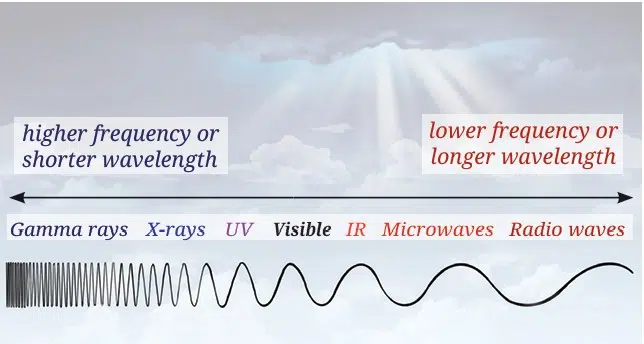
a) Infrared radiation
b) Gamma rays and X-rays
c) Visible light
d) Radio waves
Answer: b) Gamma rays and X-rays
Q59. If a surface reflects 70% of incoming solar radiation, its albedo value is:
a) 0.30
b) 0.70
c) 1.00
d) 0.10
Answer: b) 0.70
Q61. Which atmospheric role protects life on Earth?
a) Absorbing harmful UV radiation
b) Blocking visible light
c) Preventing oxygen circulation
d) Stopping greenhouse gases
Answer: a) Absorbing harmful UV radiation.
Q62. In the valley breeze, air moves __________.
a) Down the slope during the day
b) Up the slope during the day
c) Horizontally across the valley
d) Only at night
Answer: b) Up the slope during the day.
Q63. In the global ocean currents, gyres rotate:
a) Clockwise in both hemispheres
b) Counter-clockwise in both hemispheres
c) Clockwise in the Northern Hemisphere, counter-clockwise in the Southern Hemisphere
d) Randomly without pattern
Answer: c) Clockwise in the Northern Hemisphere, counter-clockwise in the Southern Hemisphere
Q64. In the water cycle, which process returns water to the atmosphere?
a) Precipitation
b) Evaporation and transpiration
c) Infiltration
d) Runoff
Answer: b) Evaporation and transpiration
Q65. In the carbon cycle, which process releases CO₂ back into the atmosphere?
a) Photosynthesis
b) Respiration and decomposition
c) Shell formation in marine organisms
d) Infiltration
Answer: b) Respiration and decomposition
Q66. In the nitrogen cycle, which step involves decomposers breaking down organic matter into ammonia?
a) Assimilation
b) Ammonification
c) Nitrification
d) Denitrification
Answer: b) Ammonification
Q67. In the oxygen cycle, which process adds oxygen back to the atmosphere?
a) Respiration
b) Combustion
c) Photosynthesis
d) Decomposition
Answer: c) Photosynthesis
Q68. In the oxygen cycle, which process consumes oxygen and releases CO₂?
a) Photosynthesis
b) Respiration and combustion
c) Transpiration
d) Infiltration
Answer: b) Respiration and combustion
Q69. In the eutrophication, algal blooms mainly cause:
a) Increase in oxygen levels
b) Depletion of oxygen, killing fish
c) More rainfall
d) Soil erosion
Answer: b) Depletion of oxygen, killing fish.
Disclaimer: The content that is present on our website is based on the NCERT Class 9 Science textbook and is provided for educational purposes only. All the content and images have been taken from Science Class 9 NCERT Textbook and CBSE Support material. Images and content shown above are the property of individual organizations and are used here for reference purposes only. To make it easy to understand, some of the content and images are generated by AI and cross-checked by the teachers.
Best