
Artificial Intelligence (AI) is a technology that enables machines to think, learn, and make decisions like humans. In this chapter, students will understand how AI observes our actions, learns from data, recognizes patterns, and solves problems. The chapter helps students connect AI concepts with real-life situations in a simple and practical way.
Artificial Intelligence Class 7 Chapter 2 Notes
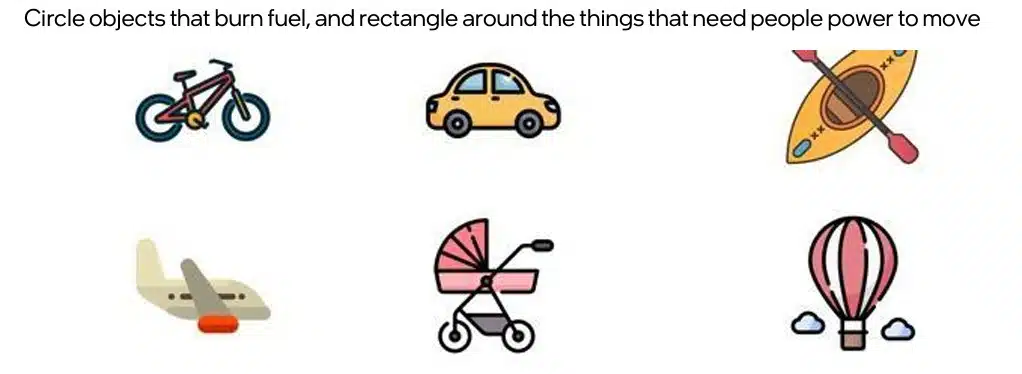
Natural resources are the things that we get directly from nature, like land, air, water, minerals, fossil fuels, forests, and sunlight. These natural resources are the raw materials that help us to live and grow. We use natural resources every day to get energy, like to move a car, to bake a cake in an oven, to light our homes, etc.
Natural resources give us energy in different forms:
- Light—from the sun, electricity, or fire
- Heat—for cooking, warming, and industrial use
- Motion—wind turning turbines, fuel moving vehicles
- Sound—produced when energy makes things vibrate
Sustainability
The word “sustainability” comes from the word “sustain.” It means using the natural resources responsibly, or you can say that “sustainable” means managing natural resources to meet present needs without compromising future generations to meet theirs. Imagine you want to make a sandwich with bread, jam, and butter. When you go to the kitchen, the jam is finished. Your elder sister says she used it earlier. If she knew you were going to make a sandwich, she would have saved some jam for you. In the same manner, we have to save resources for the future generation.
The concept of saving resources for future generations is similar. Our Earth has limited resources. The land, air, water, and food that provide us with energy are not unlimited. If we use all of them or pollute them, coming generations might not be able to use them.
Sustainability tries to solve this problem. Sustainability encourages everyone around us to use resources in a responsible manner by sharing resources equally and not being wasteful.
Sustainable Development Goals (SDGs)
For achieving sustainability at a global level, countries have come together to create goals called the Sustainable Development Goals (SDGs). There are 17 goals established by the United Nations in 2015. Each of these goals has several targets. The website of SDGs is https://sdgs.un.org/goals
The purpose of the SDGs is to address global challenges, including poverty, inequality, climate change, environmental degradation, peace, and justice, to ensure a sustainable future for all. The target year for achieving the SDGs is 2030.
Who is responsible for implementing the SDGs?
The Sustainable Development Goals (SDGs) are not the job of only government. It is a responsibility of the government, private sectors, civil society, and individuals.
- Governments: make policies, laws, and plans to achieve the goals.
- Private Sector (Companies): Adopt sustainable business practices and provide innovation.
- Civil Society (NGOs, communities, organizations): raise awareness, support projects, and hold leaders accountable.
- Individuals’: everyday actions like saving energy, reducing waste, volunteering, and spreading awareness.
The17 SDG Goals are –
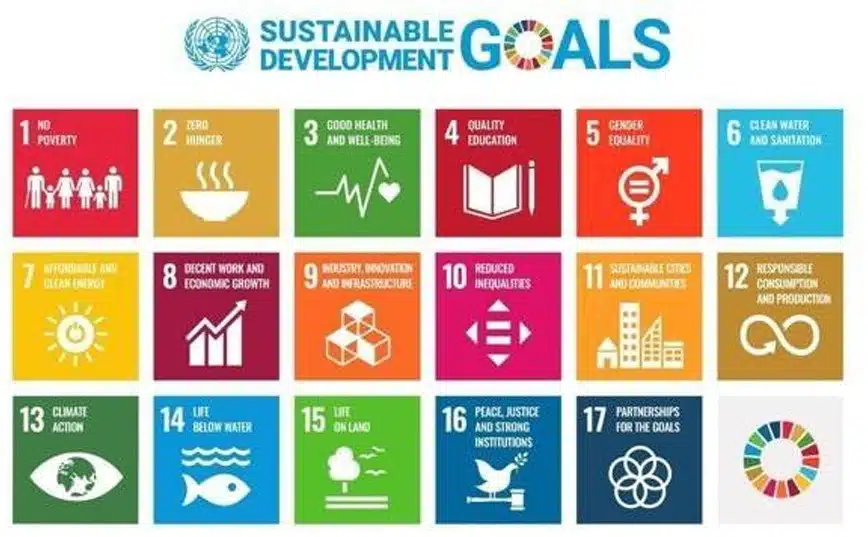
Which of these goals would you like to pursue? Why?
Students can select any goals depending on what matters most to them. These goals are almost related to our daily lives, and each and every goal is related to each other. To understand the relation between these goals, we have to see the SDG wedding cake image, which shows how the goals are related to each other.
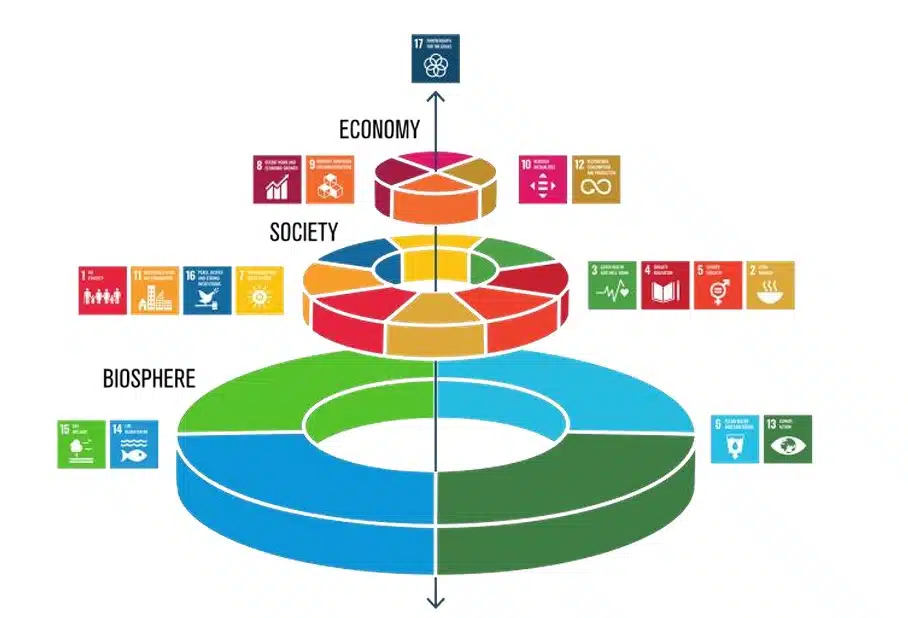
Watch the video for better understanding
SDG Video link: Stockholm Resilience Centre TV. (2021, November 9). The SDGs “wedding cake” (animation) [Video]. YouTube.
https://www.youtube.com/watch?v=dcvz6Fv8DqU The goals are divided into three broad categories:
- Economy–production, and consumption of goods and services, and management of resources
- Society–a group of people living together
- Biosphere–parts of Earth where life exists
Session 3: Systems thinking and System Map
Systems thinking
There are a lot of problems that appear to be straightforward but are not so straightforward. For example, the large outbreak of malaria in Borneo in the 1950s. The people of Borneo requested the WHO (World Health Organization) to control the malaria; the WHO sent in pesticides (DDT) to control the outbreak of malaria.
Mosquitoes died and malaria cases came down, but due to DDT pesticides, the insects and lizards were also affected. Cats ate lizards due to the pesticides’ effects, and the cats also died this is known as an “Operation cat drop”. Now without cats, the rat population increases, and the rats spread plague. So, nature is interconnected, and solving one problem (malaria) without thinking of the whole ecosystem can create new problems.
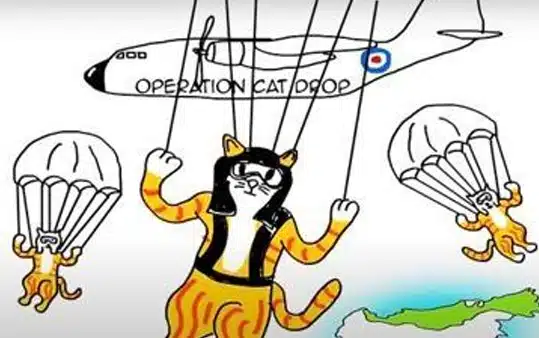
A lot of times, straightforward solutions can lead to unintended consequences, as we saw in the last example. To avoid such situations, we can use a style of thinking called system thinking.
When you take a holistic approach to understanding and addressing complex problems, not just only one part, this is known as system thinking. It emphasizes the interconnectedness of components and recognizes that changes in one part can have ripple effects throughout the entire system.
- A system is simply a group of interconnected things.
- Systems behave differently from their individual components.
- Systems are represented visually using a systems map.
- This simply means that its components interact and affect each other. This feature of systems is known as interconnectedness.
- Example: The water cycle, school, the digestive system, and food chains.
Basics of System Map
System maps are useful when there are multiple factors affecting an issue; we call these factors “elements.” In the system map, all the elements are connected by relationships, which we represent by “arrowheads,” and the loop indicates the direction and degree of feedback. We can draw the arrows to show how one element affects another; the arrows can have positive (+) or negative (-) relationships.
Positive Relationships (direct relation) are represented by a “+” sign.
E.g., An increase in element “X” leads to an increase in element “Y”.

Negative Relationships (inverse relation) are represented by a “-” sign
E.g., An increase in element “X” leads to a decrease in element “Y”

In a system map, every element is interconnected. We try to represent that relationship using arrows. Within a system map, we will identify loops. These loops are important because they represent a specific chain of causes and effects. A system typically has several chains of causes and effects. You may notice that some arrows are longer than others. A longer arrow represents a longer time for a change to happen. We also call this a time delay.
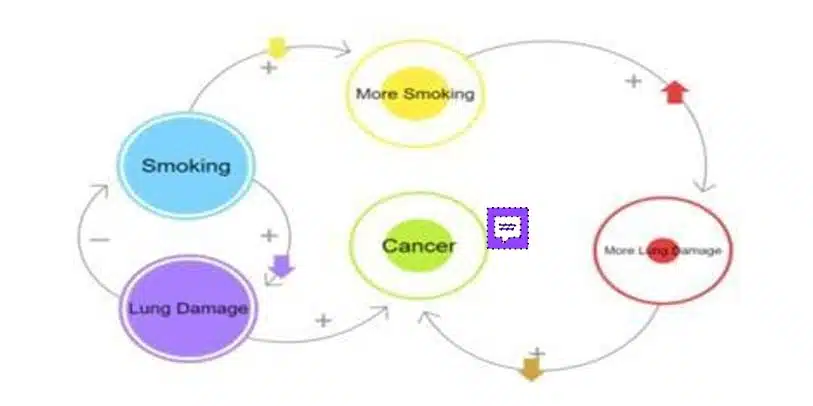
To change a system, we can change its elements or the relationships between them. Changing relationships is usually more effective. A systems map is a visual tool that shows how parts of a system connect and affect each other. For example, smoking leads to lung damage, which leads to cancer.
Using AI as leverage in a systems map
Leverage means the best point in a system map where a small change can create a big impact. It is just like finding the weak area. Instead of trying to change everything, we try to look for the key relationship or element that influences the whole system. For example, as youth, we are unlikely to effect changes on large issues like war or climate change, but we can influence them. However, with AI skills (particularly in getting AI to predict), we might be able to help people in charge take informed decisions.
Statistical Data Projects linked to SDG
The data visualization is a graphical representation of information and data; in data visualization, data is shown in the form of graphs, charts, or maps. Data visualization helps to make complex datasets easy to understand. It also helps to uncover patterns, trends, and insights not visible in raw numbers.
1. Data Visualization (Small Groups) – AI for Lifeforms
Purpose: Visualization of SDG‑related data and understanding its significance.
Any of the topics related to population, economy, or environment such as birth rate, death rate, infant mortality, life expectancy, food production, CO₂ emission, etc. can be chosen from the website and the relevant data can be downloaded. Choosing this data, represent them visually using any data visualization tool and analyze the data with respect to the SDG goal related to it as to how the progress is.
Data can be accessed from WorldStat – statistics on global development and inequalities.
2. Data Visualization (Small Groups) – AI for Human Services
Purpose: Visualization of SDG‑related data and understanding its significance.
Topics related to digital users, social media revenue, etc. can be chosen and the relevant data can be downloaded. Choosing the relevant data, represent them visually using any data visualization tool and analyze the data with respect to the SDG goal related to it.
Data can be accessed from Statista – The Statistics Portal for Market Data, Market Research, and Market Studies.
Disclaimer: We have provide you with the accurate handout of “Artificial Intelligence Class 7 Chapter 2 Notes“. If you feel that there is any error or mistake, please contact me at anuraganand2017@gmail.com. The above CBSE study material present on our websites is for education purpose, not our copyrights.
All the above content and Screenshot are taken from Artificial Intelligence Code 901B Class 7 CBSE Textbook, CBSE Sample Paper, CBSE Old Sample Paper, CBSE Board Paper and CBSE Support Material which is present in CBSEACADEMIC website, NCERT website This Textbook and Support Material are legally copyright by Central Board of Secondary Education or NCERT. We are only providing a medium and helping the students to improve the performances in the examination.
Images and content shown above are the property of individual organisations and are used here for reference purposes only. To make it easy to understand, some of the content and images are generated by AI and cross-checked by the teachers. For more information, refer to the official CBSE textbooks available at cbseacademic.nic.in.